
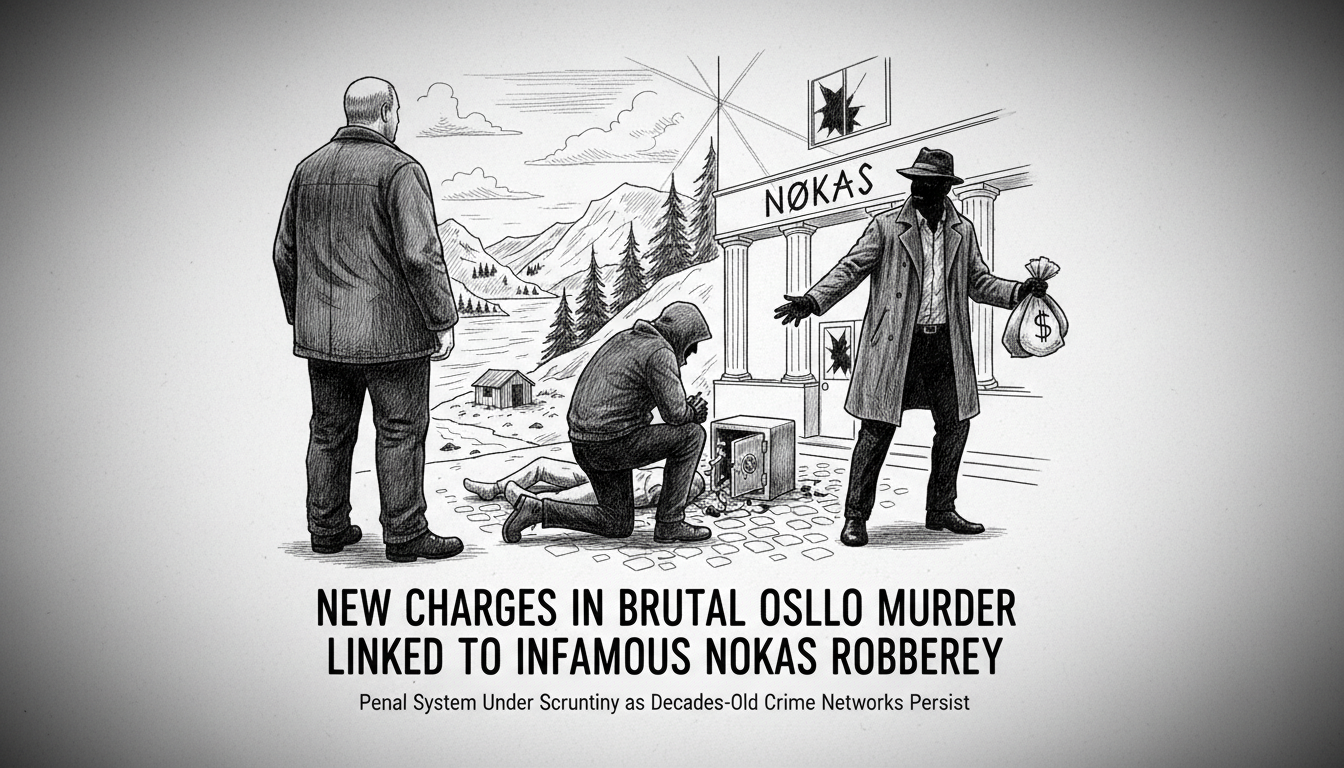
Norwegian police have confirmed new charges in the murder of Metkel Betew, a man with deep ties to one of the country's most infamous crimes. Investigators state more individuals than the previously named suspect, Stig Millehaugen, are now formally charged. The charges relate directly to the killing or complicity in the killing. Police officials declined to specify the exact number of new suspects. The case has reopened painful chapters in Norway's criminal history, connecting a brutal modern murder to a decades-old heist that shocked the nation.
Betew, 46, was found shot and killed in the Godlia forest on Oslo's Oppsal district in mid-April. Authorities described the killing as extremely brutal and targeted. Born in Oslo to parents from Eritrea, Betew was a convicted participant in the 2004 Nokas cash depot robbery in Stavanger. That armed heist, which netted 57.4 million kroner, resulted in the death of police officer Arne Sigve Klungland. Nearly the entire stolen sum remains missing. Betew was convicted for his role in that robbery, which involved the fatal shooting of the officer.
The primary suspect, Stig Millehaugen, was arrested in late April and has been held in custody since. Millehaugen has been described in past court proceedings as one of Norway's most dangerous men. He has spent most of his adult life imprisoned. At the time of Betew's murder, Millehaugen was on a temporary release from prison. He is currently serving a 21-year sentence for the 2009 contract killing of gang leader Mohammad "Jeddi" Javed. He was also previously convicted for the 1993 murder of a prison guard in Sarpsborg.
This case highlights significant challenges within the Norwegian justice and penal systems. The fact that a man serving a sentence for a contract killing was on temporary release when another murder occurred raises immediate questions. It prompts a necessary public debate about parole assessments and the monitoring of high-risk inmates. The connection to the unsolved Nokas robbery also suggests potential motives rooted in old criminal networks and undisclosed money. The investigation's expansion indicates police believe this was not a simple act of violence but a planned operation with multiple participants.
For international observers, this case contradicts the common perception of Norway as a society with minimal serious crime. It underscores that organized criminal networks, often with international links, operate within the Nordic region. The involvement of individuals from the Nokas robbery, a case that captured global headlines for its audacity and violence, shows the long shadow cast by major crimes. The ongoing police work now focuses on uncovering the links between the old robbery and the new murder, a task complicated by the code of silence within criminal milieus. The next steps will involve detailed forensic analysis and witness interviews, with the Storting likely to later examine any systemic failures this case reveals.