
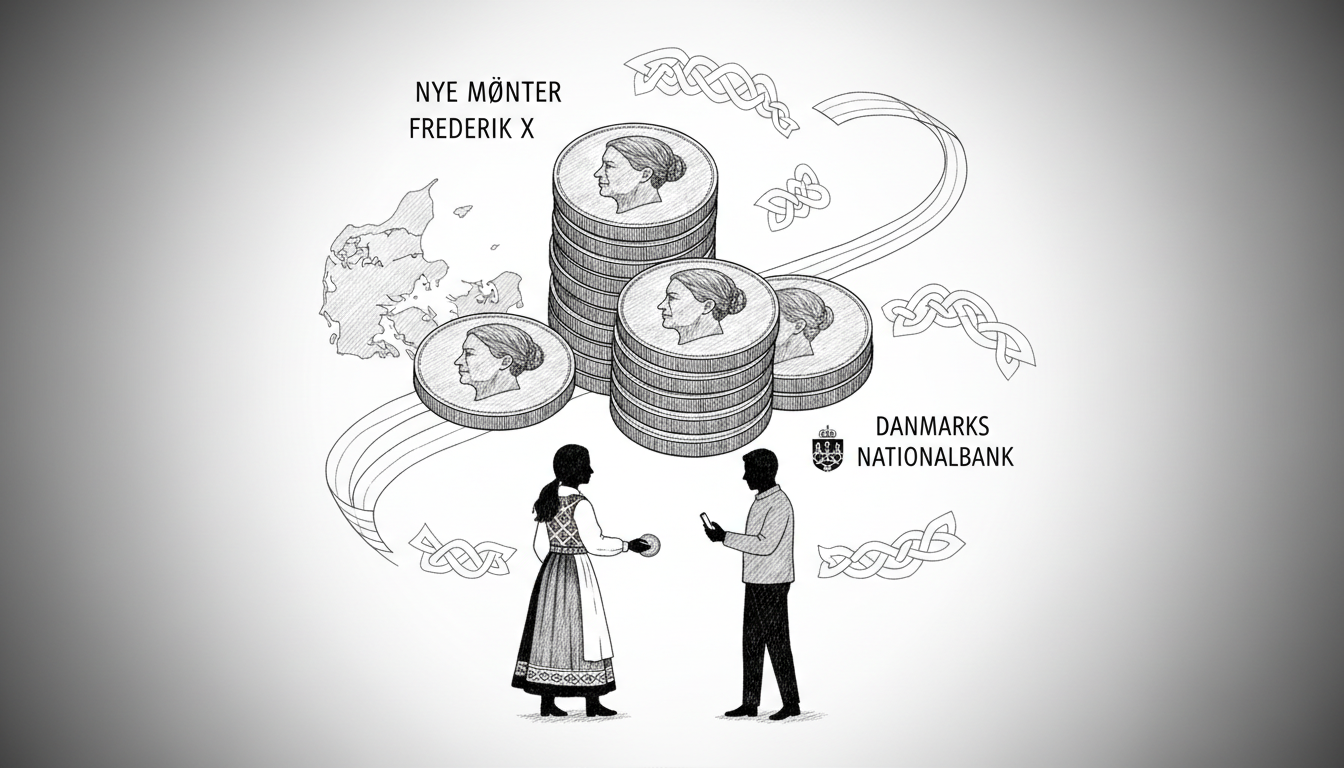
A quiet but significant change is now jingling in pockets across Denmark. The National Bank has begun circulating new coins featuring the portrait of King Frederik X, marking a tangible transition in the nation's monarchy. This move updates the physical currency for the first time since the abdication of Queen Margrethe II. The new ten and twenty kroner coins bear the King's profile, while updated one, two, and five kroner coins will display his royal monogram. Only the fifty-øre coin remains unchanged, as it carries no regal motifs. This physical change in everyday life offers a moment to reflect on tradition, national identity, and the evolving role of cash in a digital society.
National Bank officials explained the reasoning behind the update. They stated it continues a centuries-old tradition of placing the reigning monarch's portrait on the larger denomination coins. The old coins with Queen Margrethe's portrait remain legal tender, so Danes may find a mix of generations in their change for years to come. A total of 29 million new coins, with a combined face value of six billion kroner, have been produced in Spain under strict security protocols. The rollout to banks and retailers has begun, but officials note it will take time for all the new coins to fully circulate. You need a bit of luck to get one of the new coins in your hands at the start, a bank director said. If you pay frequently with cash, a new coin might just appear.
This coin renewal occurs against a backdrop of declining cash use in Denmark, one of the world's most digitally advanced societies. The central bank acknowledges this trend but defends the continued role of physical currency. We use them for change, a director noted. They are also important if the power goes out, and they have a function for shopping carts or vending machines. This practical defense highlights a tension between digital progress and tangible tradition, a common theme in Danish social policy which often balances innovation with a strong welfare safety net. The design of the coins themselves bridges this gap. The portrait on the ten and twenty kroner pieces was created by artist Eva Hjorth, while the reverse features the shield and crown from the royal coat of arms. The new smaller coins feature a novel icon: an octagon representing Amalienborg Palace Square, repeated four times for the four palaces. The design chief said this symbolizes the palace square as a gathering point for the royal family and the people.
From an integration and social policy perspective, these small metal discs are more than currency. They are a ubiquitous, state-issued object that every resident handles, a daily, tactile connection to the Danish state and its history. For new citizens and residents, understanding such symbols is a subtle part of engaging with Danish society. The seamless coexistence of old and new coins also mirrors a broader Danish approach to change—often gradual, pragmatic, and without invalidating what came before. While the direct impact on Copenhagen integration or the Danish welfare system is minimal, the event is a cultural marker. It reflects how national symbols are maintained and updated, a process watched closely in a nation with deep respect for its monarchy and its democratic institutions. The coins will slowly tell the story of a new chapter, one small transaction at a time.