
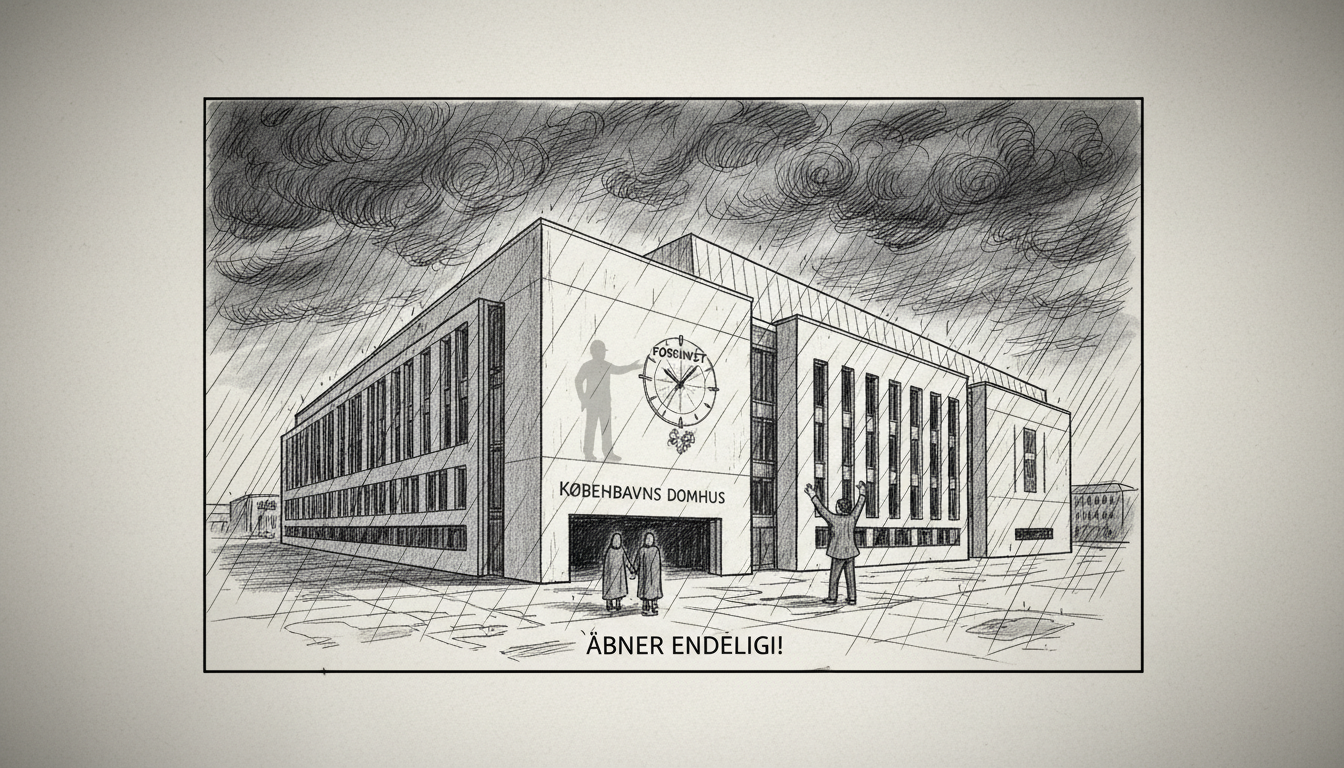
A new, specially secured courthouse in Copenhagen opened its doors this week after years of delays and construction problems. The building stands adjacent to Vestre Fængsel, Denmark's largest prison. A connecting tunnel now allows prison guards to escort detainees to court hearings without ever going outside. This change aims to streamline a critical part of the judicial process. The project was originally slated for completion several years ago but faced repeated setbacks. According to the latest government report, construction costs have soared to 178.9 million kroner. This figure substantially exceeds the initial 2019 estimate of 124.6 million kroner.
The Ministry of Transport cited numerous faults and deficiencies during construction. A dispute arose between the national building agency and the main project consultant. Perhaps the most persistent issue has been water damage. While the building stood empty, its basement was flooded, causing moisture damage to walls and floors. Repairs were completed, but the problem recurred during a heavy downpour. Water again infiltrated the lower level, and mold spores were later discovered in the ventilation ducts. These incidents highlight the challenges of major public infrastructure projects, even in a system known for its efficiency.
The new facility features two smaller courtrooms for initial hearings. These are used by the Copenhagen City Court and the Court of Frederiksberg for constitutional hearings concerning pre-trial detention. The basement houses a large, high-security courtroom designed for Copenhagen's most substantial cases. This room can accommodate up to 15 defendants. A glass wall separates the court proceedings from the public gallery for added safety. Most other court cases will continue to be held in the existing courthouses at Nytorv in central Copenhagen and on Frederiksberg. Some initial hearings may also still occur in the older buildings.
This opening arrives amid broader discussions about the Danish welfare system and its capacity. The judicial system is a core pillar of that social contract, guaranteeing rights and security. Delays and cost overruns in public projects can strain public trust and resources. The new courthouse's location and design reflect a continued focus on security and logistical efficiency within Danish legal proceedings. It represents a tangible investment in the physical infrastructure of justice. For international observers, it underscores how even well-functioning Nordic systems grapple with practical project management and budgetary control. The building's troubled journey from blueprint to reality serves as a case study in public administration.
Community leaders and legal experts often stress that integration and social cohesion rely on a perceived fair and functional justice system. Efficient court facilities contribute to timely legal processes, which affect everyone from local residents to new arrivals navigating Danish society. While this new building addresses a specific logistical need, its story is also one of ambition meeting reality. The final cost to taxpayers is significantly higher than planned, and the path to completion was marred by avoidable problems. The courthouse is now operational, but its legacy includes a record of delays and repairs that officials will hope to move past.