
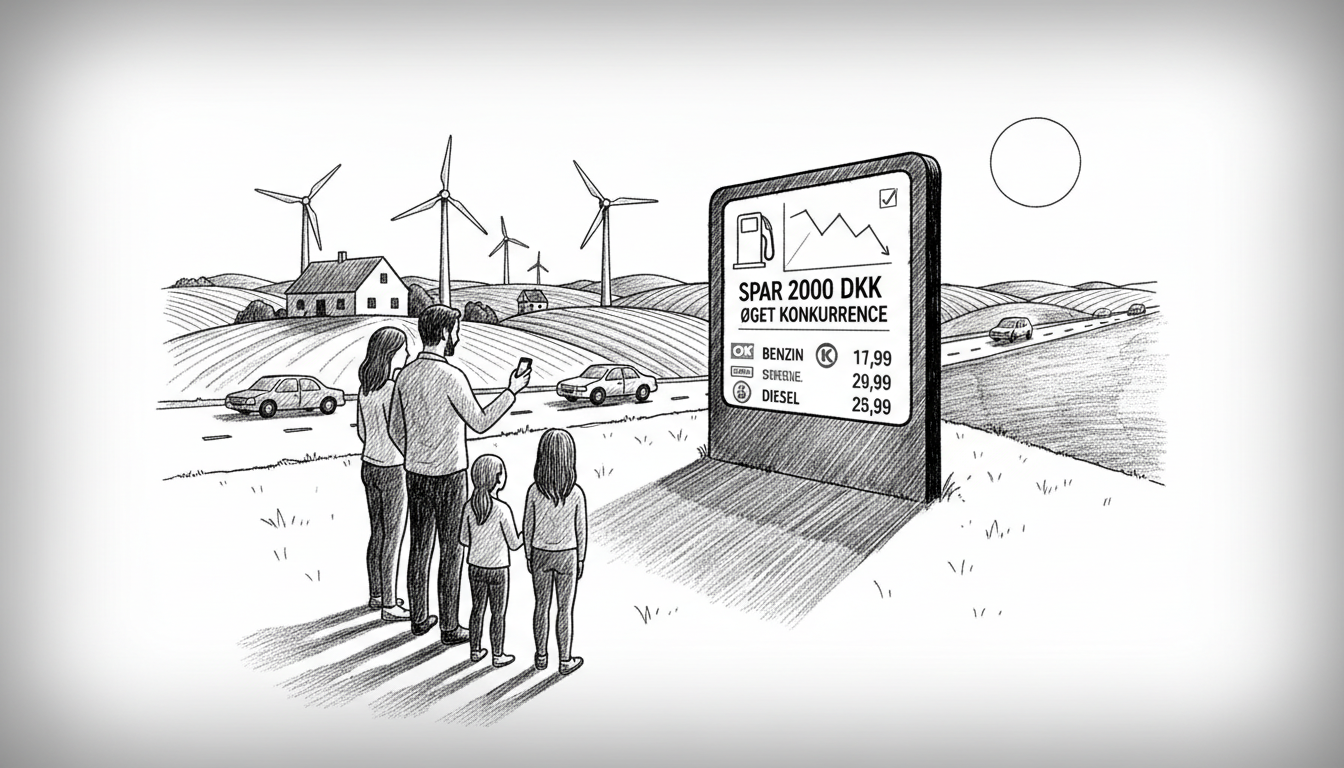
Danish drivers of petrol and diesel cars can expect new rules designed to create more competition at the pump. The changes, which took effect recently, aim to end a period of uniform pricing and help consumers find cheaper fuel. The government believes a typical two-car family could save around two thousand kroner annually. This policy shift reflects a broader conversation about consumer protection and market dynamics within the Danish welfare model, where fair pricing is a cornerstone of social trust.
The core problem identified by authorities was a lack of local competition. For several years, following a significant drop in demand, prices remained nearly identical from one station to the next. One dominant market player largely set the price, and other companies followed its lead using published guide prices. This practice is now prohibited. Companies can no longer announce guide prices in advance, a move intended to prevent coordinated pricing strategies.
A second major change requires all stations to publish their current, local pump prices online via a website or app. This transparency is meant to empower consumers, eliminating the need to drive around to compare costs. The Minister for Industry stated the goal is simply to create more competition in a market where it has been absent. He emphasized that the only beneficiaries of the current system are large multinational corporations.
Consumer advocates see this as a step in the right direction. A chief economist with Denmark's major motoring organization noted that without competition, consumers pay a premium. He drew a direct comparison to the electric vehicle charging market, which already features vigorous competition and widely varying prices based on location and provider. The hope is that the traditional fuel market will begin to resemble this more dynamic landscape. The official clarified that these measures do not conflict with national goals to transition people to electric vehicles, arguing the alternative is continued non-competition.
The context for this intervention is crucial. Danish integration and social policy often focuses on creating equitable systems, and consumer markets are no exception. When competition fails, it is seen as a policy failure that disproportionately affects all residents, including those navigating the complexities of a new society. The government's direct action here mirrors its hands-on approach in other social spheres, from housing to education, aiming to ensure the system works for everyone. This move also comes after recent increases in fuel excise duties, primarily tied to inflation, with an extra hike for diesel to reduce CO2 emissions. The policy landscape is clearly trying to balance environmental goals, economic realities, and consumer fairness.
What does this mean for daily life in Copenhagen and beyond? For families budgeting tightly, potential savings are meaningful. For new residents learning the rhythms of Danish society, transparent pricing reduces a layer of complexity. The success of this policy will be measured not just in kroner saved but in whether it genuinely restores a competitive, fair market for a essential commodity. It is a practical test of the state's ability to correct market failures for the benefit of its citizens.