
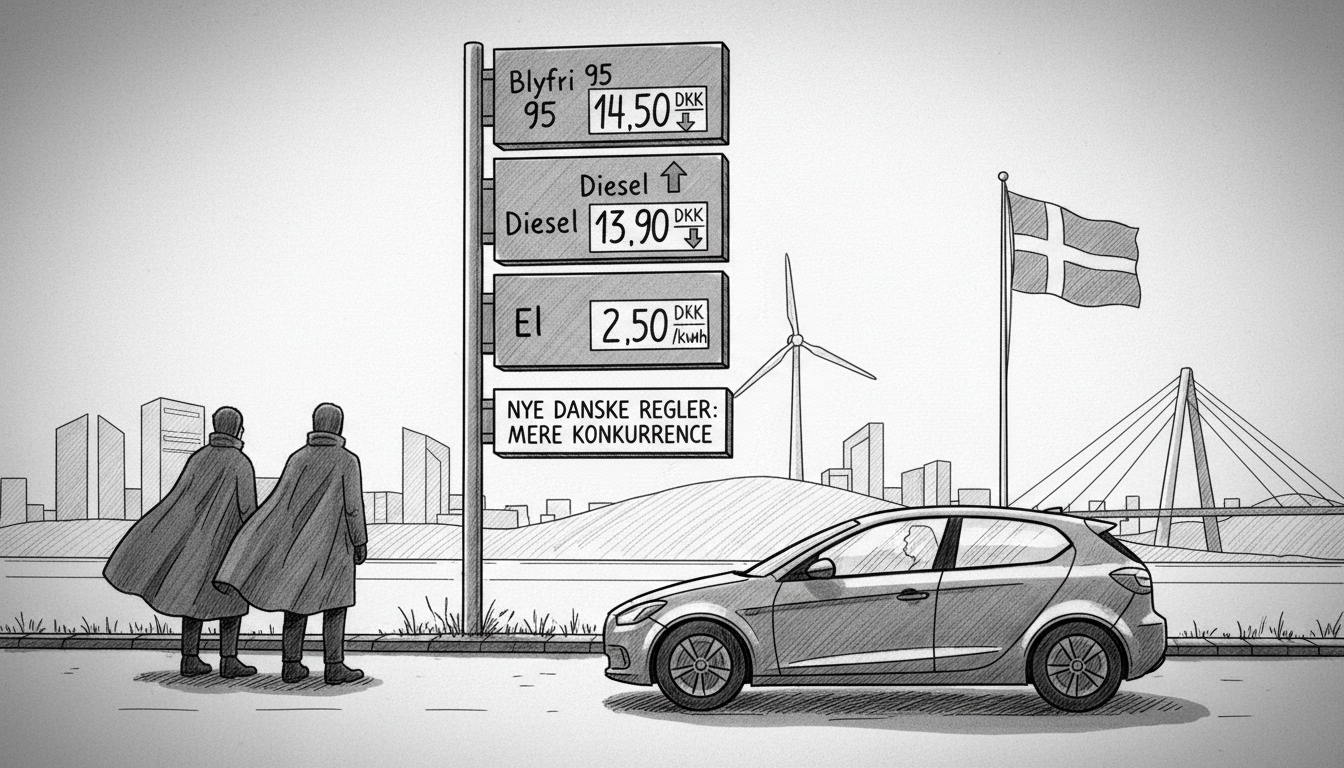
Danish drivers may soon see more variation in fuel prices across the country. New government rules taking effect in December require gasoline and diesel companies to publish their current pump prices both at the station and online. This move aims to reintroduce dynamic pricing and greater competition after years of uniform national rates. The change responds to widespread confusion among motorists who have questioned the identical pricing from Copenhagen to rural Jutland.
Ilyas Dogru, a consumer economist with the Danish Motorists' Federation, explained the recent market stagnation. He said demand for fuel dropped sharply during the pandemic. Prices then became largely fixed across regions. Many federation members have contacted the organization expressing bewilderment. They do not understand how gasoline prices can be the same in the east and west, the north and south. Dogru expects a return to a world where prices change according to competitive conditions.
The Danish Ministry of Industry estimates the new transparency could save households up to 2000 kroner annually for two-car families. Single-car households could save around 700 kroner. The policy shift represents a classic Danish regulatory approach. It uses information transparency to correct market inefficiencies for consumer benefit. This reflects broader social policy trends where the state intervenes to ensure fair market functioning, a principle deeply embedded in the welfare model.
For years, prices have largely followed one leading company's suggested rates. Station signs across the nation have shown identical numbers. Changes often occurred simultaneously nationwide. The new mandate requires companies to disclose real-time consumer prices digitally. Individual drivers will always find station prices online, perhaps on a website or in an app. This creates immediate price comparison capability previously absent.
The implications extend beyond simple consumer savings. Increased price competition could affect station viability in different municipalities. It may alter driving patterns as motorists seek cheaper fuel. The policy also tests the balance between market freedom and consumer protection in Denmark's mixed economy. Similar transparency rules exist in other Nordic countries for various services, aligning with regional trust in open data.
This development connects to larger conversations about cost of living and integration. For new residents and international communities in Copenhagen and Aarhus, understanding local price mechanisms is part of societal navigation. Fluctuating fuel costs impact commuting budgets for all, including those navigating the Danish welfare and tax system. The government's direct intervention shows its ongoing role in managing everyday economic life, a hallmark of the Danish social contract.