
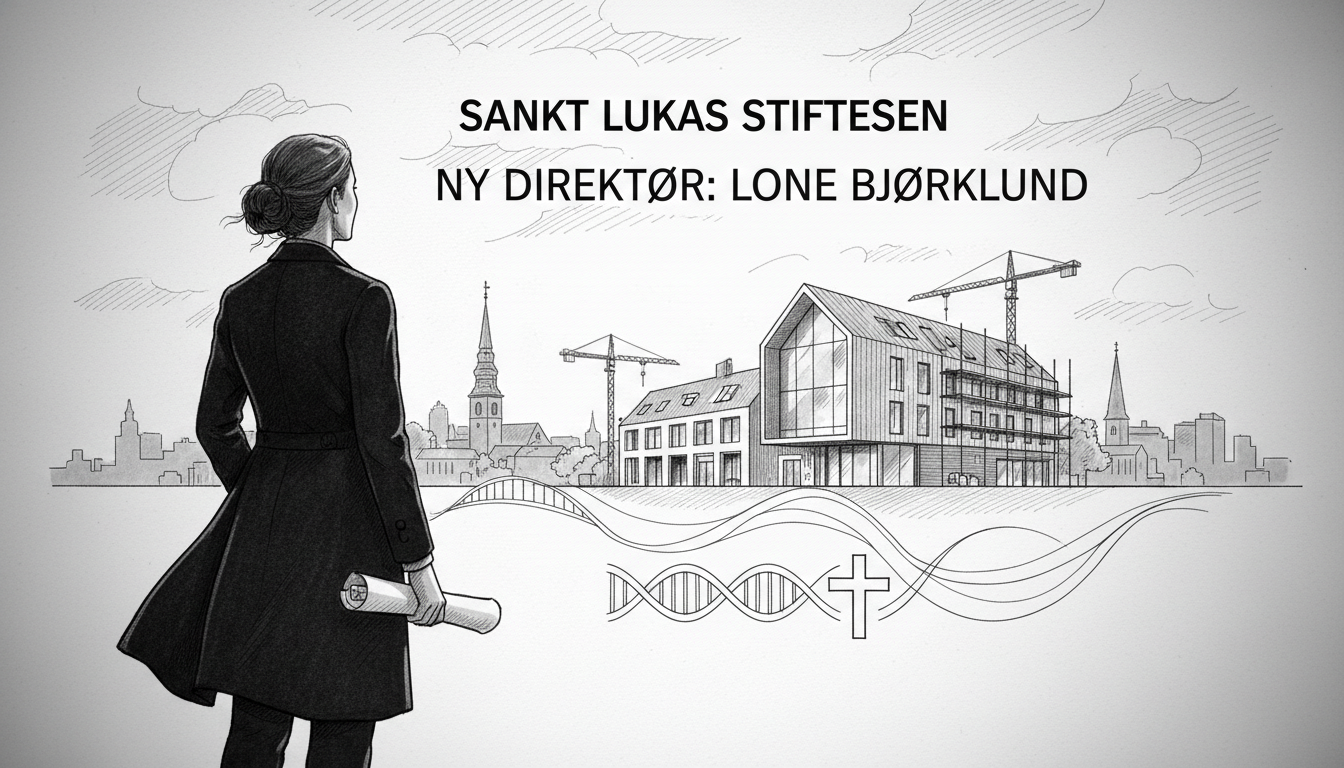
A major Danish social welfare institution has appointed a new leader to guide its future development. Lone Bjørklund will become the director of Sankt Lukas Stiftelsen, moving from her role as deputy director of psychiatry for the Capital Region of Denmark. Her immediate task involves overseeing the construction of a brand new palliative care center. This leadership change signals a strategic shift for one of Copenhagen's key healthcare and social service providers. It reflects broader trends in Danish society news where specialized expertise is increasingly sought to manage complex public-private welfare partnerships.
The appointment connects directly to ongoing debates about Copenhagen integration and the capacity of the Danish welfare system. Sankt Lukas Stiftelsen operates at the intersection of healthcare, social care, and community support. Its services often touch the lives of vulnerable citizens, including elderly residents and those with chronic illnesses. The choice of a leader with a psychiatry background from the regional health authority is telling. It suggests a focus on holistic patient and family support, which is a growing priority in Denmark social policy. Municipalities across the country are grappling with how to deliver dignified end-of-life care within budgetary constraints.
Lone Bjørklund's experience in the Capital Region's psychiatry system provides her with critical insights. She understands the administrative challenges of large public health organizations. Officials close to the process stated she was the right person to lead the foundation into an exciting future. This phrase, often used in Danish institutional announcements, typically indicates a candidate chosen for both managerial skill and visionary capacity. Her first major project, the new palliative center, will be a concrete test of that vision. Such facilities require careful planning to meet both medical needs and the human desire for comfort and peace.
This story matters beyond a single personnel change. It is a small window into how Denmark immigration policy and demographic changes pressure social services. An aging population increases demand for palliative and long-term care. At the same time, integrating new citizens into the workforce that provides this care is a constant challenge. Statistics on integration often show gaps in employment within the healthcare sector for certain immigrant groups. Effective leadership in foundations like Sankt Lukas is crucial for modeling good practice. They can create inclusive workplaces that reflect Copenhagen's diversity while maintaining high service standards.
The move also highlights the role of large charitable foundations within the Danish model. Unlike many countries, Denmark has a robust tradition of privately-endowed stiftelser (foundations) performing public functions. They complement state and municipal services, often with more flexibility. Their leadership decisions can influence national policy directions. When such an institution invests in a major new palliative care center, it sets a benchmark. Other municipalities and regions take note. The success or failure of this project under the new director will be watched closely by community leaders and policy makers across the social care landscape.
In practical terms, what can Copenhagen residents expect? The new palliative center will likely aim to provide a modern, humane environment for end-of-life care. It may incorporate design principles that reduce institutional feel and increase access to nature and family space. For international observers, this is a classic example of the Danish welfare system in evolution. It is not just about state provision, but about strategic partnerships across public, private, and charitable sectors. The appointment of a public health manager to lead a private foundation blurs those lines in a productive way. It suggests a focus on practical outcomes over organizational silos, which is a necessary step for addressing complex social needs.