
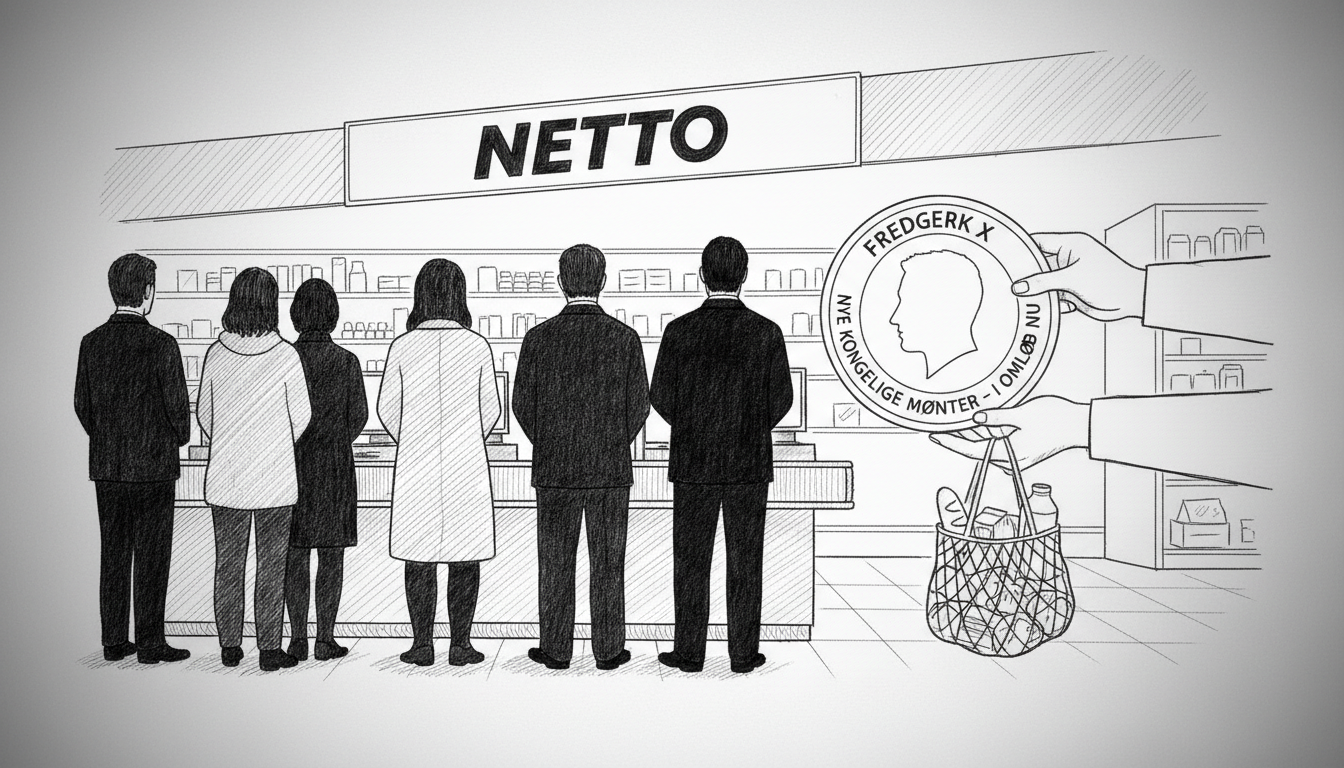
Two Netto supermarkets in Denmark have become the first points of public access for the nation's newly minted royal coins. The coins, featuring King Frederik X and the distinctive octagonal shape, entered circulation this week. The logistics firm Nokas distributed the currency from the central bank to retailers across the country. A special arrangement placed the coins directly into the cash registers at a store in Brøndby, near Copenhagen, and another in Harlev, in eastern Jutland. This means customers receiving change could immediately get the new coins. Other shops that received shipments may have locked them away. They will only enter their tills when existing coin stocks run low and require replenishment.
This quiet rollout in everyday supermarkets is a characteristically Danish approach to a national event. It grounds a symbolic act of state—the introduction of new regal currency—in the mundane reality of grocery shopping. For many residents, especially new arrivals, such moments offer subtle lessons in national identity. The coins are not just monetary instruments but cultural tokens. Their design, featuring the new monarch, marks a tangible transition in the country's modern history. The choice of common discount supermarkets as the first distribution points is also telling. It ensures the coins reach a broad, socio-economically diverse cross-section of the public quickly and without fanfare.
The integration of such symbols into daily life is a quiet, persistent process. It happens at the cash register, in the pocket, and in the hand. For international observers and Denmark's immigrant communities, these small details form part of the broader tapestry of Danish society and its welfare system. The state's presence is often felt through these practical, understated channels. The central bank manages the money supply, a logistics company handles distribution, and local supermarkets become the interface with the citizen. This efficient, decentralized model reflects a deep trust in public and private systems working in tandem. It is a system that often functions so smoothly its mechanisms become invisible.
Yet, the practical rollout also highlights a digital divide. The news is most relevant to those who still use physical cash, a group that includes some elderly residents and segments of the population less integrated into the digital economy. While card and mobile payments dominate in Copenhagen and other urban centers, cash remains vital for some. The accessibility of new national symbols, therefore, depends partly on one's payment habits. This is a small but real aspect of social inclusion. The municipal social centers and community groups that work on integration often stress the importance of understanding these everyday systems. Knowing how to navigate banking, currency, and commerce is a fundamental part of building a life in Denmark. The arrival of a new coin, for some, is a conversation starter about history, value, and belonging.
What happens next? The coins will slowly spread through the economy as more stores restock their tills. Collectors may seek out the specific Netto locations, but for most Danes, the coins will appear naturally in their change over the coming weeks and months. The process is gradual, systematic, and designed for minimal disruption. It is a small change that carries the weight of a new era, distributed not with ceremony, but with the simple efficiency of a grocery transaction. This blend of symbolism and practicality is a hallmark of Danish social policy, where even national updates are often channeled through familiar, local institutions.