
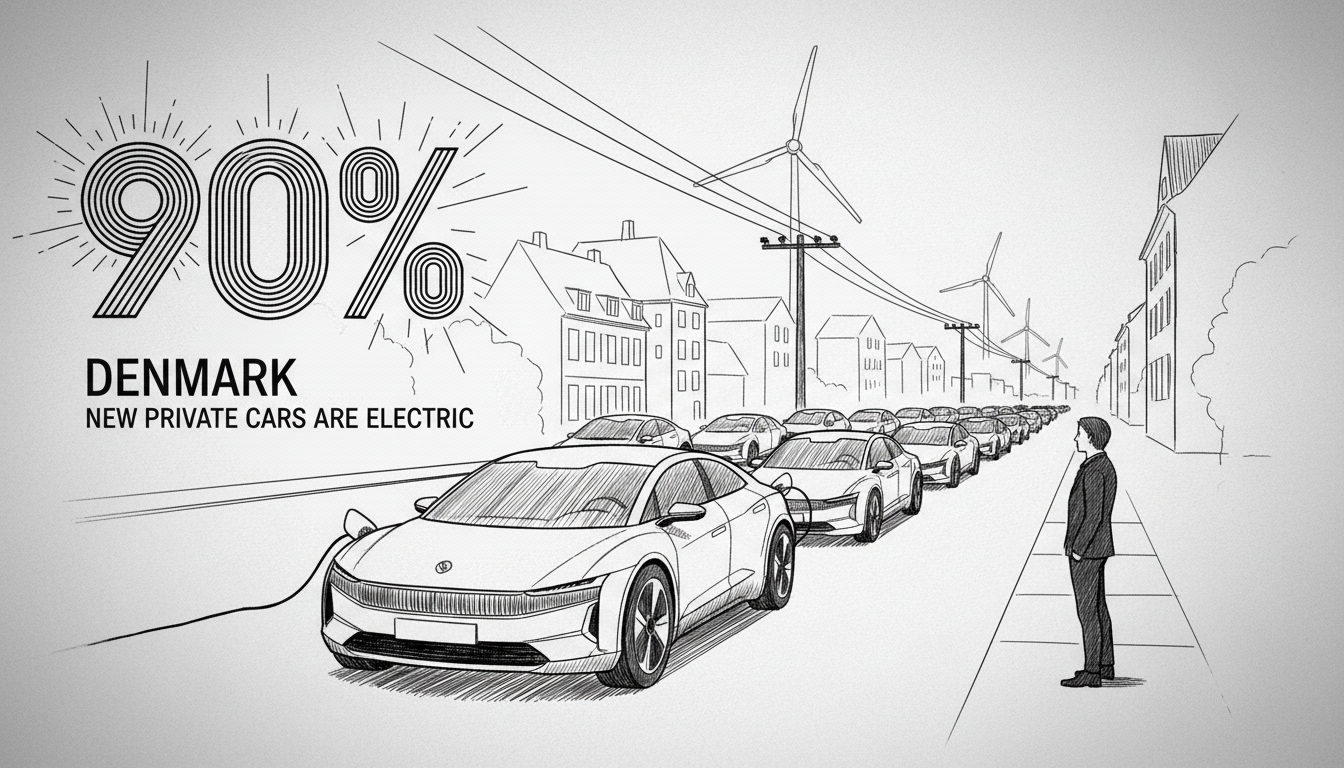
The Danish car market is accelerating toward a record year, with electric vehicles now dominating private purchases in a profound shift. New figures show that in November, nine out of every ten new cars bought by private individuals were electric. This surge confirms a broader national trend toward electrification, reshaping both consumer habits and the country's environmental footprint.
A total of 15,910 new passenger cars were registered in November, a 6.6 percent increase from the same period last year. For the year to date, registrations have surpassed 166,000 vehicles. The director of the industry association Mobility Denmark noted the solid momentum, expecting a strong finish to the year. The overall share of electric vehicles reached 73.7 percent of all new registrations in November, up from 70.6 percent in October.
This transformation is not just about consumer choice. It is deeply intertwined with Danish social policy and economic planning. The recent political agreement on car taxes played a crucial role. It delayed a planned increase in electric vehicle taxes, removing a major uncertainty for buyers. This clarity from policymakers gives consumers better conditions to make long-term decisions, directly linking state fiscal policy to everyday household economics.
For international observers, this rapid adoption offers a case study in effective incentive structures. Denmark's high registration taxes have long made car ownership expensive, but generous tax breaks for electric vehicles have flipped the script. The most popular models in November—the Skoda Enyaq, Volkswagen ID.4, and Audi Q4 e-tron—carry price tags from approximately 250,000 to 350,000 Danish kroner. Notably, Tesla, once the dominant force, has slipped to seventh place on the top-ten list, indicating a more diversified and competitive market.
The implications extend beyond the showroom. This shift pressures the national infrastructure, from charging networks in Copenhagen neighborhoods to power grid capacity in smaller municipalities. It also reflects a societal consensus on climate action, a key pillar of the Danish welfare model that prioritizes long-term collective benefits. If the current trend continues, industry analysts project Denmark will register its one-millionth electric vehicle within the next few years.
This move toward electric transport aligns with broader Danish integration and social policy goals. Reliable, affordable personal transport is a key factor for social mobility and access to education and employment, especially in suburban and rural areas. The data suggests that green technology is becoming mainstream, not a niche luxury. The real test will be ensuring the transition is inclusive, supporting all segments of Danish society as the country drives toward a fossil-free future.