
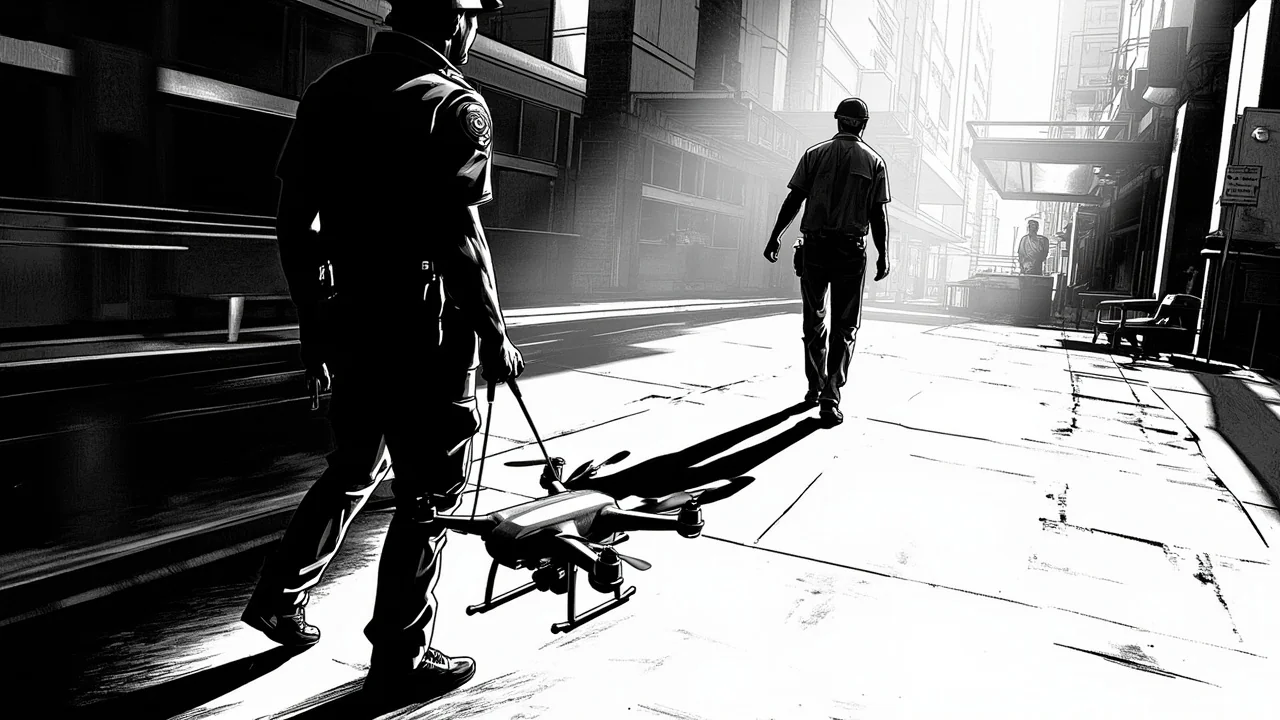
Norway's mandatory reporting clause 5.2 led to the police seizure of a drone and the charging of a foreign tourist at Alta Airport in Finnmark on Monday. The incident, which triggered a police response after a 13:25 alert, involved flight activity within the airport's restricted zone that disrupted air traffic.
Operational leader Øyvind Johnson Holsbrekken confirmed the pilot was a foreign tourist. "The nature of the flight was such that it disturbed the air traffic in and out of Alta Airport," Holsbrekken said in a statement. Police charged the individual and confiscated the drone. Airport operations continued normally throughout the incident.
The Incident and Immediate Response
Finnmark Police District dispatched officers to Alta Lufthavn following the report of unauthorized drone activity. The response falls under strict national aviation security protocols. Air traffic controllers detected the drone within the protected perimeter, a zone where all unmanned aircraft flights are prohibited without explicit permission from aviation authorities.
"The pilot is a foreign citizen, a tourist," Holsbrekken reiterated, underscoring the commonality of such incidents involving visitors unfamiliar with Norwegian regulations. The police intervention was swift, resulting in the immediate grounding of the device and the formal charging of the individual under Norwegian aviation law.
Norway's Drone Regulations and Enforcement
This event highlights the active enforcement of Norway's comprehensive drone legislation. The rules, governed by the Civil Aviation Authority, establish no-fly zones around all airports with a radius that often extends several kilometers. The primary law invoked in such cases is the Regulations concerning the operation of unmanned aircraft, which carries significant penalties for violations that compromise aviation safety.
Authorities do not distinguish between recreational and commercial drones in these protected areas, all flights are banned. The legislation is designed to prevent catastrophic collisions, with even a small drone posing a severe risk to aircraft during takeoff and landing phases. Police across all districts are authorized to seize equipment on the spot when a clear violation is observed.
A Recurring Challenge in the North
The Alta incident is not isolated. Northern airports, particularly those serving major towns and tourist destinations like Alta, which is a gateway to the Finnmark plateau, frequently deal with such breaches. The region's popularity for Northern Lights tourism and dramatic landscapes attracts visitors who may inadvertently or deliberately fly drones for photography.
Local police have repeatedly issued warnings and conducted information campaigns, especially during peak tourist seasons. The message is clear: flying a drone near an airport is a serious criminal offense. The consequences extend beyond a fine, a criminal charge can impact a tourist's ability to re-enter the Schengen area.
The Broader Safety Implications
Aviation experts consistently warn that a drone strike on a passenger aircraft could have devastating consequences. The kinetic energy of a collision, even with a lightweight consumer drone, is immense at aircraft speeds. Critical systems like jet engines are particularly vulnerable to damage from ingested debris.
This safety rationale is why the response is so immediate and the penalties are structured to be deterrents. Air traffic disruption, as confirmed in this case, is a direct threat to schedule integrity and, more importantly, forces pilots to take evasive action or abort landings, creating additional risk.
What the Law Prescribes for Violators
Individuals charged under the unmanned aircraft regulations face a legal process that typically begins with an on-site fine or a summons to report to the police for formal charging. The confiscation of the drone is standard procedure and the device is held as evidence. Convictions can result in substantial fines and, in severe or repeated cases, imprisonment.
The law grants authorities wide discretion in prosecution, with the severity of the punishment often linked to the potential risk created. Interfering with scheduled air traffic, as happened at Alta, is considered an aggravating factor that strengthens the prosecution's case.
A Warning to All Visitors
The police action in Alta serves as a direct warning to all visitors and residents in Norway. Ignorance of the law is not considered a valid defense. Before operating any drone, individuals must consult the official drone map provided by the Civil Aviation Authority, which clearly delineates all restricted zones in real-time.
For tourists, the responsibility lies in checking these regulations upon arrival. Many rental companies are required to provide safety information, but the ultimate legal responsibility rests with the pilot controlling the device. The Alta case demonstrates that enforcement is nationwide, reaching even the remote northern airports.