
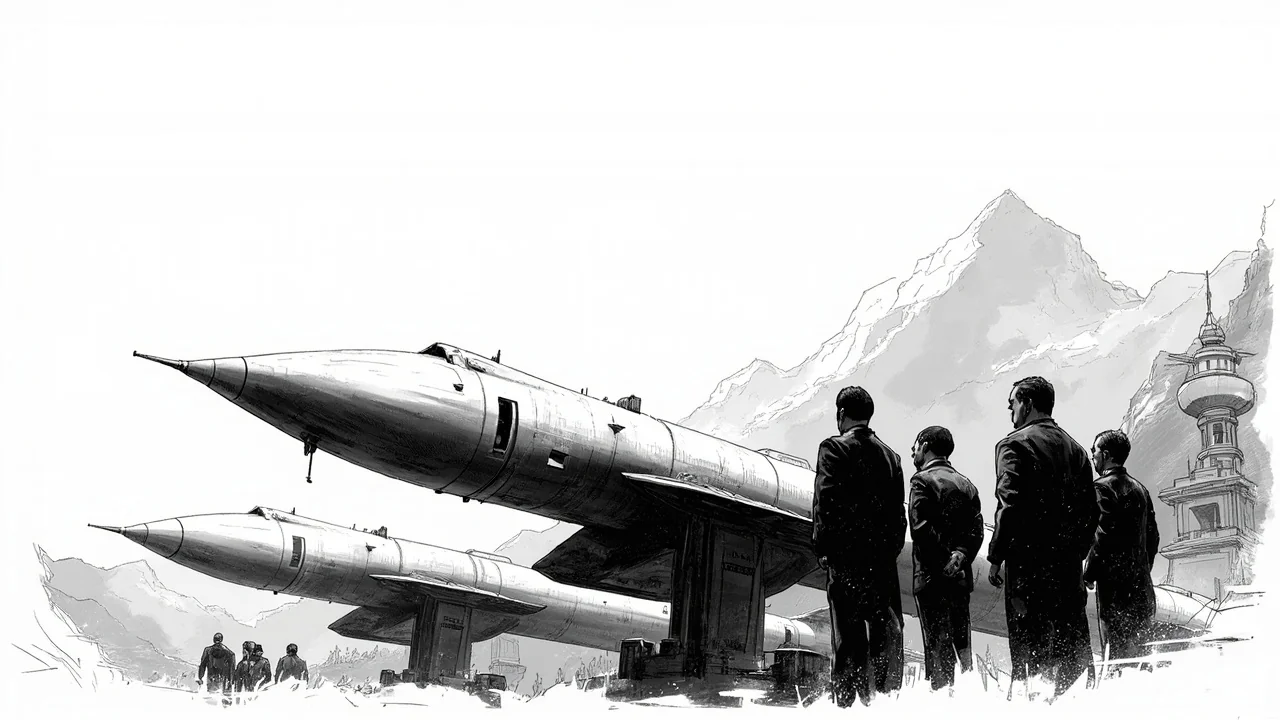
Norway's Parliament has approved a 19 billion kroner deal to purchase long-range missile systems from South Korea, creating a new strategic capability for the nation's army. A majority coalition in the Storting voted in favor of the government's proposal, overriding opposition from parties that wanted a European supplier.
A New Long-Range Strike Force
The approved systems, with a range of roughly 500 kilometers, represent a significant escalation in Norway's conventional firepower. Peter Frølich of Høyre, who acted as the committee's lead on the matter, described them as "likely the most powerful weapon systems procured in Norwegian history." He stated the missiles provide Norway the ability to strike deep into an adversary's territory to destroy bases, supply lines, and troop concentrations. "An enemy must think twice before they choose to attack us," Frølich said in an email statement.
The government aims to sign the contract with South Korea's Hanwha Aerospace, the country's largest defense contractor, before the end of January. The army plans to introduce the new system starting in 2029. The deal also includes provisions for industrial cooperation agreements with the supplier.
Political Divide Over European Defense
The parliamentary majority consisted of the Labour Party, the Progress Party, the Conservatives, the Red Party, the Green Party, and the Liberal Party. The minority—comprising the Socialist Left Party, the Centre Party, and the Christian Democratic Party—argued for a European alternative but was outvoted.
Arild Hermstad of the Green Party expressed relief at the outcome. "I am glad there is a majority for the government's proposal. It is South Korea that can deliver the best solution for long-range precision fire. A new competition now would lead to major delays. If the Storting is to micromanage the government's choice of supplier, the defense agreement could become a defense shipwreck," Hermstad said.
Opposition voices criticized the decision for undermining European defense industrial cooperation. Jonas Andersen Sayed of the Christian Democratic Party argued the government was breaking its own security promises. "Here we have a European initiative that works, that other allies will use, which could provide opportunities for the Norwegian defense industry and strengthen the bilateral cooperation with Germany regarding missiles. That opportunity we are now missing out on," Sayed said. He added that the majority "glosses over the fact that it is nine times farther from Oslo to Seoul than from Oslo to Berlin, and that Norway also has a strong interest in Europe building industrial capacity within a critical military capability."
Linked to Submarine Budget Surge
The missile vote was part of a larger defense spending package approved by lawmakers. The Storting also agreed to increase the cost frame for new submarines by 46.5 billion kroner, bringing the total budget for the submarine program to nearly 98.5 billion kroner. This follows a previous parliamentary approval to expand the submarine fleet investment from four to six new vessels. The twin decisions signal a substantial concurrent investment in both long-range land-based strike capabilities and maritime subsurface warfare, reflecting a broad modernization push for the Norwegian Armed Forces.