
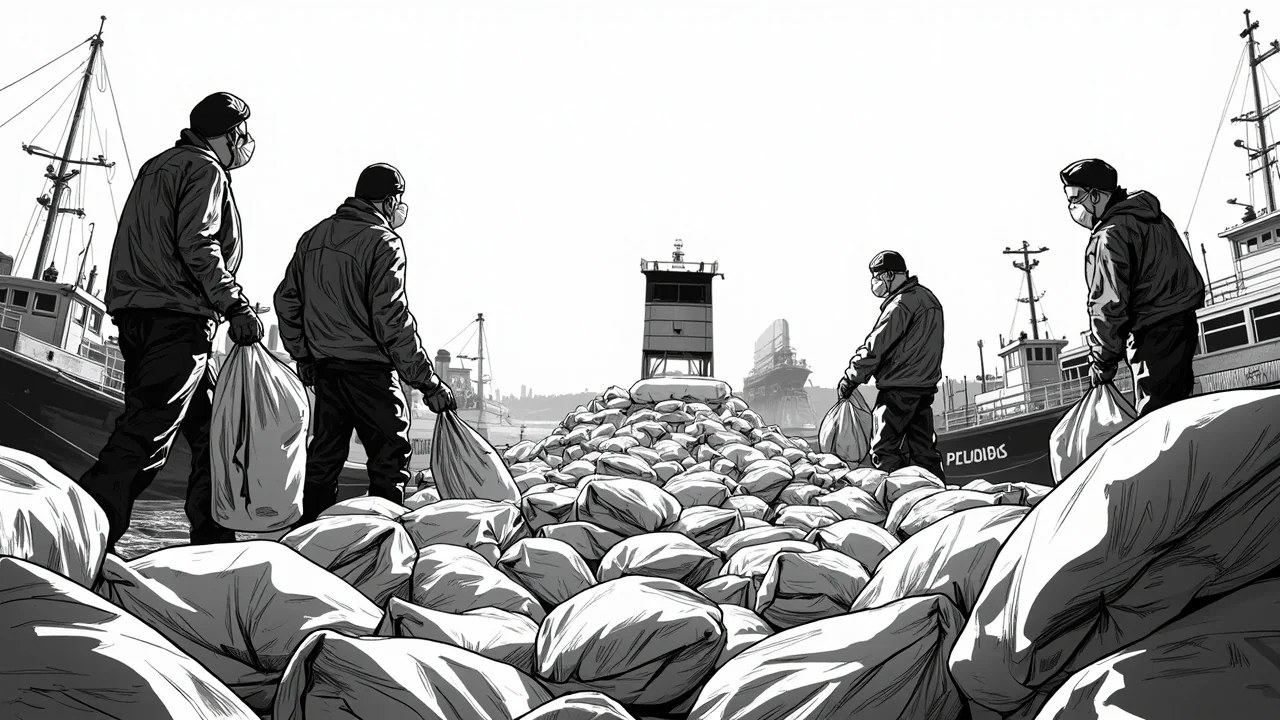
Norwegian authorities seized 404 kilograms of cocaine last year, the second-largest annual haul on record and a clear signal that the drug is establishing a firm foothold in the country. The total, documented in the Norwegian National Criminal Investigation Service's (Kripos) annual narcotics statistics, marks a profound shift in a market long dominated by cannabis. Excluding the anomalous year of 2023, which saw the four largest single seizures in history, 2024's figure is the highest ever recorded.
A Dramatic Shift in the Drug Market
Cocaine now accounts for 11 percent of all drug seizures nationwide, a sharp increase from just 5 percent in 2019. This rise is not merely statistical. It represents a tangible expansion of the cocaine trade, reflected in 2,146 separate seizures across the country. Kripos chief Kristin Kvigne stated the trend has moved the substance from the margins to the mainstream of Norway's illicit drug scene. "Cocaine is no longer a marginal intoxicant, but a substance that is seized frequently and in large quantities," Kvigne said.
While cocaine's market share grows, cannabis remains the most prevalent illegal drug. Last year, police confiscated 5,434 kilograms of hashish, marijuana, and cannabis plants in 7,005 seizures. The 2,144 kilograms of marijuana and plants seized is roughly double the amount from the previous year, making 2024 the second-largest year for cannabis seizures since 1995.
| Substance | Amount Seized (2024) | National Share of Seizures | Trend vs. 2019 |
|---|---|---|---|
| Cocaine | 404 kg | 11% | More than doubled (from 5%) |
| Cannabis (Total) | 5,434 kg | Remains dominant | Significant increase in plant material |
| Marijuana & Plants | 2,144 kg | N/A | Approximately double 2023 volume |
Oslo: The Epicenter of the Cocaine Trade
The capital city stands out as the epicenter of this worrying trend. In Oslo, cocaine constitutes 18 percent of all narcotics seizures, making it the second most frequently seized drug after cannabis. This concentration suggests a robust and open retail market within the city, driven by demand that appears to be growing despite high prices and severe legal penalties. The data indicates that cocaine trafficking and consumption are becoming normalized in urban centers, presenting a complex new challenge for law enforcement in the Oslo police district.
The sheer volume and frequency of seizures point to intensified smuggling efforts targeting Norway. The methods of importation—whether through major ports like Oslo, Bergen, or Kristiansand, or via land borders—are likely evolving to meet this increased flow. Authorities have not specified the primary routes, but the distributed nature of the 2,146 seizures suggests successful interdiction at multiple levels, from large-scale maritime shipments to street-level distribution networks.
The Policy and Enforcement Challenge
For policymakers at the Storting and law enforcement leaders, these figures present a stark challenge. Traditional interdiction strategies, while yielding record quantities, are not curbing the overall supply. The debate will inevitably turn toward the effectiveness of Norway's overall drug policy model in the face of such persistent and adapting markets. Questions will be asked about whether current resources are correctly balanced between border interception, domestic policing, and harm reduction initiatives.
The regional concentration in Oslo will require a tailored police response, but the national spread of seizures indicates the problem is not confined to the capital. This nationwide distribution complicates enforcement, demanding coordinated strategy across police districts and sustained cooperation with international partners to target trafficking networks at their source.
The coming year will be a critical test. If 2024's figures represent a new baseline rather than a peak, it will confirm that cocaine has irrevocably carved out a major segment of Norway's drug market. The central question for authorities is whether they can adapt their tactics to reverse this entrenched trend, or if they are merely documenting the growth of a new and troubling status quo.