
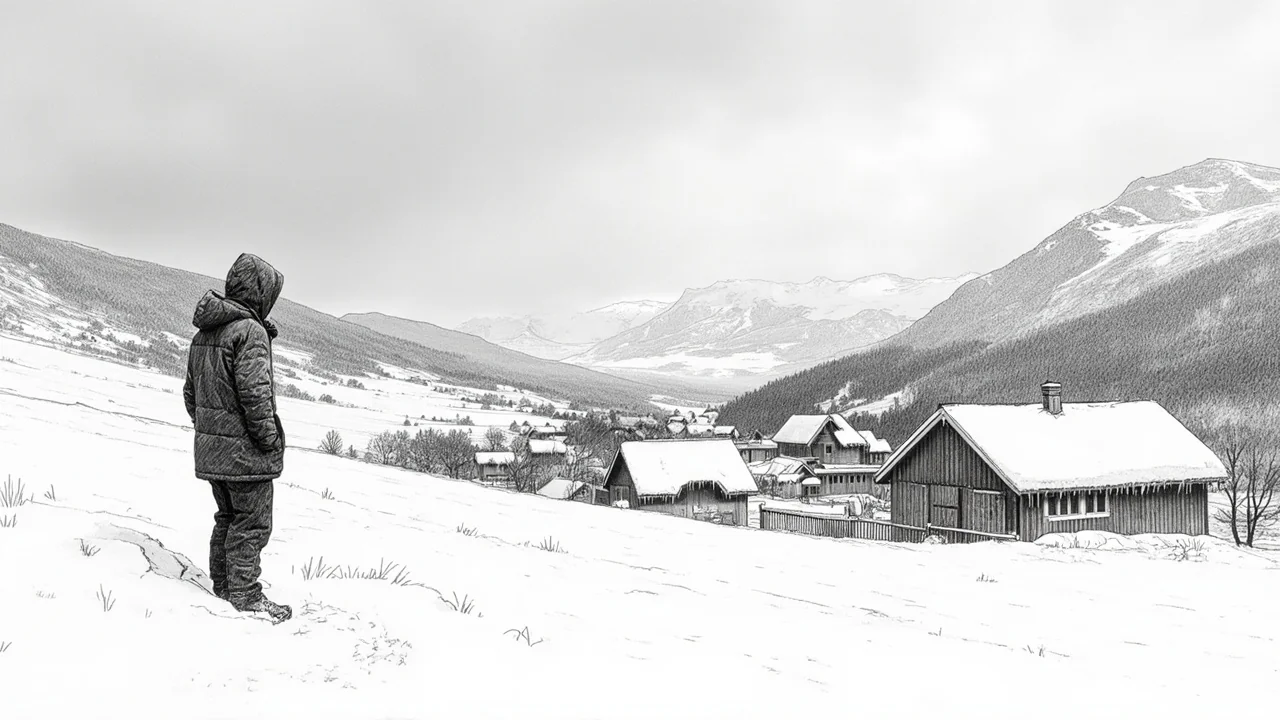
Norway's Folldal commune recorded the country's lowest temperature at -34 degrees Celsius on Sunday, marking a severe cold snap that has gripped vast regions. The reading, taken in the Innlandet county municipality, underscores a persistent winter pattern with high-pressure systems bringing dry, frigid air across mainland Norway. Deputy Mayor Tommy Kristiansen of Folldal acknowledged the chill but noted residents are well-accustomed to such conditions. 'It is cold, yes! But also fine, with dry and clear air,' Kristiansen said in a statement. He described the winter as stable and fine so far this year, with excellent skiing conditions and stunning mountain views. By Sunday afternoon, temperatures had moderated slightly, remaining in the minus twenties, but the deep freeze had already set records.
Record Low in Folldal
Folldal's -34.2 degree Celsius measurement was the coldest point in Norway on Sunday, according to the Meteorological Institute. Meteorologist Per Egil Haga confirmed the data, stating that winter temperatures are prevalent across most of mainland Norway. 'The places where we have had the lowest temperatures today are north in Gudbrandsdalen, north in Østerdalen, and in Trøndelag,' Haga said. Folldal, a municipality known for its high-altitude location in the mountains, frequently experiences extreme cold, but this reading highlights the intensity of the current weather system. Kristiansen expressed no surprise, noting that locals are prepared for such cold spells. 'We are used to cold like this. Most are prepared and know they must be more careful, and keep an eye on water and such things. Winter is going its usual way,' he said. Residents rely on traditional methods to stay warm, such as burning wood in fireplaces and eating hot, hearty meals like bacalao.
Nationwide Freeze Extends
Beyond Folldal, several other locations reported near-record lows, indicating a widespread freeze. Røros, Tynset, and Mo i Rana all experienced similarly frigid temperatures, with readings close to the -34 degree mark. Haga emphasized that the cold is biting across many parts of the country and is expected to persist. 'Winter is biting from many places in the country. And it looks like it will continue to do so in the week ahead of us,' he said. The meteorological outlook points to a high-pressure dominated weather pattern, which typically brings clear skies and cold conditions due to radiative cooling. This pattern is set to affect entire regions, with particularly cold forecasts for Eastern Norway, Western Norway, Trøndelag, and northern areas. Haga added that some snow replenishment is possible in Eastern Norway and parts of Northern Norway, while Western Norway and Trøndelag may see dry and cold conditions.
Meteorological Outlook and Stability
The current winter weather is projected to linger until mid-February, driven by stable high-pressure systems. Haga described the situation as 'relatively stable,' with cold, dry, and wintery conditions prevailing. 'It looks like this high-pressure-prone, cold, dry, and wintery weather type will be with us all the way until the middle of February,' he said. However, variations exist, for instance, cloud cover in Eastern Norway could act as a thermal blanket, preventing the most extreme cold spikes. 'Clouds almost lay like a warming blanket in the atmosphere,' Haga explained, reducing the risk of 'burst cold' or sudden deep freezes. This detailed forecast helps residents and authorities plan for continued cold, ensuring infrastructure like water pipes and transportation networks are monitored. The persistence of such weather aligns with typical Norwegian winter patterns, but the specific intensity in Folldal and neighboring areas draws attention due to the record-low readings.
Human Adaptation and Winter Life
In Folldal and other cold spots, daily life adapts seamlessly to the harsh conditions. Kristiansen highlighted the community's resilience, with activities like skiing thriving due to good snow conditions. 'It is fine to go skiing at the moment, with good conditions. We live up in the mountains and have a fantastic view,' he said. This adaptability is rooted in Norway's cultural embrace of winter, where outdoor pursuits remain popular despite temperatures. The deputy mayor's comments reflect a broader Norwegian attitude toward winter: preparedness and enjoyment go hand-in-hand. Practical measures, such as using wood stoves and consuming warm foods, are common nationwide during cold snaps. Moreover, the stability of the winter so far—without severe storms or unpredictable shifts—has allowed for consistent routines, from commuting to recreational skiing. This normalcy amidst cold underscores the region's infrastructural and social readiness for winter extremes.
Broader Implications and Regional Focus
While this is a weather story, the cold snap has indirect ties to Norway's energy and Arctic contexts. Cold temperatures increase domestic energy demand for heating, potentially impacting hydroelectric and oil-based energy systems, though the source material does not specify this. Geographically, the affected areas like Folldal, Gudbrandsdalen, and Østerdalen are inland valleys prone to temperature inversions, where cold air pools in low-lying areas. The Meteorological Institute's focus on these regions aligns with historical cold patterns in Norway's interior. As the freeze continues, monitoring by agencies like the Meteorological Institute will be crucial for public safety, especially in remote communities. The forecasted stability suggests no immediate crises, but vigilance is maintained for vulnerable populations. Norway's experience with Arctic climates informs its response, making such cold events a routine part of seasonal transitions.