
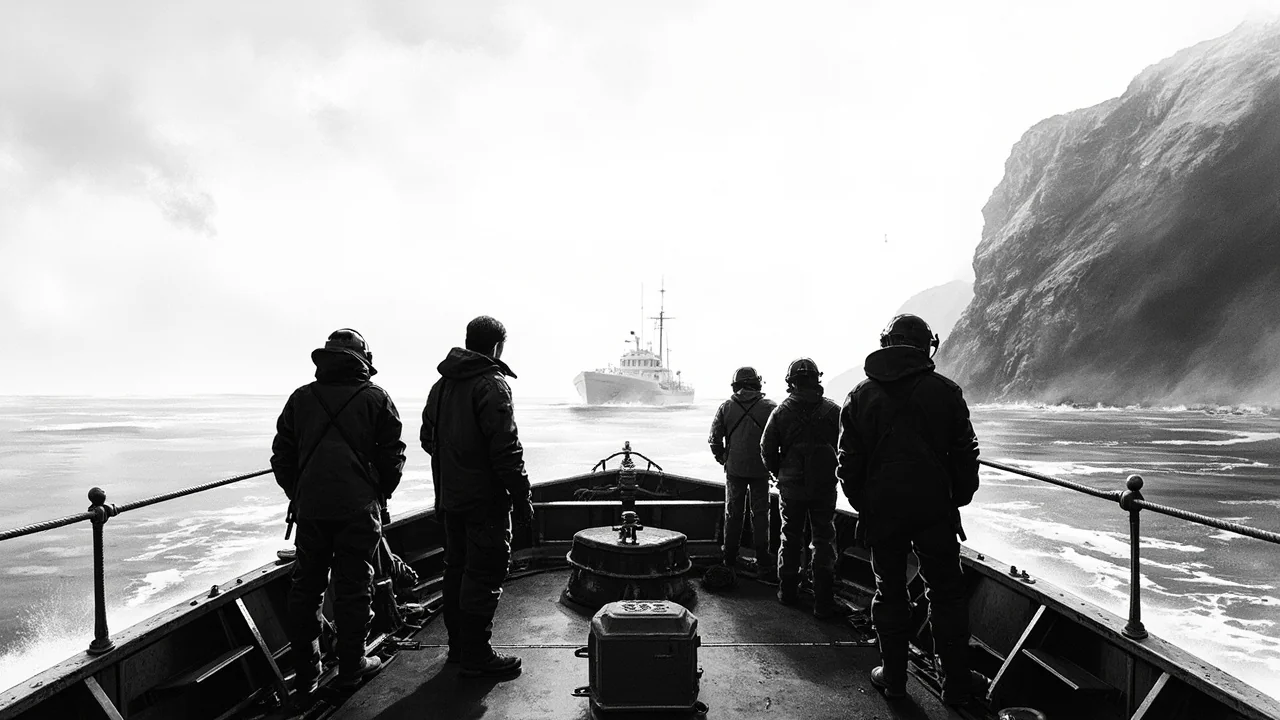
Norway's rescue center has concluded its 47th major maritime search operation this year after a mysterious mayday signal from the Trondheimsfjord yielded no trace of distress. The coordinated effort involving a rescue cruiser, fireboat, and rescue helicopter was called off following an extensive sweep of the waters between Trondheim and Steinkjer. Rescue leaders state they are confident no one was in danger, but the origin of the urgent distress call remains an unresolved mystery, raising questions about maritime communication systems and the allocation of emergency resources.
The Signal That Started It All
At the heart of the incident is a lone 'Mayday' broadcast, the highest priority distress signal used in maritime and aeronautical operations. According to Jonas Andersen, the rescue leader at the Main Rescue Coordination Centre (HRS), the protocol was clear but incomplete. 'Mayday is used when someone is in dire distress at sea. You expect a complete message afterwards, but we did not receive one in this situation,' Andersen stated. This absence of follow-up communication, such as a position, vessel name, or nature of emergency, left rescue coordinators with a vast area of the Trondheimsfjord to search without a specific target. Andersen confirmed it was not possible the signal was sent by accidental button press, given the deliberate activation required.
A Coordinated Search With No Target
Faced with the ambiguous signal, HRS initiated a standard large-scale response. The Trondheimsfjord, a major Norwegian waterway critical for shipping, fishing, and leisure, became the focus. Resources were deployed to scour the area, leveraging what Andersen described as 'exceptionally good search conditions.' The search protocol in such cases involves contacting all registered vessels in the vicinity. In this instance, none of the boat operators contacted had heard any supplementary distress calls or witnessed signs of an emergency. Concurrently, the fire department was alerted for potential land-based support, but Vaktleder Frank Hansen confirmed they did not initiate an action from shore, citing uncertainty over whether the alert was real or a false transmission.
Search Protocol and Resource Implications
The decision to end the search underscores the procedural balancing act faced by the HRS. With significant assets deployed and no corroborating evidence of distress after a thorough sweep, continuing indefinitely is not operationally sustainable. 'We have searched with considerable resources... Thus, we are confident in our decision that there is no one in distress in the relevant area,' Andersen explained. This incident marks another entry in the annual log of searches launched from the center in Bodø, which coordinates all rescue operations north of the 65th parallel and complex cases elsewhere. Each launch involves high costs and pulls resources from potential simultaneous emergencies, making accurate assessment of initial alerts crucial. The Norwegian Sea and the coastline of Trøndelag are among Europe's busiest and most challenging for maritime safety, with a mix of commercial traffic, ferries, and private boats.
The Persistent Challenge of False Alerts
While this event concluded without finding a source, it highlights an ongoing issue for coast guards and rescue centers worldwide: false or unverifiable distress signals. These incidents consume thousands of man-hours and millions of kroner in operational costs annually. In Norway, the integrated maritime surveillance system, which includes coastal radio stations and automatic identification system (AIS) tracking, is typically robust. However, a standalone mayday signal without digital position data can slip through as an analog ghost. The HRS must treat every 'Mayday' as absolute priority until proven otherwise, a principle that safeguards lives but leaves the system vulnerable to hoaxes or malfunctioning equipment. The Norwegian Maritime Authority repeatedly advises all vessel operators to ensure their VHF radios are properly configured and to use digital selective calling (DSC) functions for precise, automated distress signaling.