
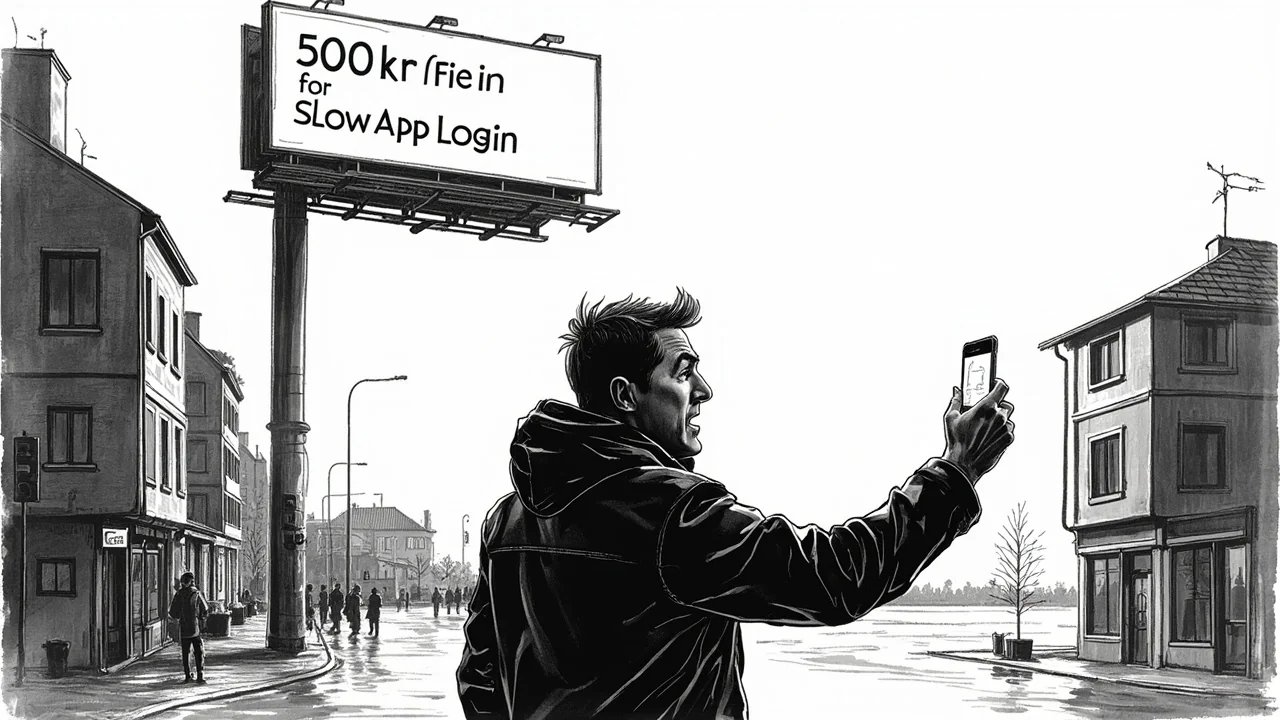
Norway's digital driver's license is a valid legal document, yet police on the E39 near Ørskogfjellet recently fined motorists 500 kroner each for not producing a physical card. The reason given was that it took the drivers too long to log into the official app during a traffic stop.
This incident highlights a growing tension in one of the world's most digitally advanced societies. Norway pushes forward with ambitious plans to digitize public services, but real-world implementation can sometimes trip over practical hurdles.
The Traffic Stop That Sparked Outrage
Police conducted a large-scale control on October 29 last year, stopping nearly 1,000 motorists. Two of those drivers received fines. They had valid digital licenses but were penalized because the login process for the app was not instantaneous.
One driver detailed his frustrating experience in a complaint. He said he was interrupted multiple times during the login attempt. Officers asked for his personal identity number, instructed him to take a breathalyzer test, and told him to move his vehicle.
"When digital driver's licenses are legal, you must get a chance to log into the app," the driver argued. His fine, and another issued to a driver in a similar situation 20 minutes earlier, have since been deleted by police.
A Digital Society Hitting a Speed Bump
Norway has been a pioneer in digital public services. The digital driver's license, stored in an official app, is part of a broader Nordic technology trend towards a paperless society. The stated goal is convenience and efficiency for citizens.
However, this case shows that the human and technical factors in the field can diverge from policy. A slow mobile data connection, an app requiring an update, or a phone with low battery can suddenly become costly problems during a police check.
Press officer Ingunn Handagard stated she had not previously heard of people being denied time to log in and retrieve their digital license. The Norwegian Automobile Federation (NAF) also said it was unaware of any similar cases.
Industry and Legal Backlash
The fines prompted immediate criticism from consumer and motorist organizations. They argue the penalties undermine the very concept of the digital license and punish citizens for following the law.
"This is not good and should not happen," said Børre Skiaker, Secretary General of the Royal Norwegian Automobile Club (KNA). "It is unacceptable that motorists get fines when they actually have a valid driver's license. The police must ensure control routines that make it possible to follow the law rather than punish people for conditions the police themselves create.
Handagard echoed this sentiment, stating, "In our age with so many people having and using digital driver's licenses, you should get time to show it in a control."
Police Admit Error and Promise Change
Facing public criticism, the police have conceded the fines were a mistake. Acting Deputy Police Chief Ove Brudevoll said the force would review the incident internally before the next major control to prevent a recurrence.
"It is always regrettable when we make a mistake, we try to avoid it and we learn from these cases," Brudevoll said. "In this instance, two fines were revoked and the knowledge from this control we take forward to the next control.
This internal review is crucial. It will determine whether the issue was a one-off error by individual officers or points to a need for updated national guidelines for handling digital documentation during roadside checks.
The Broader Implications for Digital Trust
This case touches on a core challenge of Norway's digital transformation: maintaining public trust. For citizens to fully embrace digital IDs, payment apps, and e-government services, they need confidence the system will work reliably under pressure.
An incident where a legally valid digital document leads to a fine can erode that trust. It creates uncertainty and may push people back to carrying physical cards as a backup, defeating the purpose of digitization.
The solution likely lies in better training and clear protocols. Police officers need standardized procedures that allow reasonable time for app access, accounting for variable network speeds. The government may also need to ensure the official apps are as streamlined and quick to access as possible.