
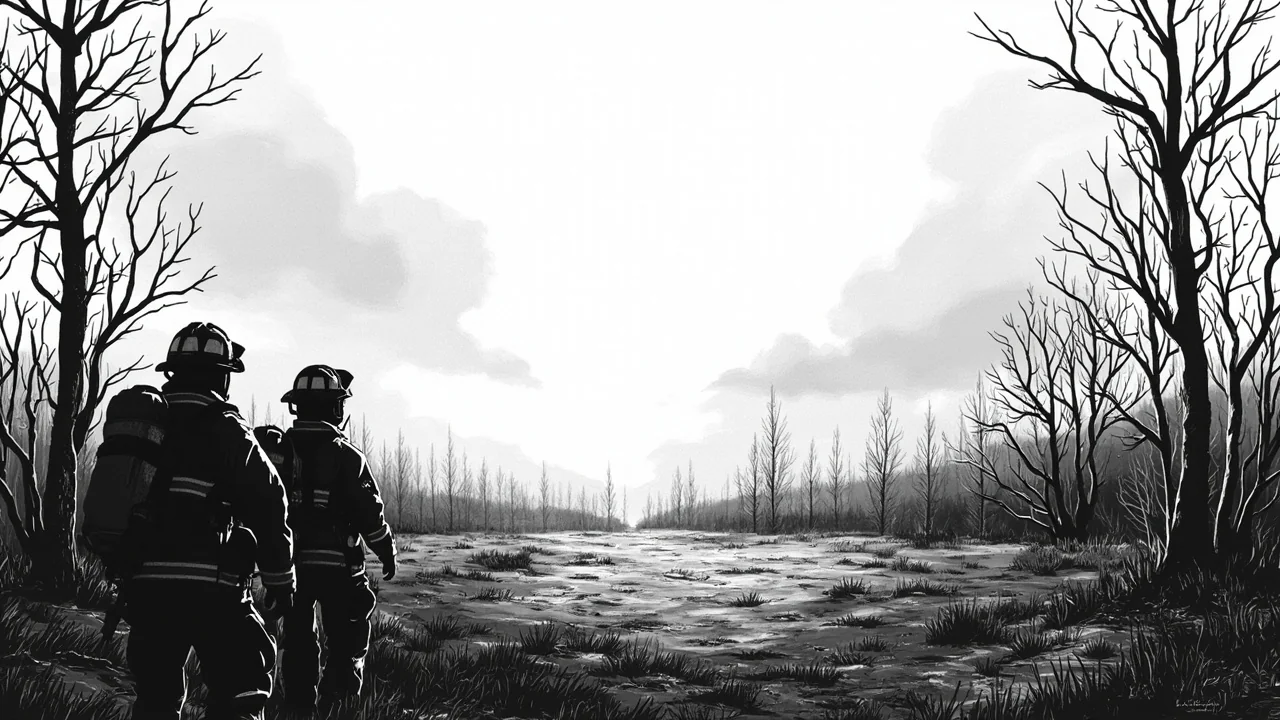
Norway's southern regions are on high alert for brush and grass fires this January, an unusual threat fueled by a persistent cold, dry weather pattern that contrasts sharply with the nation's typically wet winters. Meteorologists have issued fire danger warnings for Rogaland county and are considering expanding them to Vestland, as stable high-pressure systems block precipitation across Scandinavia. This situation has prompted multiple fire department call-outs to control blazes ignited by bonfires gone awry, highlighting a public misconception about winter safety.
A Meteorological Anomaly
Per Egil Haga, the duty meteorologist at the Meteorological Institute, called the current conditions 'very unusual.' He noted that while stable, dry winter weather occurs occasionally, it is rare. Typically, Norwegian coasts are wet and rainy during winter months. For context, last year at this time, the cyclone 'Éowyn' rolled in from the North Sea, and in 2022, the extreme weather event 'Gyda,' categorized as an 'atmospheric river,' caused havoc. The contrast this year is stark, with northern light hunters enjoying clear skies but firefighters facing new risks. In Bergen, rainfall has totaled only 82 millimeters so far this month, barely a third of the January average. The fresh forecast from state meteorologists offers little relief, with no significant rain or snow expected across large parts of the country for several weeks. Haga stated, 'As it looks now, we do not expect precipitation this week. It could also be dry the next two weeks. This high pressure covers large parts of Scandinavia, and there is a low probability of significant precipitation in the next two to three weeks.' He added that some snow is reported for coastal and fjord areas in Nordland, Troms, and Finnmark in the coming days, but the south remains parched.
Fire Incidents in the South
The stable easterly winds and lack of snow in lowland areas have left grass and heather unusually dry. Wind further increases the risk of rapid spread if a fire takes hold. Fire departments in both Rogaland and Vestland have responded to several call-outs for smaller fires in grass and heather in recent days. In many cases, the fires started due to uncontrolled bonfire burning. On Saturday in Sandnes, firefighters battled a terrain fire visible from multiple locations in Rogaland. On Sunday, the fire department had to dispatch units to Sola after a person lost control of a bonfire. In Bergen, a bonfire also got out of control in a hiking area. These incidents underscore the heightened danger in regions like the fjord districts near Stavanger and the outskirts of Bergen, where dry vegetation is prevalent. The fire service has been actively monitoring areas with high tourist traffic or popular outdoor spots, emphasizing that even small sparks can lead to significant outbreaks under these conditions.
Public Awareness and Warnings
The fire department has pointed to a lack of public awareness as a key factor in the recent blazes. A spokesperson explained, 'This is unfamiliar to the public. It is natural to think that one can make a bonfire at this time of year without it being dangerous. Then it is easy to become careless.' Many residents associate winter with damp safety, but the current dryness has created a tinderbox scenario. Authorities are urging people to avoid open flames, refrain from burning debris, and report any signs of fire immediately. The warnings extend to rural communities and urban fringe areas where heather and grass fields meet residential zones. The fire danger is particularly acute in places like the Jæren region in Rogaland and the hills surrounding the Bergen fjords, where vegetation is dense and winds can whip up quickly.
The Broader Weather Context
The high-pressure system dominating Scandinavia is not just a local oddity but part of a larger pattern that has left much of Northern Europe dry. This stability has allowed cold air to settle in, keeping temperatures low but without the moist precipitation that normally accompanies Norwegian winters. The lack of snow cover in lowland areas, such as those around the Oslofjord and the southern coasts, exacerbates the fire risk by leaving dead grass exposed. Historical data shows that such prolonged dry spells in January are infrequent, with past decades seeing more consistent snowfall or rain. Meteorologists are tracking the system closely, but long-term forecasts on platforms like Yr indicate continued sunshine and sub-zero temperatures for much of Norway through January 2026, suggesting this anomaly could persist. For now, the focus remains on the immediate weeks, where no respite is in sight.