
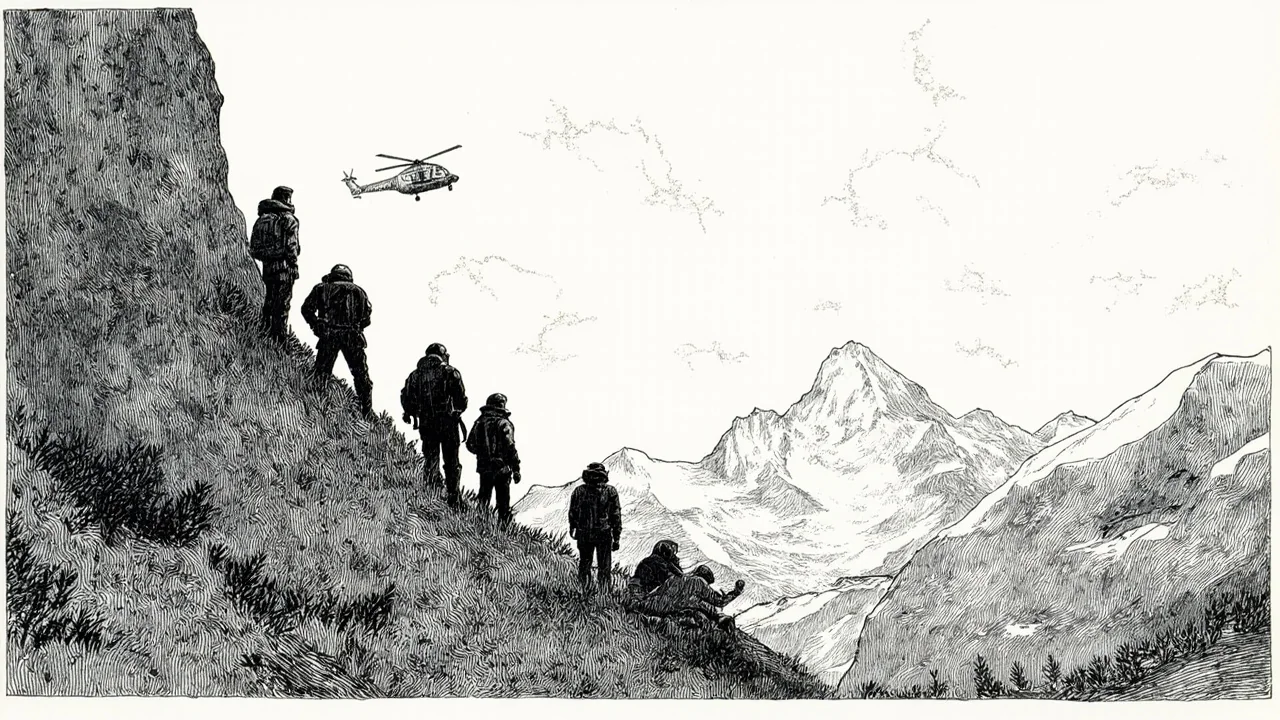
Norway's police and air ambulance services are responding to two tourists stranded on Sukkertoppen mountain in Ålesund. The tourists reported the incident themselves, stating they were stuck after beginning their descent from the summit on the west side, known as the 'Tyskerstien'. Espen Andersen from the Møre and Romsdal police district confirmed the situation in a statement. An air ambulance from Ålesund is attempting to extract the tourists, with a helicopter from Florø on standby if needed. This emergency highlights the risks associated with Norway's popular hiking trails, even as the country promotes its natural beauty to visitors.
Emergency Call from the Summit
The incident began when the two tourists contacted authorities from Sukkertoppen, a well-known peak in the Ålesund region. They had started down the 'Tyskerstien' path, a route often used by hikers, but encountered problems that left them unable to proceed. Police did not specify the exact nature of the difficulties, but such situations typically involve injury, fatigue, or treacherous terrain. The quick self-reporting by the tourists allowed for a rapid response from local emergency services, underscoring the importance of communication devices in remote areas. Norway's rugged coastline and fjords, while stunning, pose significant challenges for even experienced adventurers.
Rescue Operations in Motion
Espen Andersen outlined the rescue plan, noting that an air ambulance from Ålesund would first attempt to reach the tourists. If that proves impossible, a helicopter from Florø will be deployed. This multi-layered approach is standard for Norwegian rescue operations, which often rely on aerial assets due to the country's difficult topography. The Møre and Romsdal district, with its deep fjords and steep mountains, requires specialized equipment and training for such missions. Rescue teams frequently train for scenarios like this, balancing speed with safety in unpredictable weather conditions common along Norway's western coast.
The Risks of Norwegian Hiking
Sukkertoppen is a popular destination for tourists in Ålesund, offering panoramic views of the surrounding archipelago. However, its trails can be deceptively challenging, especially on descents where loose rocks or sudden weather changes increase danger. Norway sees numerous hiking incidents annually, particularly during the summer months when tourist numbers peak. Authorities consistently advise hikers to prepare adequately, check forecasts, and inform others of their plans. The 'Tyskerstien' path, while historic, may have sections that require caution, as evidenced by this emergency. This incident serves as a reminder that Norway's wilderness demands respect, regardless of a trail's popularity.
Coordination and Response Efforts
The police district's coordination with air services reflects Norway's integrated emergency response system, which involves local police, rescue helicopters, and volunteer organizations. Air ambulances in Norway are often equipped for mountain rescues, with trained personnel capable of hoisting individuals from precarious locations. The decision to have a backup helicopter from Florø ready demonstrates the contingency planning inherent in these operations. Such responses are funded and supported by national policies that prioritize safety in remote areas, a key aspect of Norway's governance in regions prone to outdoor accidents. While this rescue unfolds, authorities are likely assessing weather and light conditions to ensure a successful outcome.
Broader Implications for Tourism Safety
As Norway's tourism industry grows, incidents like this draw attention to the balance between promoting outdoor activities and ensuring visitor safety. The Ålesund region, known for its Art Nouveau architecture and proximity to fjords, attracts thousands of hikers each year. Local governments and tourism boards often emphasize preparedness, but emergencies still occur. This event may prompt reviews of trail markings or signage on Sukkertoppen, though no official changes have been announced. For now, the focus remains on the immediate rescue, with hopes for a swift and safe resolution. The outcome could influence future safety campaigns or regulations in Norwegian hiking hotspots.
A Moment of Reflection
As rescue teams work to bring the tourists to safety, this event prompts questions about how Norway manages its vast outdoor spaces. Will increased tourism pressure lead to more incidents, or can better education and infrastructure mitigate risks? The answer lies in the delicate interplay between promotion and protection, a theme familiar in Norwegian affairs. For now, all eyes are on Sukkertoppen, waiting for news of a successful operation that reaffirms the value of robust emergency services in preserving life amidst Norway's breathtaking but demanding landscapes.