
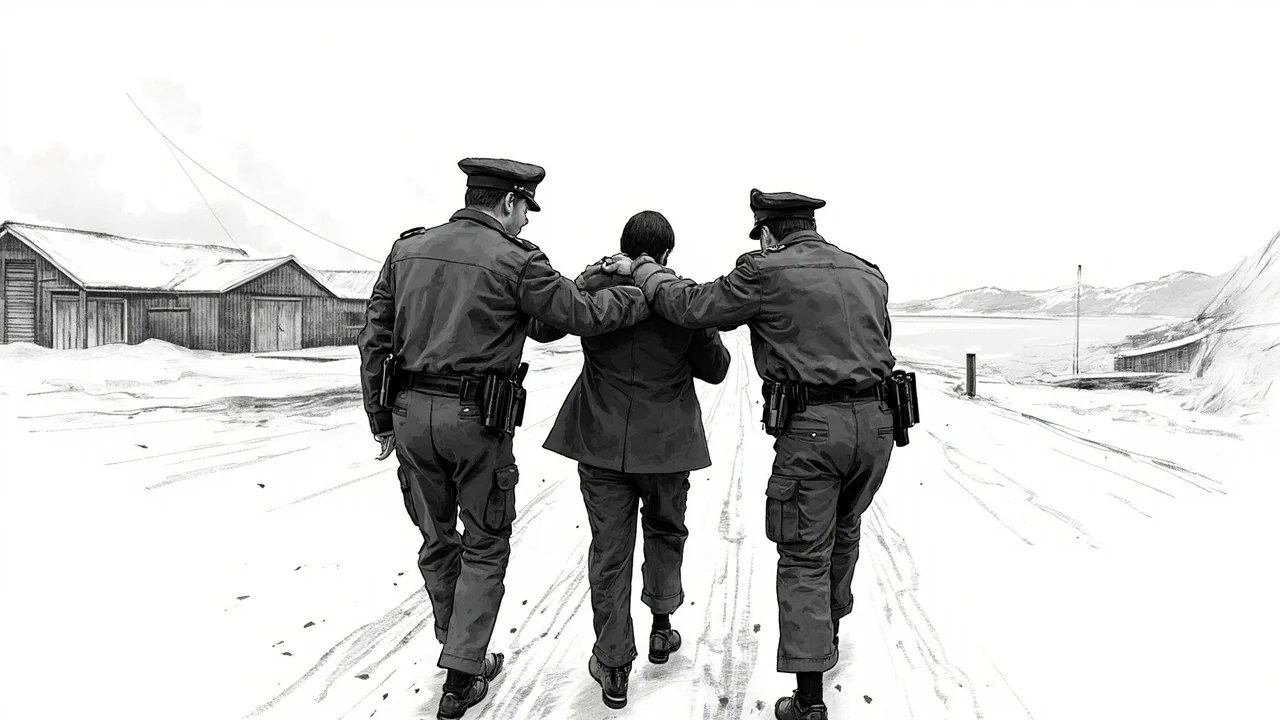
Oslo police arrested a man twice within 48 hours, first with a machete and then with a baseball bat, in consecutive incidents on the capital's main street. The events, logged in the official police journal, highlight ongoing challenges with weapon possession and public disorder in the city center. The man, who police stated appeared under the influence of drugs, was taken into custody following both encounters near Karl Johans gate.
A Repeated Pattern on Karl Johan
According to the police report, the initial arrest occurred in the early hours of Saturday. Officers detained an individual for disturbing public order and for being in possession of a machete. The location, Karl Johans gate, is Oslo's central pedestrian thoroughfare, lined with shops, restaurants, and historic buildings, and is typically crowded day and night. Less than 24 hours later, in the early hours of Sunday, police patrols controlled the same person at the same location. This time, he was found in possession of a baseball bat. The police log notes the individual appeared influenced by narcotic substances. He was arrested again and transported to a police detention cell.
Police Response and Procedure
The case demonstrates standard police procedure for repeated offenses involving weapons and public disturbance. Norwegian law permits pre-trial detention if there is a risk of re-offending. The quick re-arrest suggests police assessed an immediate and continued threat to public safety. Possession of weapons like machetes and baseball bats in a public place, particularly under the influence of drugs, constitutes a serious violation of Norway's Penal Code, which strictly regulates the carrying of arms and objects intended for use in assault. The police's ability to identify and re-detain the individual points to functioning patrol and reporting systems in the urban core, yet it also raises questions about available interventions between arrests.
Context of Urban Security in Oslo
While violent crime rates in Norway remain low by international standards, incidents involving weapons in central Oslo periodically prompt public and political scrutiny. The capital's police district repeatedly identifies nightlife districts and major transit corridors as focal points for preventative work. Incidents involving edged weapons or blunt objects, often linked to intoxication or interpersonal conflicts, form a consistent part of urban police logistics. This specific case is unusual not for the type of weapons involved, but for the brief timeframe and identical location of the two arrests, indicating a persistent pattern of behavior by one individual that was halted by police intervention.
Legal Implications and Next Steps
The man now faces charges related to both incidents. Legal experts note that consecutive arrests for similar offenses can influence prosecutorial decisions and court assessments regarding conditional release. The prosecution will likely consider the short period between offenses as an aggravating factor when evaluating the case. The court must weigh the principle of proportionality against the demonstrated risk of recidivism. Outcomes typically range from fines and probation for lesser offenses to imprisonment for more serious or repeated weapon crimes, especially when public safety is compromised.
A Broader Look at Prevention
This incident feeds into a broader discussion in Norwegian criminology about the intersection of substance abuse, mental health, and petty crime. While police intervention is crucial for immediate public safety, long-term prevention often hinges on social services and health interventions. The case underscores the reality that police resources in major cities are continually deployed to manage recurring situations involving a small number of individuals. It highlights the cycle that can occur when underlying issues, such as substance dependency, are not addressed, leading to repeated confrontations with law enforcement. The effectiveness of post-arrest measures, including access to treatment programs, becomes a critical factor in breaking this cycle.
The Road Ahead for the Accused
The individual at the center of this case awaits formal charges and legal proceedings. His experience—two arrests, two weapons, two days—will now be processed through Norway's judicial system. The outcome will depend on forensic evidence, the individual's previous record, and the specific charges filed by the prosecutor. For the police, the case is a clear example of successful interventional patrol work. For the public, it is a reminder of the visible and invisible safety work conducted in city streets. For policymakers, it is another data point in the ongoing balance between enforcement, prevention, and rehabilitation. The story ends not with the arrest, but with the open question of what happens next, after the cell door closes, and how society manages the cycle that leads back to Karl Johans gate.