
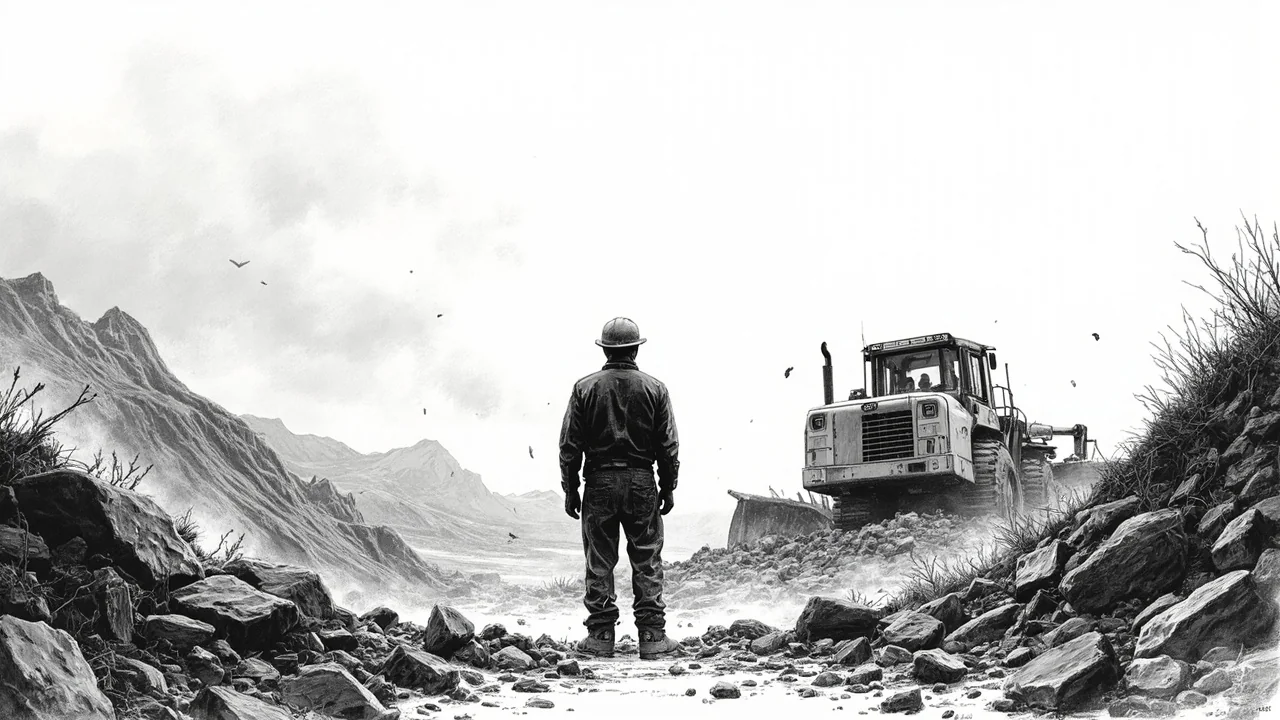
Norway police are investigating a fatal workplace accident after a 39-year-old man died at a quarry in the Vest police district early Saturday morning. The incident occurred under what authorities described as confined conditions, with the victim trapped under an overturned wheel loader. Emergency services responded to a call received at 05.51 but pronounced the man dead at the scene. Police have urged media to exercise caution in reporting out of respect for the family, who have not yet been notified. This tragedy casts a spotlight on workplace safety in a nation renowned for its stringent regulations, yet where isolated fatal incidents still occur.
The Incident and Immediate Response
Vest police district received the alert just before dawn on Saturday. Officers and emergency personnel arrived at the quarry to find the worker deceased. Preliminary reports indicate he was caught under a heavy vehicle that had tipped over. The police have confirmed they are in the initial stages of the investigation. A spokesperson said in a statement that they will provide more information as it becomes available. The request for media discretion highlights the sensitive nature of informing next of kin, a standard protocol in such cases. The quarry's location and specific name have not been disclosed by authorities, maintaining privacy during the ongoing inquiry.
Workplace Safety in the Norwegian Context
Norway maintains some of the world's most comprehensive workplace safety laws, governed by agencies like the Norwegian Labour Inspection Authority. The country consistently reports low rates of fatal accidents compared to global averages, a point of pride for its social democratic model. However, industries such as construction, mining, and quarrying remain higher-risk sectors. Each incident triggers mandatory investigations to determine if regulatory breaches occurred. This accident will likely be scrutinized for compliance with operational protocols for heavy machinery. The use of wheel loaders in tight spaces, as mentioned by police, is a known hazard that safety guidelines aim to mitigate through training and equipment checks.
Political and Regulatory Implications
As Norwegian Affairs Correspondent, I note that fatal workplace accidents often prompt political scrutiny. Members of the Storting have historically used such events to debate enforcement of safety laws. The current government, led by Prime Minister Jonas Gahr Støre, has emphasized worker protection in its platform. This incident may renew discussions in parliamentary committees about resource allocation for inspections, particularly in remote or industrial sites. While Norway's oil and gas sector dominates safety talks due to its economic weight, accidents in basic industries like quarrying remind policymakers that risks persist across all sectors. The outcome of this investigation could influence upcoming revisions to national safety directives.
The Human Cost and Community Impact
Beyond the statistics and policies, this accident represents a profound personal loss. A 39-year-old man, whose identity is withheld, has died while earning a living. His family, friends, and colleagues are now grappling with sudden grief. In close-knit Norwegian communities, especially in regions with industrial activity, such events resonate deeply. They underscore the human element behind the country's economic engines, from fjord-side construction projects to inland mineral extraction. The police's call for media caution is a reminder that behind every news brief lies a ripple effect of sorrow and disruption. Local support services typically mobilize in these cases, offering counseling and assistance to those affected.
Investigation Path and Industry Reactions
The police investigation will focus on the circumstances leading to the wheel loader overturning. Factors like terrain stability, vehicle maintenance, operator training, and adherence to safety procedures will be examined. Industry groups, such as the Federation of Norwegian Construction Industries, often issue statements following accidents, reiterating commitment to safety standards. While no official comment has been made yet, past incidents have led to internal reviews within companies. The quarry operator, once identified, will be required to cooperate fully with authorities. Depending on findings, there could be legal consequences or recommendations for broader industry practices.