
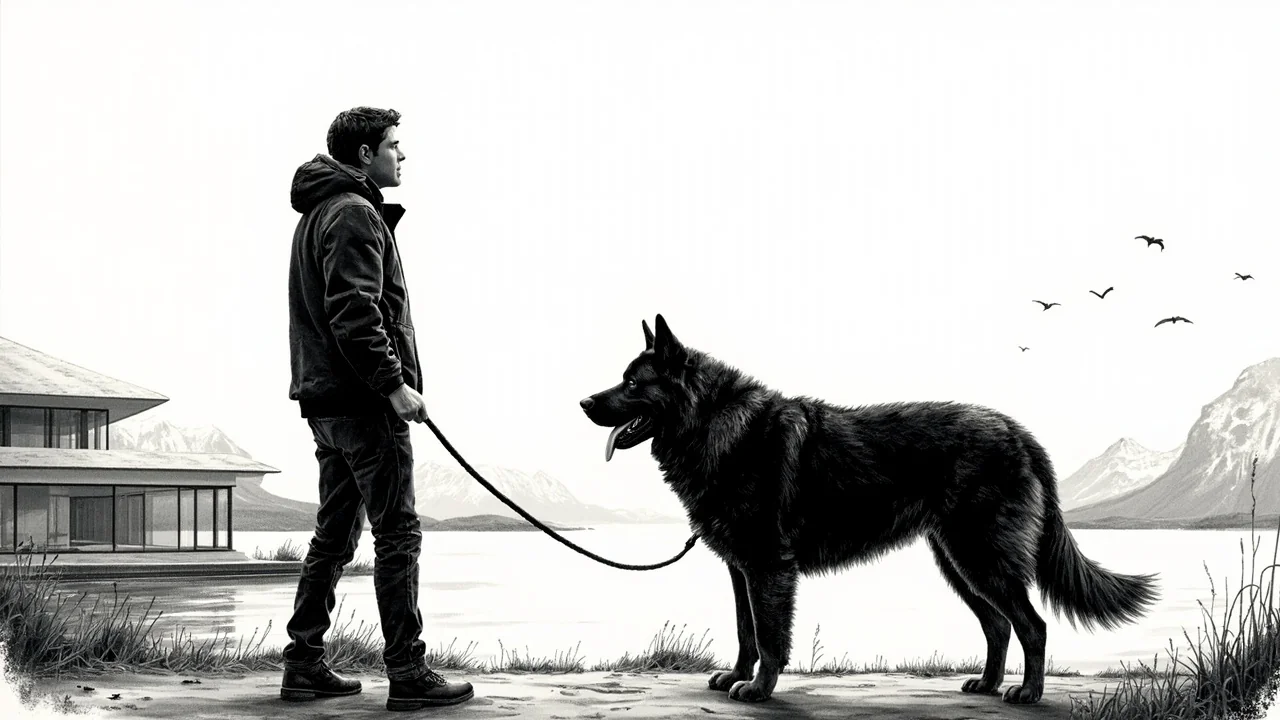
Norway's public transport system has banned a 60-kilogram Newfoundland dog from buses after passenger complaints about a persistent odor, leaving his owner stranded without her essential commuting partner. Sara Rolfsøn, 32, depends on buses to travel from her remote mountain cabin to work in Trondheim and calls the exclusion discriminatory, challenging the boundaries of pet access in Scandinavian transit hubs.
A Life Built Around Public Transit
Sara Rolfsøn and her three-year-old dog Albert moved to a cabin in Stugudalen in 2025, seeking peace in the mountain wilderness. Previously living in Moss, Rolfsøn never considered getting a driver's license because the local bus service met all her needs. "We are a team," she said, describing Albert as an energetic companion who has accompanied her everywhere since she got him. During the winter, Rolfsøn commutes over 12 hours a day to her office job in Trondheim, a journey made possible by bus routes operated by Vy on behalf of the transport authority AtB. She refuses to leave Albert alone for such long periods, so he rides with her, lying calmly in the aisle or on the handicapped space.
The Sudden Exclusion Notice
Just before Christmas, Rolfsøn received a written notice from AtB stating that Albert was no longer welcome on the bus. The decision cited feedback from fellow passengers who felt inconvenienced by a strong smell over several hours, with the odor perceived to linger in the bus afterward. Vy Buss, responsible for the route, reiterated this to the Norwegian Newfoundland Dog Club, which has engaged in the case. The company pointed to transport regulations that allow dogs free entry but place responsibility on owners to ensure their pets do not inconvenience others. "We have considered possible adjustments, but after an overall assessment, the decision in this matter stands," the letter stated.
Questioning the Basis of the Ban
Rolfsøn expressed confusion over the ban, noting she has never witnessed any negative reactions to Albert during their travels. "I have not experienced any negative incidents with Albert on the bus," she said. "Most passengers who see him greet him and have never shown any signs of being uncomfortable." She emphasized that Albert, despite his size, is well-behaved and poses no disturbance. Rolfsøn also questioned the lack of direct contact from authorities before the decision was made, wondering why alternative solutions were not discussed with her personally. For her, the bond with Albert is non-negotiable, she has no issue with his weight, quipping, "Much to handle, much to love."
The Role of Advocacy and Regulation
The Norwegian Newfoundland Dog Club has taken up Rolfsøn's case, highlighting the tension between pet owner rights and passenger comfort in public transport. AtB's rules clearly state that dogs must not be a nuisance, but defining nuisance remains subjective. This incident raises questions about how transport operators balance individual needs with collective comfort, especially in regions where car ownership is not feasible. Rolfsøn's situation underscores the challenges faced by those in rural areas who rely on infrequent bus services for essential travel, with pets often integral to their daily lives.
The Commuting Reality Without a Car
Without a driver's license and with limited options in Tydal municipality, Rolfsøn's ability to work depends entirely on bus access. The ban forces her to reconsider her employment or living situation, as leaving Albert alone for extended periods is not an option. This case mirrors broader discussions in Norway about accessible transport and inclusivity, where digital transformation and innovation in mobility often focus on urban centers, leaving remote residents vulnerable to policy strictures. The lack of prior incidents involving Albert suggests that complaints were based solely on olfactory discomfort, a factor difficult to measure or mitigate.
Seeking Resolution and Understanding
Rolfsøn remains hopeful for a reconsideration, advocating for a more personalized approach from transport authorities. She believes that if given the chance, she could address any concerns, such as through grooming adjustments or designated travel times. The involvement of the dog club may push for clearer guidelines on what constitutes a nuisance, potentially leading to standardized procedures for handling similar cases. As Norway continues to promote sustainable transport, stories like this test the system's flexibility and empathy towards all users, including those with four-legged companions.
What This Means for Norway's Transport Future
This ban on a single dog reveals larger questions about equality and accommodation in public spaces. With Scandinavia often seen as a leader in social welfare and innovation, cases like Sara and Albert's challenge that narrative, showing where policies may fall short. As Rolfsøn navigates this obstacle, her experience prompts a reevaluation of how transit systems can serve diverse needs without compromising on comfort or fairness. The outcome could set a precedent for pet owners across the Nordic region, emphasizing the need for dialogue over dismissal in public service decisions.