
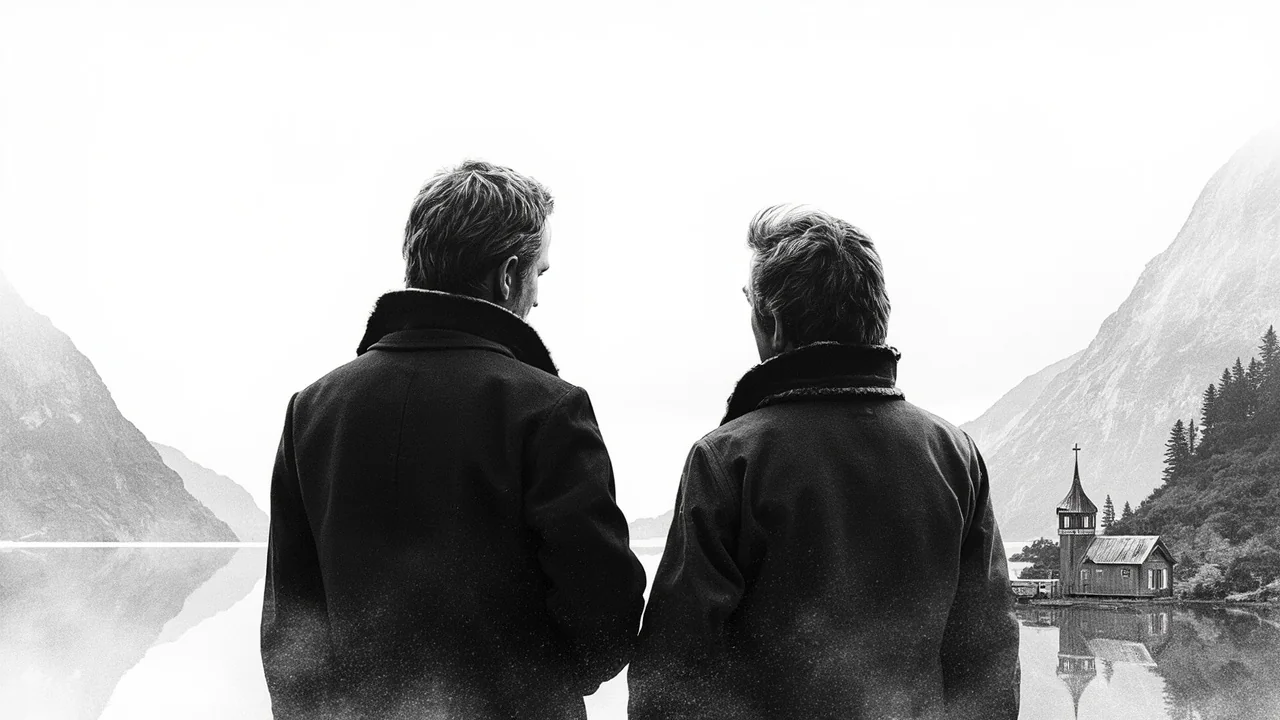
The twin brothers Birger and Olav Råbu, known affectionately across their community as 'Brødrene Brådders,' have died at 72. Their passing marks the end of a chapter for the Austre Moland community in Agder, where the brothers, both born with developmental disabilities, became cherished local figures whose lives reflected broader changes in Norwegian society.
Their sister, Hilde Johanne Raabu Andersen, is now the last surviving sibling. She recalls a childhood in the 1950s and 60s where local support systems were limited. 'Back then, there weren't many offers in the local community,' she said. 'They had to take the schooling they got. If they were to attend a special school, they would have had to travel many miles from home. That would not have been an option. Then there would have been many tears.' This reality shaped their lives, anchoring them firmly within their family and immediate surroundings, relying on the goodwill and adaptation of their local area.
A Life Forged in Community
Despite the challenges of the era, the brothers thrived within the framework their community provided. They were not isolated. Hilde Johanne notes that while growing up with two brothers who were different had its tough moments, it warms her heart that their surroundings welcomed them so completely. 'It wasn't always easy. But that's how they were created, and they couldn't help it,' she explained. This acceptance became the foundation of their lives. They were, in her words, 'mascots for the whole village.'
'They made many friends, and people were fond of them. People accepted them as they were. They were in everyone's hearts,' she said. This integration was active and everyday. The brothers were employed, with Birger working in a factory and Olav at a smelting works, participating in the local economy and social fabric in a tangible way.
Local Icons in the Public Eye
The Råbu twins were familiar faces far beyond their immediate circle. They figured frequently in the local press throughout their lives, captivated a national audience during a 2008 appearance on a TV show where they tested various products, and were constant presences in Arendal. A memorial notice from a local journalist described their routine: 'They were often out and about in Arendal and other places. They loved meeting people. They often stopped by the local newspaper's office, were often at the café on Harebakken, took trips to local revues and other places where people gathered.'
Their public life was not that of passive subjects but of engaged individuals who sought out connection. They navigated their world with a distinctive presence that left a mark. Their story is not one of extraordinary tragedy or singular achievement, but of ordinary life lived fully within the constraints and opportunities of their time and condition. It is a story of how a community can embrace difference, not through formalized programs initially, but through simple, daily acceptance.
A Final Reunion and a Silent Wave
The brothers' deaths, though separated by four and a half months, led to a poignant reunion. Olav died on August 15 last year, and Birger passed on December 30. 'It's so strange. The grave was waiting for him, it was vacant when Birger died,' their sister reflected. 'Now they lie next to each other under the snow, the sun, and the water. The sky and the clouds watch over them, under the large oak trees in the old churchyard.'
Her words paint a picture of natural, peaceful rest, symbolizing a cycle completed. She concludes with a powerful metaphor for their passing's impact on the community they so animated: 'They have left tracks that no one can mistake. A wave has settled in the village.' The constant, familiar ripple of their daily rounds and encounters has stilled, leaving a quiet that underscores their absence.
The Unwritten Legacy of Acceptance
Analyzing the brothers' story offers a quiet commentary on societal evolution. Born in 1953, their early lives coincided with a period in Norway before the widespread development of today's specialized municipal health and care services. Their survival and integration were testament to family resilience and informal community networks. Their ability to work, socialize, and become 'local icons' demonstrates a model of inclusion that was organic and relational, preceding modern policy frameworks.
Their lives raise implicit questions about the value of such community-based belonging versus more institutionalized care. While the latter provides essential resources and professional support, the Råbu brothers' narrative highlights the irreplaceable role of being known, accepted, and woven into the daily life of a place. Their legacy is etched not in formal records, but in the collective memory of a village that chose to make them part of its heart. It is a legacy that challenges contemporary discussions about disability and community to remember the fundamental human need for simple belonging. As Hilde Johanne's testimony shows, their greatest achievement was not overcoming their disabilities, but living in a way that made them unforgettable to those around them, proving that a life well-lived is measured by the depth of its connections, not the breadth of its travels.