
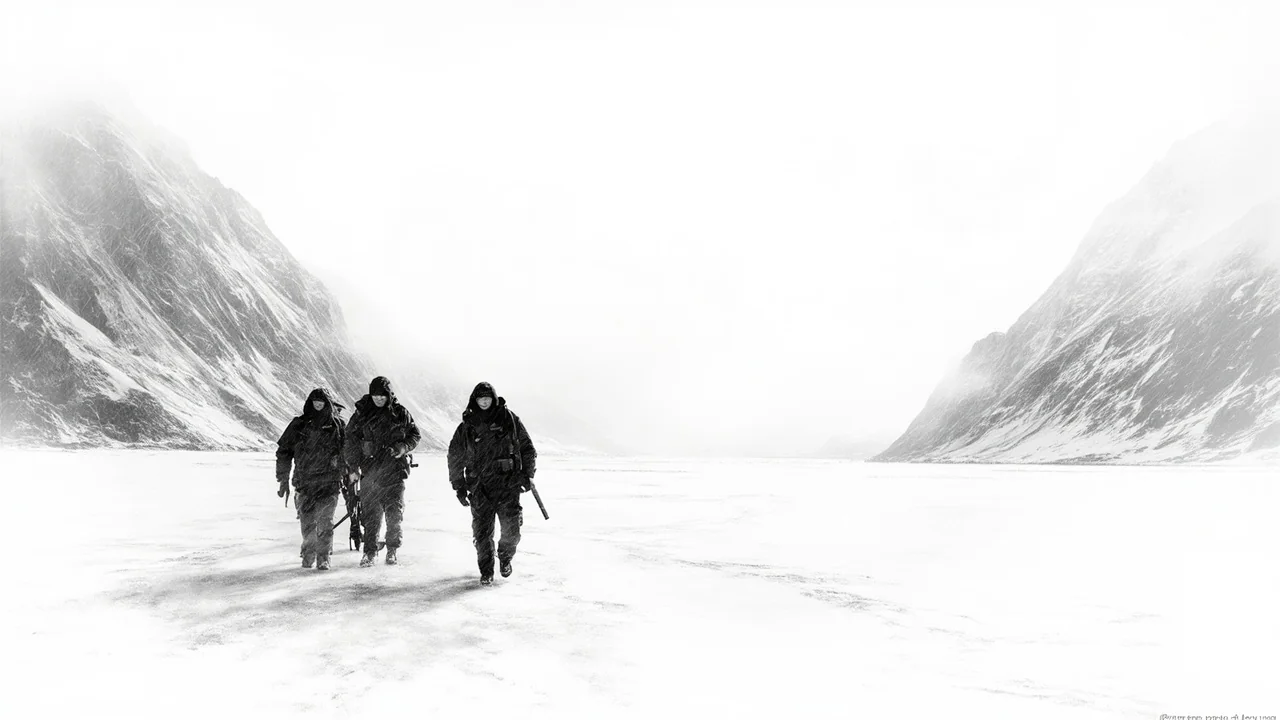
Norway's emergency services launched a full-scale rescue operation at Tunevannet in Sarpsborg after reports a person had fallen through the ice. The response involved multiple agencies and a rescue helicopter from Rygge air station, representing a significant deployment of national resources for a single incident. Minutes later, the operation was called off. It was a false alarm. 'No one has gone through the ice,' confirmed Operations Manager Håkon Hatlen of the East Police District.
The Alarm That Mobilized a Region
The initial call triggered a standard, high-priority response protocol for a person in icy water, a scenario where survival time is measured in minutes. Police, fire services, and ambulance crews were dispatched immediately to the lake. Crucially, the Norwegian Sea Rescue Society's rescue helicopter, LN-OJF, was scrambled from Rygge. This multi-agency mobilization is a standard, coordinated procedure for such life-threatening incidents, designed to bring all necessary assets to bear as quickly as possible.
The helicopter's involvement underscores the seriousness with which such reports are treated. Air assets provide rapid response over distance and crucial aerial visibility in search operations, especially over the fractured, reflective surface of a frozen lake. Their deployment represents a substantial financial and operational cost, but one that is never hesitated over when a life is potentially at stake.
The Cost of Caution
Within minutes of the first responders arriving on the scene and beginning their assessment, the situation became clear. There was no person in the water. There was no hole in the ice. The elaborate and costly rescue machinery, now fully activated, had nothing to rescue. Operations Manager Hatlen's brief statement closed the case. The agencies stood down, and the helicopter returned to base. No further details about the source or nature of the original report were immediately released by police.
While the outcome was the best possible—no tragedy, no loss of life—such false alarms carry a real weight. They tie up emergency resources that could be needed for a genuine, concurrent crisis elsewhere in the district. The financial cost of fueling and operating a rescue helicopter, along with the man-hours of dozens of professional responders, is considerable. Yet, authorities uniformly state that this cost is always preferable to the alternative of a slow or inadequate response to a real emergency.
A Recurring Winter Challenge
This incident at Tunevannet is not an isolated event. Each winter, emergency services across Norway respond to numerous calls concerning people and animals on unstable ice. While many are genuine, a portion turn out to be false alarms or misunderstandings. These can be sparked by discarded clothing on the ice, shadows, or reports from concerned citizens who see a distant figure and fear the worst. The policy, however, remains unambiguous: every report is treated as real until proven otherwise.
The incident highlights the critical public safety messaging repeated annually by Norwegian authorities: ice conditions are unpredictable and vary dramatically based on temperature, currents, and snow cover. Popular lakes near urban areas, like Tunevannet, are particularly prone to having unstable ice due to subsurface springs or human activity. The message from rescue services remains constant: stay off the ice unless its thickness has been officially checked and declared safe by local authorities.
The Aftermath and Allocation
In the wake of the false alarm, the operational focus shifts from rescue to review. The police will typically log the incident and the resources expended. The internal processes of the responding agencies will note the mobilization for future training and readiness assessments. The financial cost is absorbed as part of the annual operational budget for emergency preparedness—a budget built expecting such responses.
For the responders, the rapid stand-down brings a mix of relief and frustration. Relief that no one was in mortal danger, but frustration at the expenditure of finite resources. This dynamic is a fundamental part of emergency services work, the system must be predicated on responding to every potential threat, knowing that some responses will be in vain. The alternative—ignoring a report that turns out to be genuine—is unthinkable.
A System Tested, Not Failed
The Sarpsborg call, while false, served as an unplanned live exercise. It tested communication channels between police, fire, and air rescue services. It verified response times and mobilization procedures. In this sense, even a false alarm has operational value, keeping the intricate machinery of emergency response well-oiled and ready for the next call, which will hopefully never come.
The event concludes not with a rescue story, but with a quiet reassurance. The system worked as designed, with speed and professionalism. The public can be confident that a report of a person in distress will trigger an immediate and massive effort to save them. The ultimate question left by such incidents is not about the cost of the response, but about the public's role in preventing real tragedies through ice safety awareness and vigilance.