
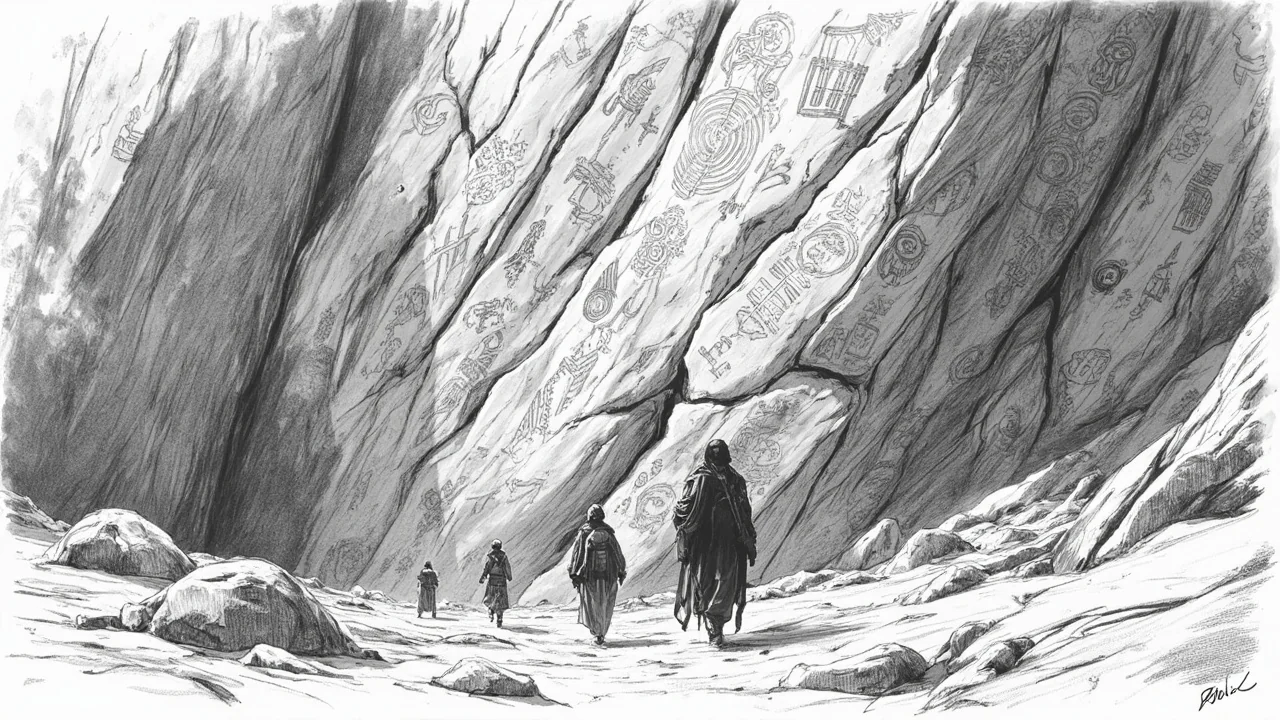
Norway's rocky landscapes have yielded a new archaeological treasure, a rare collection of petroglyphs estimated to be 3000 years old, discovered not by professionals but by a dedicated amateur. On a grey autumn day near Kolsås and Gjettum in Bærum, Tormod Fjeld (43) was out exploring the terrain, checking on previously registered rock carvings he knew were in the area. After examining those, he decided to familiarize himself more with the landscape. 'Suddenly I saw a single cup mark lying on a shelf not far from the other rock carvings,' Fjeld told Dagbladet by phone. As he looked around the steep landscape, his eyes caught something else.
An Unexpected Discovery Emerges
Between moss, heather, and autumn-brown leaves, Fjeld glimpsed a faint line. When he carefully brushed away some moss, a motif emerged that no one had likely seen for three millennia. It depicted a ship with a crew. Nearby were several more ship figures, additional cup marks, a hand, and a foot sole. 'I found more and more, and they were very fine figures. So there was a very good mood, even though I was alone,' he laughed. For Fjeld, the hunt for rock carvings has become more than a hobby—it's almost a lifestyle. By day he works as a digital marketer, but his free time is often spent outdoors in forests and on mountains.
A Decade of Dedicated Searching
Fjeld's journey into this unique pastime began entirely by chance in 2015. 'I started completely randomly in 2015, when I was out walking the dog. I discovered something that looked a bit atypical compared to what nature itself can manage to do. That's when it started,' he said. Over ten years, the Østfold native has made around 700 finds, most of them in his home county. 'I have done a lot together with two good buddies—Lars Ole Klavestad and Magnus Tangen. We have been a trio on a great many trips, and we have found many hundreds of sites down here,' Fjeld explained. His network includes serious expertise. Lars Ole Klavestad is a landscape architect and artist, while Magnus Tangen is a trained archaeologist working at the Cultural History Museum in Oslo.
Exploring New Territories
In recent years, Fjeld has expanded his search area. 'I have found a bit on my own in Akershus and just into Oslo—that has become around 80 new sites in the last three years. I have moved a bit in that direction because it has been exciting to explore other areas,' he noted. The Bærum discovery itself was made incidentally while his daughter was on her way to Lier. Fjeld described how the sandstone in the area gives a different expression to the carvings compared to other regions. The find was first reported by the local newspaper Budstikka, highlighting the significance of the location in a municipality not traditionally known for a high density of such archaeological sites.
The Significance of Amateur Contributions
This discovery underscores the vital role that knowledgeable amateurs play in Norwegian cultural heritage management. Fjeld's systematic approach and collaboration with professionals like Tangen bridge a crucial gap. The vast Norwegian wilderness means that state archaeologists cannot survey every inch of terrain. Passionate individuals with a trained eye, who spend countless hours in the field, often serve as the first line of discovery. Their work directly contributes to the national registry, protecting sites from potential damage by development or natural erosion. Fjeld's methodology is careful, upon finding a new site, he documents it with photographs and precise location data before reporting it to the relevant authorities.
The Personal Reward of Discovery
For the discoverer, the reward is intangible but profound. 'There is something very special about finding rock carvings. You can probably compare it to finding a place with chanterelles—only you can multiply it,' Fjeld mused, drawing a parallel to a quintessential Norwegian outdoor activity. The thrill lies in the direct connection to the distant past. Each discovery is a silent message, a snapshot of a thought or belief from someone standing in that exact spot centuries before the Viking Age, before the Roman Empire, in the Nordic Bronze Age. It transforms a routine walk in the woods into an encounter with history.