
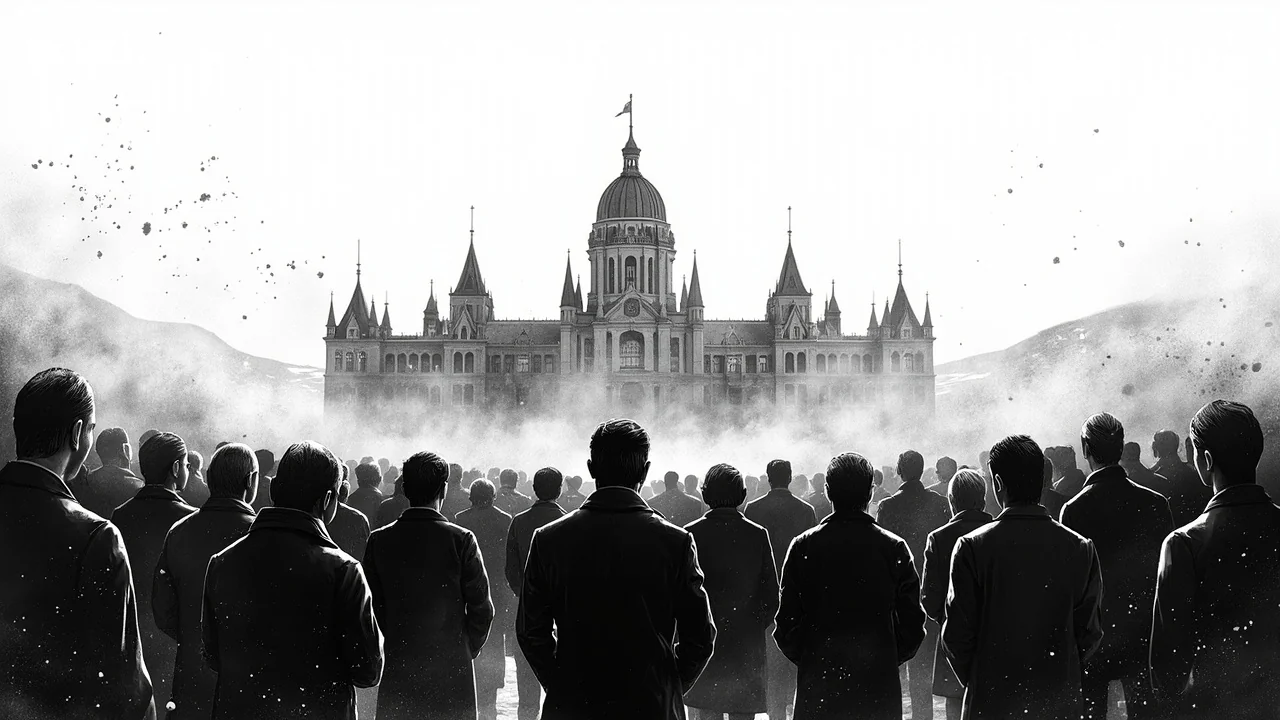
Norway's Parliament, the Storting, has reaffirmed its solid majority backing for the nation's constitutional monarchy, with a key committee report recommending no change to the current form of government. The report from the Standing Committee on Scrutiny and Constitutional Affairs, presented Tuesday, found broad cross-party support for keeping King Harald V as head of state. Committee Chair Jonas Andersen Sayed from the Christian Democratic Party said the monarchy's strength lies in its ability to represent all Norwegians. 'That we have a head of state who stands above party politics, everyday discussions, and who unites us across opinions and generations, is incredibly important,' Sayed stated in his assessment.
Cross-Party Consensus with Notable Exceptions
The political landscape reveals a clear but not unanimous front. The Socialist Left Party (SV), the Red Party (Rødt), and the Green Party (MDG) are formally in favor of transitioning to a republic. In contrast, the Labour Party (Ap), the Progress Party (FrP), the Conservative Party (Høyre), the Centre Party (Sp), and the Christian Democrats (KrF) support the monarchy. The Liberal Party (Venstre) was not represented on this specific committee. This alignment indicates the monarchy continues to draw support from the political center and right, while the left-wing parties push for a republican model. The debate reflects a long-standing divide in Norwegian politics, where the symbolic role of the royal family is balanced against principles of elected representation.
The Significance of a Conscience Vote
A crucial element of the upcoming parliamentary vote is the decision by several parties to allow a conscience vote, freeing their representatives from the official party line. This practice, common in matters of constitutional and ethical significance, means individual MPs can vote according to their personal conviction. It guarantees that dissenters within parties supporting the monarchy can vote for a republic, and vice versa. This mechanism acknowledges the profound personal and philosophical dimensions of the question, placing it above routine political maneuvering. The final vote in the Storting chamber next week will therefore reflect a more nuanced picture than the official party platforms suggest, capturing the genuine spectrum of opinion among Norway's elected representatives.
Historical Context and Modern Relevance
Norway's monarchy was restored in 1905 following the dissolution of the union with Sweden, when Prince Carl of Denmark was elected king by popular referendum, taking the name Haakon VII. This foundational act tied the modern monarchy directly to democratic consent. Since then, the institution has evolved into a largely ceremonial and unifying symbol, with King Harald V and his family maintaining consistently high approval ratings in opinion polls. The monarch's constitutional duties are limited but significant, including the formal opening of the Storting each autumn. Supporters argue this apolitical continuity provides national stability, especially during periods of political transition or crisis, offering a figurehead disconnected from the contentious daily debates in the Storting's corridors.
The Republican Argument and Its Limited Traction
While the republican movement in Norway has dedicated advocates, its parliamentary representation remains confined to a minority. The arguments often focus on democratic principles, the cost of the royal household, and the idea that a modern, egalitarian society should not have a hereditary head of state. However, these arguments have repeatedly failed to gain a decisive majority, either in public opinion or within the Storting. The enduring popularity of the royal family, seen as a humble and hard-working symbol of national identity, has consistently outweighed calls for systemic change. The committee's latest report and the anticipated vote confirm that this equilibrium is set to continue for the foreseeable future, with no major political force currently capable of mobilizing a shift.
What the Vote Means for Norway's Future
The impending vote is not on a proposal to abolish the monarchy, but rather on accepting the committee's report which endorses the status quo. Its passage is virtually assured given the stated positions of the larger parties. Therefore, the practical outcome is the continuation of Norway's constitutional framework as it has existed for over a century. The debate and the conscience vote serve as a periodic health check on the institution, allowing for the formal expression of dissent while ultimately reaffirming the existing system. This process itself is seen by many as a strength of Norwegian democracy, providing a stable, predictable avenue for discussing fundamental governance without precipitating a constitutional crisis. The monarchy's position appears secure, embedded in a political culture that values both tradition and pragmatic consensus.
A Look Ahead to Next Week's Session
When MPs gather in the Storting chamber for the vote, the result will be a formal endorsement of the monarchy, but the individual vote tallies will be closely watched. They will reveal the exact strength of the republican bloc and identify any notable cross-bench movements, particularly from MPs using their conscience vote to break ranks. This data will provide the most current snapshot of republican sentiment within the country's political elite. Nevertheless, barring an unprecedented political earthquake, the vote will close with a clear message: Norway's 119-year-old modern monarchy retains the overwhelming confidence of its national assembly, anchoring the state in a tradition that continues to find deep resonance across much of the Norwegian political spectrum.