
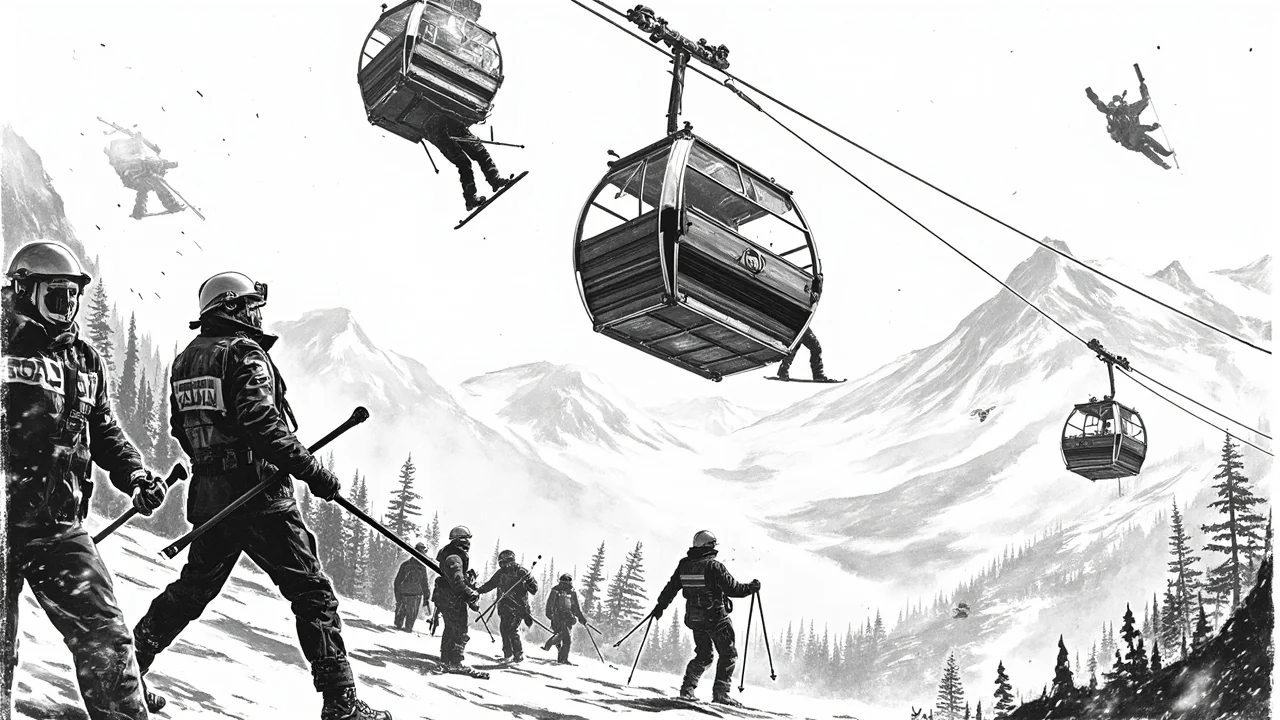
Norway's Trysil ski resort evacuated all 25 gondolas on a key lift line after a single cabin halted unexpectedly mid-route on Saturday. The incident began at 10:50 AM, triggering a major response from the resort's own trained personnel who managed the evacuation without police assistance.
Evacuation Proceeds Smoothly
Gudrun Sanaker Lohne, the destination manager for SkiStar in Trysil, confirmed the operation was ongoing just before 1:30 PM. 'We have initiated an evacuation and it is still in progress,' Lohne said. She emphasized that the process was proceeding very well, crediting the staff's extensive training. 'Our employees are well-trained for this,' Lohne stated. While the cause of the stoppage remains unknown, the resort immediately began troubleshooting to restart the lift. 'The troubleshooting is still ongoing, but we are in the final phase,' Lohne added.
Self-Sufficient Rescue Operation
The resort's in-house team handled the entire rescue, a standard protocol for such incidents at major Norwegian winter sports destinations. Operations Manager Vidar Flokenes from the Innlandet Police District confirmed that police were not assisting. 'We have been briefed by SkiStar, which has the competence to carry out the rescue operation itself. They will notify us when the action is completed,' Flokenes said. This underscores the high level of safety preparedness mandated for Norwegian ski lift operators, who must have detailed emergency plans and routinely train staff for technical failures and passenger evacuations.
Counting Passengers and Assessing the Scene
A primary task for the resort staff following the halt was accounting for all passengers. Lohne confirmed that every gondola on the line was occupied when the stoppage occurred. 'We are conducting a count of how many people were in the one that stopped,' she explained. This precise headcount is a critical step in any emergency protocol, ensuring no guest is unaccounted for and that assistance can be prioritized if needed. The evacuation of a gondola lift, especially one carrying multiple passengers across a potentially significant height and distance, is a methodical process. It typically involves technicians accessing the cable and using specialized equipment to lower each cabin safely to the ground or to bring passengers directly from the cabin to the lift tower via harness systems.
The Infrastructure and Safety Context
Trysil is Norway's largest ski resort, and its gondola system is a vital piece of infrastructure for moving skiers efficiently across its vast terrain. Modern detachable gondola lifts, like the one involved in this incident, are complex pieces of machinery with numerous redundant safety systems. They are subject to stringent daily checks and annual inspections by Norwegian regulatory authorities. A sudden stoppage can be triggered by various factors, from a safety sensor being activated by wind sway or a minor technical glitch in the drive system, to an object on the line or a door ajar detection. The immediate implementation of troubleshooting and the concurrent launch of evacuation procedures indicate the resort followed established safety protocols to the letter.
Economic and Operational Implications
For a resort of Trysil's scale, a prolonged closure of a primary lift has immediate operational and financial repercussions. It disrupts the flow of skiers across the mountain, potentially leading to congestion on other lifts and slopes. The resort must manage guest communications, provide potential compensation or alternative arrangements, and coordinate the technical investigation while maintaining normal operations elsewhere. The professional handling of such an incident is crucial not only for safety but also for maintaining visitor confidence, which is the bedrock of Norway's winter tourism industry. The fact that the evacuation was managed entirely in-house and reported to be proceeding smoothly suggests a significant investment in training and preparedness paid off during a real-world scenario.
A Look at Norwegian Safety Standards
This event, while disruptive, serves as a live test of the rigorous safety frameworks governing Norway's leisure industry. The country's technical standards (TEK) and regulations enforced by the Norwegian Labour Inspection Authority demand that lift operators have comprehensive contingency plans. These plans cover everything from power failures and brake failures to evacuation procedures for every type of lift, including chairlifts, T-bars, and gondolas. Regular, documented drills are not just recommended but are a required part of operational licensing. The seamless coordination described by resort officials between the operational team initiating the fault diagnosis and the safety team executing the passenger evacuation reflects this drilled, multi-pronged approach to incident management.
What Happens Next?
The immediate priority remains the safe evacuation of all passengers. Once the line is clear, the focus will shift entirely to the technical investigation. SkiStar's engineers, likely alongside representatives from the lift manufacturer, will work to diagnose the root cause of the stoppage. This investigation must be thorough and concluded before the lift can be recertified for public operation. The resort will also be required to file a report with the relevant safety authorities detailing the incident, the response, and the corrective actions taken. For the guests involved, the resort will typically offer apologies and gestures of goodwill, which could range from complimentary food and drink to voucher offers for future visits, depending on the duration and discomfort of the ordeal.
A Testament to Preparedness
The incident at Trysil, though alarming for those involved, appears to be a controlled emergency response unfolding as designed. The absence of police involvement is not a sign of neglect but an indicator of the operator's certified capability. It highlights a fundamental principle in Norwegian safety management: those who create and operate the risk are responsible for managing it, with public services acting in a supportive, not primary, role. As the final passengers are brought to ground safely and the technicians work to restart the system, the event stands as a stark reminder of the unseen safety machinery that operates daily beneath the surface of Norway's popular winter attractions. The successful resolution of such incidents relies not on luck, but on the relentless, regulated practice of preparedness.