
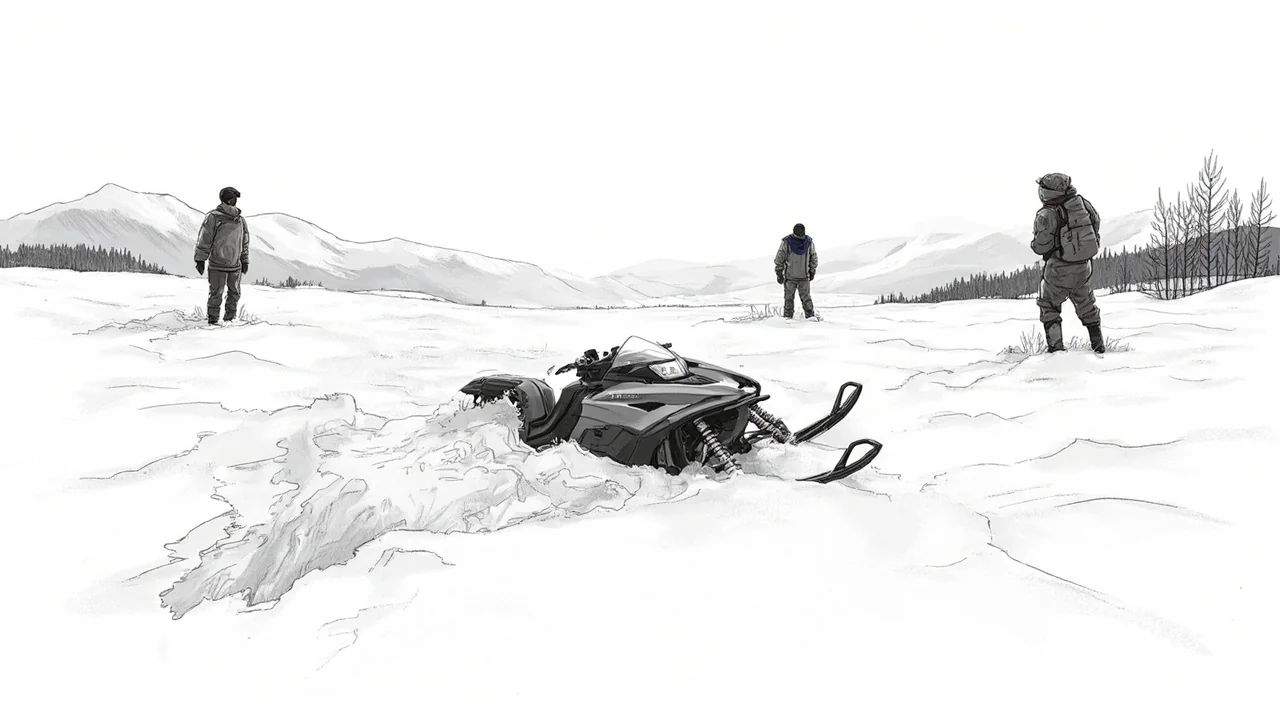
Norway's Balsfjord region has witnessed a fatal snowmobile accident that claimed the life of a man in his late fifties. The incident occurred on private property, where the snowmobile reportedly drove into a ditch. Police were alerted after the man's wife grew concerned over not hearing from him for a period of time. A neighbor subsequently discovered the man with the snowmobile near his home. Despite immediate resuscitation efforts, the man was declared dead at the scene. Operations leader Eirik Kileng stated that the snowmobile appeared to have been traveling at low speed, with no visible injuries to the man or damage to the vehicle. The man has been sent for an autopsy, and no witnesses to the event have been identified. Next of kin have been notified.
The Scene of the Incident
Balsfjord, a municipality in Troms county, is characterized by its rugged Arctic terrain and is a common area for winter recreational activities like snowmobiling. The accident took place on private land, with the snowmobile ending up in a ditch. Police described the location as not far from the man's residence. The lack of significant damage to the vehicle and the absence of visible injuries on the man have raised questions about the precise circumstances leading to his death. Eirik Kileng emphasized in his statement that the low speed involved made the outcome particularly unexpected. The remote nature of the area meant that the discovery was made by a neighbor, highlighting the close-knit community dynamics in such regions.
Response and Investigation Efforts
Local police initiated a response immediately after receiving the concern from the man's wife. Upon arrival, they found that a neighbor had already located the man. Emergency services performed cardiopulmonary resuscitation, but it was unsuccessful. The operations leader confirmed that life could not be saved. The police have now launched an investigation to determine the exact cause of the accident, with the autopsy expected to provide further details. The absence of witnesses complicates the investigation, relying on physical evidence and the autopsy results. Standard procedures in such cases involve reviewing the snowmobile's condition and the terrain, but initial reports indicate no obvious faults or hazards.
The Human Element and Community Impact
The man, whose identity has not been publicly released, was in his late fifties and lived locally. His wife's alert to the police underscores the personal vigilance often required in remote Norwegian communities. The neighbor who found him represents the informal safety networks that operate in these areas. Such tragedies resonate deeply in small communities, where everyone is often acquainted. The notification of next of kin has been completed, and the community is likely to rally in support. This incident brings to light the personal risks associated with winter sports, even in seemingly low-risk situations. The man's death is a stark reminder of how quickly routine activities can turn fatal.
Snowmobile Safety in Norwegian Context
Snowmobiling is a popular activity in Norway, especially in northern regions like Troms, but it carries inherent risks. Accidents, though relatively rare, often involve factors like terrain, weather, and speed. In this case, the low speed and lack of damage suggest that other factors, such as health issues or environmental conditions, may have played a role. Norwegian authorities typically advocate for safety measures including proper training, use of safety gear, and awareness of weather forecasts. The Arctic environment can be deceptive, with challenges like sudden weather changes or hidden obstacles. This accident may prompt local discussions on safety protocols for private land use and emergency response times in remote areas.
Broader Implications for Winter Recreation
The death in Balsfjord occurs amidst Norway's ongoing engagement with Arctic policy and rural lifestyle promotion. While not directly tied to energy or politics, it touches on aspects of Norwegian life in the north, where activities like snowmobiling are part of the cultural fabric. The incident could influence local safety campaigns or community-led initiatives to prevent similar tragedies. It also highlights the importance of communication systems in isolated areas, where delays in reporting can be critical. As Norway balances development in the Arctic with preserving local traditions, safety in recreational pursuits remains a key concern. This event serves as a somber note on the need for continuous vigilance, even in familiar settings.
Moving Forward from Tragedy
The investigation will continue with the autopsy results, which may clarify whether underlying health conditions contributed to the accident. Police have not indicated any suspicion of foul play, focusing instead on understanding the sequence of events. For the community, the loss will be felt deeply, and it may lead to increased awareness around snowmobile safety. In Norway, where outdoor activities are integral to national identity, such incidents prompt reflection on balancing adventure with caution. The man's death is a poignant example of how everyday moments in Norway's majestic landscapes can hold unforeseen dangers, urging both individuals and authorities to prioritize safety in all seasonal pursuits.