
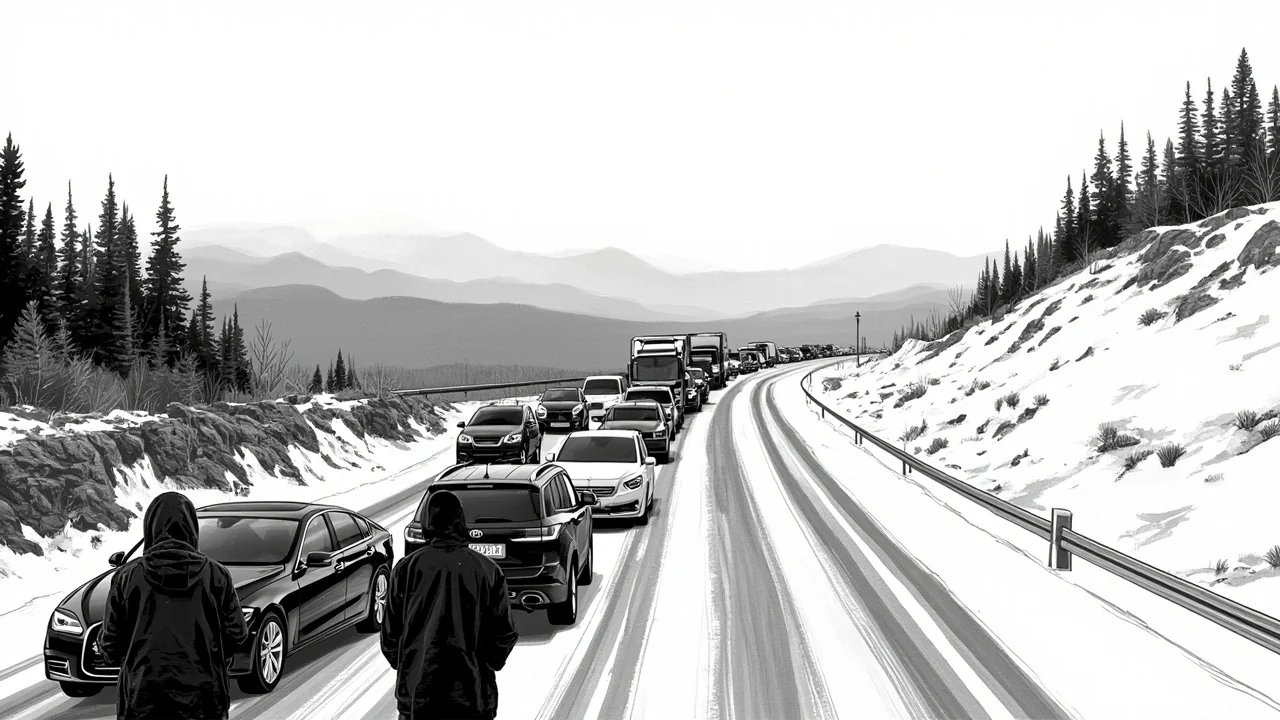
Norway's Riksvei 7 has a traffic queue stretching over 20 kilometers after a Friday afternoon accident in Flå. The collision, reported by police just before 5 PM, has created a slow-moving or stationary backlog that trapped motorists for hours, disrupting evening commutes and family plans. Police noted significant frustration among drivers stuck in the standstill, with tow trucks taking three hours to arrive at the scene. This incident highlights the acute vulnerability of Norway's road network to winter conditions and sudden disruptions.
Massive Gridlock on Key Mountain Route
Barbro Evensen Venhagen from Statens vegvesen confirmed the queue's extreme length, stating it extends over 20 kilometers with very slow movement, often coming to a complete halt due to recovery operations. The accident occurred on Riksvei 7, a vital artery connecting eastern and western Norway through mountainous terrain, making it a critical but challenging route especially in winter. Police logs described a scene of mounting frustration as drivers waited in freezing temperatures, with many missing their traditional Friday evening meals. The sheer scale of the backlog, equivalent to the distance from central Oslo to the outskirts of Bærum, underscores the severity of the disruption.
Rescue Efforts and Prolonged Delays
Tow trucks, referred to as heavy recovery vehicles, were dispatched to the accident site, but their arrival did little to immediately alleviate the congestion. Police indicated that the berging operation required periodic full stops, preventing any fluid movement in the queue. This stop-start dynamic exacerbated delays, with Statens vegvesen reporting only minimal progress hours after the initial incident. The response timeline, from accident report to ongoing recovery, illustrates the logistical hurdles faced by authorities in remote or difficult terrain. Drivers had no choice but to wait, with police communications serving as the primary source of updates for those stranded.
Widespread Winter Driving Hazards
This was not an isolated event. Near Indre Fosen, winter weather created separate troubles, with police reporting up to 20 vehicles that had slid off the road. Operations leader Martin Hammervik Aarhoug noted that gritting vehicles had completed two rounds at the site, and work was underway to remove drivable cars from the area. Similarly, Innlandet police district fielded numerous calls from motorists who had skidded off icy roads. Operations leader Bård Einar Hoft emphasized that roads in Innlandet were extremely slippery in many places, urging drivers to proceed with great caution. These concurrent incidents paint a picture of a widespread winter driving crisis across southern and central Norway.
Official Warnings and Driver Advisories
Police across affected regions reiterated calls for heightened vigilance on the roads. The advice from Innlandet police was clear and direct, warning that conditions were treacherous and requiring reduced speeds and increased following distances. This messaging aligns with standard Norwegian winter driving protocols, but the frequency of incidents this Friday evening suggests many drivers were caught off guard by the rapid deterioration in conditions. The logistical challenge of treating roads promptly, as seen in Indre Fosen where gritting occurred multiple times, highlights the ongoing battle between maintenance crews and unpredictable weather.
The Human Impact of Transportation Breakdowns
Beyond the statistics, the human element of this traffic chaos is palpable. Police explicitly cited the frustration of drivers, a sentiment that resonates with anyone familiar with Norway's long winter nights and essential car dependency in rural areas. The disruption to Friday evening routines, a culturally significant time for family gatherings, adds a layer of social impact to the transportation failure. While no injuries were mentioned in the initial reports, the economic and personal toll of such prolonged delays is considerable, affecting freight, appointments, and personal well-being.
Infrastructure Resilience in Focus
Events like this inevitably raise questions about the resilience of Norway's road infrastructure, though authorities provided no immediate analysis. The concentration of incidents on key routes like Riksvei 7 and around Indre Fosen points to specific vulnerabilities in certain corridors. The response from Statens vegvesen and police was operational, focused on clearance and safety, rather than explanatory. For regular commuters and transport professionals, this Friday night served as a stark reminder of the power of winter weather to bring even major highways to a standstill.