
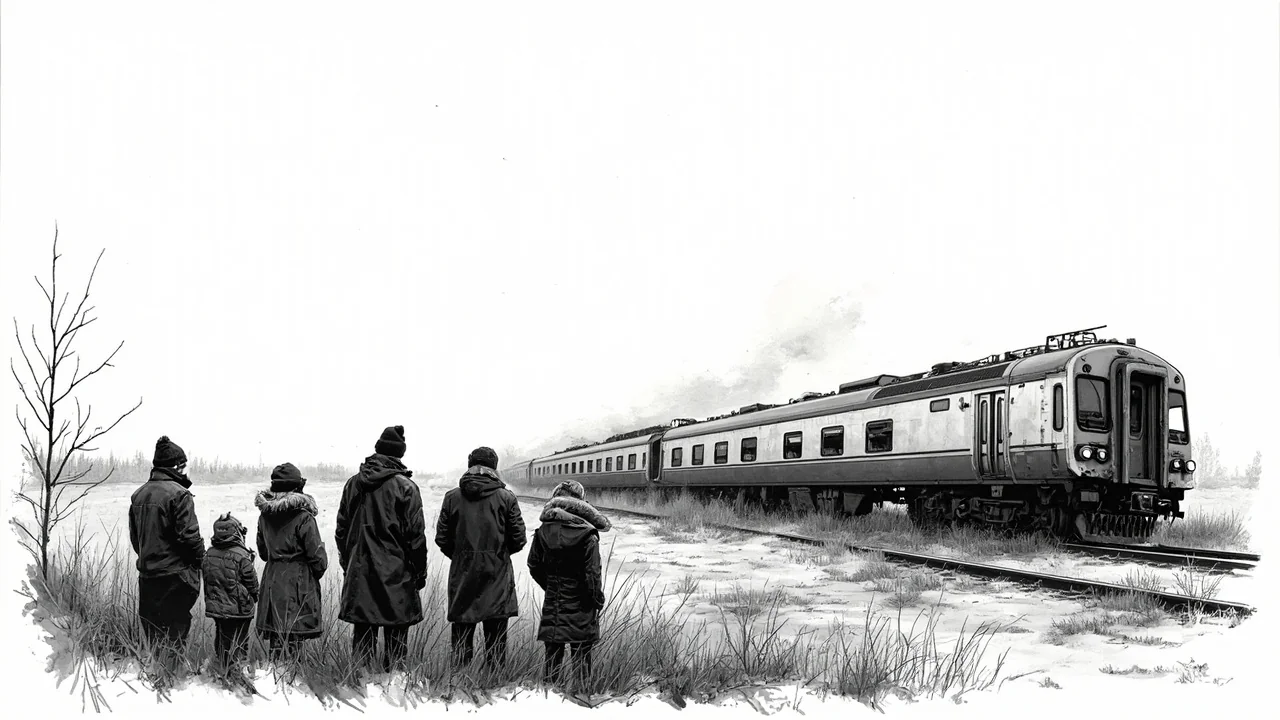
Norway's state railway operator Bane Nor reported a passenger train derailment at Trondheim Central Station that disrupted services on a key northern route without causing any injuries. The incident occurred as the train departed for Steinkjer at low speed shortly after leaving the station, leading to immediate cancellations and delays across the region. Emergency responders were quickly on scene, and an investigation into the cause has been launched, focusing on track integrity and operational factors.
Incident Details from Bane Nor
Bane Nor press contact Øystein Stavdal Paulsen said the derailment happened during the initial movement from the station platform. 'It was a train on its way out from Trondheim Central Station, heading towards Steinkjer. The derailment occurred at low speed. There are no reported personal injuries,' Paulsen stated. The train involved was a regional service on the Nordland Line, a critical artery for transport in central Norway. Passengers were evacuated safely, with no medical attention required. The location of the derailment, within the station limits, complicated initial recovery efforts and forced the closure of adjacent tracks.
Immediate Traffic Consequences
Paulsen emphasized that the derailment would have significant consequences for traffic throughout the day. 'There will be delays and cancellations, but this is so fresh that we currently do not have a full overview of how extensive it will be. The train that has derailed must be recovered,' he explained. Early reports indicated that all services on the Trondheim to Steinkjer corridor were suspended, with replacement bus services being organized. Commuters traveling to and from cities like Levanger and Verdal faced indefinite waits, impacting business and travel plans. Bane Nor's traffic management team worked to reroute freight and long-distance passenger trains, causing ripple effects on lines connecting to the Dovre and Meråker routes.
Passenger Accounts of the Event
A passenger aboard the train described a non-dramatic but unsettling experience. 'It shook a little when we drove from the station. Then we were informed over the loudspeaker system that we had derailed. It was not dramatic,' he said. This account aligns with Bane Nor's confirmation of a low-speed incident. Passengers remained calm during the evacuation, assisted by crew who followed standard safety protocols. The lack of panic or injury underscores the procedural effectiveness in such scenarios, though it highlights vulnerabilities in daily rail operations. Several passengers noted that the train had just begun accelerating when the derailment occurred, suggesting a possible issue with track switches or wheel alignment.
Infrastructure and Operational Context
The Nordland Line, where the derailment happened, is a 729-kilometer railway from Trondheim to Bodø, managed by Bane Nor's infrastructure division. This line is vital for passenger transport, freight logistics, and regional connectivity, especially for communities north of Trondheim. Bane Nor, a state-owned company under the Ministry of Transport, maintains over 4,200 kilometers of track nationwide, with regular inspections mandated by the Norwegian Railway Authority. The Trondheim hub is a nexus for rail traffic heading towards the Arctic, linking industrial and energy sectors in regions like Nordland and Troms. Past incidents on this line have typically involved weather-related issues, but low-speed derailments in station areas are rare and often point to maintenance or signal failures.
Recovery and Investigation Timeline
Recovery operations began immediately, with cranes and specialist teams deployed to re-rail the affected train cars. Paulsen noted that the process would be time-consuming due to the need for safety checks and track repairs. 'The train that has derailed must be berged, and we must inspect the track thoroughly before any traffic can resume,' he said. Bane Nor's investigation will examine data recorders, track conditions, and operational logs, with findings reported to the Norwegian Safety Investigation Authority. Parallel to this, engineers assessed damage to the track bed and signaling equipment, which could prolong service interruptions. The goal is to restore full service within 24 to 48 hours, contingent on no major infrastructure damage being found.
Broader Transport Network Impact
The derailment's effects extended beyond passenger rail, disrupting freight movements crucial for Norway's export economy, including goods bound for coastal ports. With the Nordland Line partially closed, alternative road transport faced increased congestion, particularly on the E6 highway running parallel to the railway. This incident draws attention to the aging sections of Norway's rail network, which have seen increased investment in recent years under national transport plans. For regions dependent on rail for daily commutes and logistics, such disruptions underscore the need for resilient infrastructure, especially as Norway promotes rail as a sustainable alternative to road and air travel in its climate policy.