
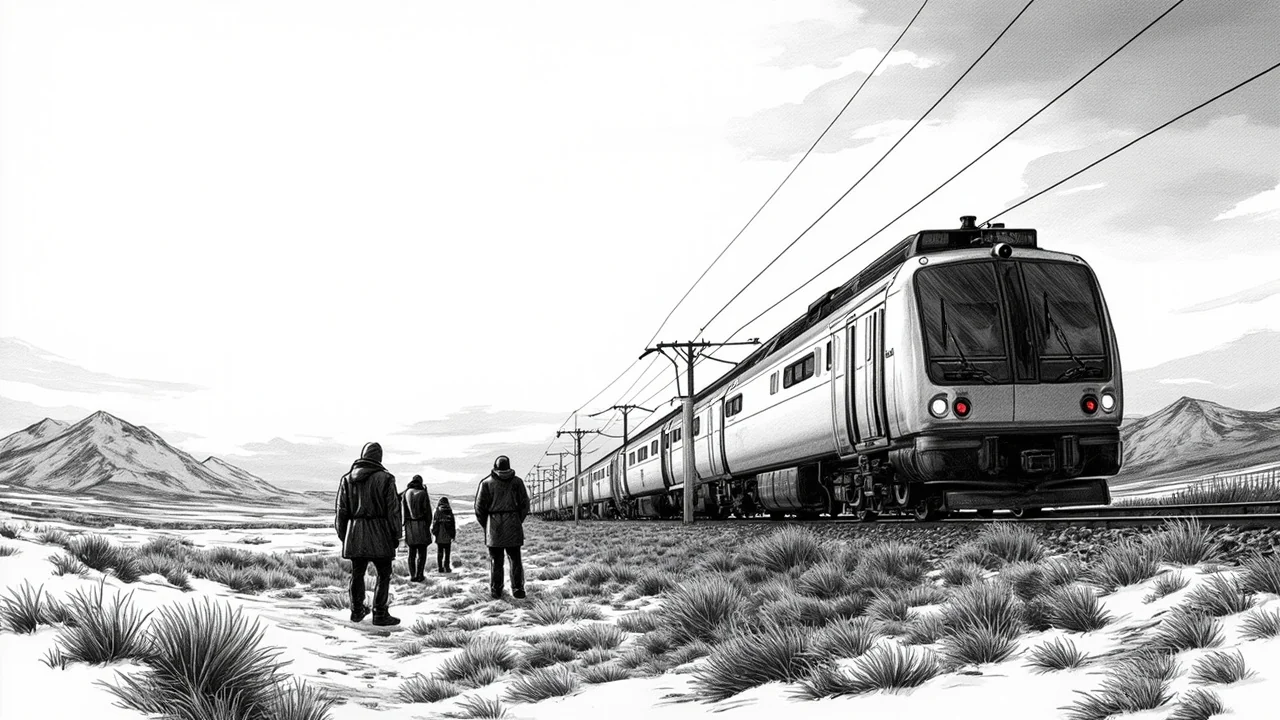
Norway's Dovre Line is shut down after a catastrophic power failure left an intercity train stranded with 500 passengers on board, blocking all traffic between Eidsvoll and Tangen. The train, traveling from Oslo to Lillehammer, lost electricity and now sits motionless on the tracks, prompting a complex rescue operation that could last hours. Press officer Åge-Christoffer Lundeby confirmed the incident, stating that the train cannot move under its own power and cannot be evacuated at its current location. It must be towed to a station before passengers can be transferred, causing significant delays across the region.
Immediate Crisis on the Tracks
The stranded train is completely without power, creating a hazardous blockage on a key northern route out of Oslo. All train traffic has been halted between Tangen and Eidsvoll, a critical junction for services heading towards Lillehammer and beyond. Lundeby explained the logistical nightmare facing authorities. "The train must be recovered from there, it cannot run on its own, and it cannot be evacuated where it stands," he said. "It must therefore be pulled to a station, and then passengers will be transported from there." With 500 people on board, the priority is ensuring their safety and comfort while engineers work to clear the line. Initial reports suggest a fallen contact line may be the cause, but this has not been officially confirmed, leaving the exact reason for the failure unclear.
Passenger Ordeal and Response Efforts
Passengers on the stricken train are facing an indefinite wait in difficult conditions. Alternative transportation is being arranged for other travelers on the line, but for those on the immobilized train, options are limited until it is moved. Lundeby acknowledged the frustration. "All trains on this section will be delayed. We are implementing alternative transport, but it helps little for those in the affected train," he said. "They must first be pulled to a station and transported from there, and that will take some time." The rescue operation involves coordinating heavy rail equipment to tow the lengthy train, a slow and meticulous process to ensure no further damage occurs. Emergency services are likely on standby, though specifics are not detailed in the initial reports.
Widespread Travel Disruption
The closure of the Dovre Line between Eidsvoll and Tangen has a ripple effect across Norway's rail network. This section is part of the main line connecting Oslo to major cities in the north, including Hamar and Trondheim. Bane Nor, the national rail infrastructure manager, has posted traffic alerts on station screens nationwide, informing travelers of the closure due to a train blocking the track. The decision to limit such announcements on their website, made last summer, means many passengers may rely on real-time updates at stations. Delays are accumulating for all services on this corridor, with commuter and long-distance trains alike forced to wait or seek alternative routes. The economic impact on freight and logistics is also significant, though passenger safety remains the immediate concern.
Investigating the Power Failure
While the focus is on rescue, questions arise about the infrastructure failure that led to this crisis. The suspected cause is a downed contact line, the overhead wire that supplies electricity to trains on this electrified route. Such failures are rare but can paralyze entire sections of the network. Bane Nor will need to conduct a thorough investigation once the line is cleared to prevent future incidents. The Dovre Line is a vital artery for Norwegian transport, and its reliability is crucial for both daily commuters and the tourism industry, especially with destinations like Lillehammer involved. The incident highlights the vulnerabilities in even modern rail systems when critical components fail.
The Road to Recovery
As night falls, the operation to recover the train and its passengers continues. The process of towing a disabled train is not swift, it requires specialized locomotives and careful coordination to navigate the single track safely. Once the train reaches a station like Eidsvoll or Tangen, buses will be deployed to transport passengers to their destinations, though this will add hours to their journeys. For the 500 people on board, this unexpected halt transforms a routine trip into a prolonged ordeal. Authorities have not provided an estimated time for when the line will reopen, indicating that disruptions could extend into the night. Travelers are advised to check for updates frequently and consider postponing non-essential trips on this route.
Broader Implications for Rail Safety
This incident on the Dovre Line comes amid ongoing discussions about Norway's rail maintenance and communication policies. Bane Nor's move last summer to share fewer traffic updates on its websites means that during crises like this, passengers may face information gaps. The stranded train episode underscores the importance of robust emergency protocols and transparent communication with the public. While Norway's railways are generally safe and efficient, today's breakdown serves as a reminder of the complex systems that keep trains moving and the consequences when they falter. For now, all attention is on safely resolving the situation and restoring normal service on this crucial transport link.