
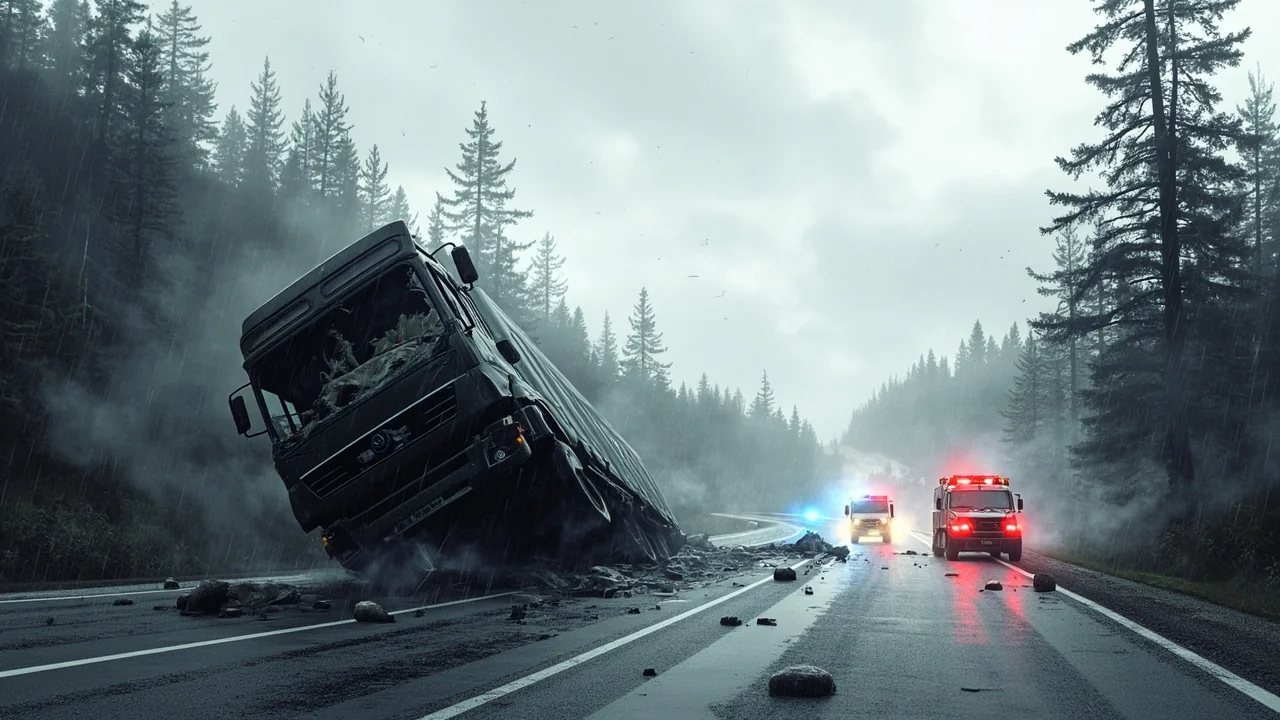
Norway's Innlandet county witnessed a serious head-on collision between a truck and a passenger car early Tuesday, trapping the truck driver and prompting a major emergency response. The accident was logged by police at 09:07, marking the start of a chaotic morning on the region's roads. Operations leader Frode Øveras confirmed the severity of the incident, stating it involved a møteulykke, or meeting accident, where the vehicles collided directly. The truck driver remained conscious but was critically trapped in the wreckage, while authorities scrambled to assess the total number of people involved. Initial reports suggested the truck had veered off the road and caught fire, spreading debris across the pavement and necessitating a prolonged road closure. This unfolding tragedy underscores the sudden dangers on Norwegian highways, with lives hanging in the balance as rescue teams work against time.
Scene of the Accident
The collision occurred on a road in Innlandet, a county known for its varied terrain and transit routes. According to police logs, the accident was first reported as a traffic incident involving a truck that had left the roadway. Frode Øveras, the operations leader overseeing the response, provided grim details to media. He emphasized that the truck driver was fastened in the cabin, aware but immobilized by the crushed metal. The passenger car's condition and the status of its occupants were not immediately clear, adding to the uncertainty at the scene. Witnesses or early alerts described flames engulfing the truck, with the blaze contributing to hazardous conditions for responders. The fire left significant nedfall, or fallout, on the road, including molten debris and ash, complicating access and cleanup efforts. Emergency vehicles, including fire trucks and ambulances, converged on the location, their lights piercing the morning fog as they navigated the obstructed route.
Emergency Response Efforts
Police and rescue services mobilized quickly following the 09:07 alert, prioritizing life-saving measures over investigative procedures. Frode Øveras stressed that the immediate focus was on liv og helse, life and health, with teams working to extricate the trapped truck driver and aid any other victims. The presence of fire required specialized equipment to cool the wreckage and prevent reignition, delaying full access to the vehicles. Medical personnel stood by to triage injuries, though Øveras noted that a complete tally of involved individuals was still pending. The operations leader reiterated that the situation remained fluid, with all resources directed toward stabilization. Communication from the scene was fragmented, as officers cordoned off the area to secure evidence for the subsequent etterforskning, or investigation. This methodical approach aimed to balance urgent care with forensic accuracy, ensuring that causes could be determined once the crisis subsided.
Road Closure and Local Impact
The accident has forced a full shutdown of the affected road, expected to last lengre tid, or a longer time, due to the extensive damage and debris. Frode Øveras cited the fallout from the fire as a primary reason for the closure, with cleanup crews needing to clear hazardous materials before reopening. This disruption likely rerouted traffic through alternative paths in Innlandet, potentially causing delays for commuters and freight transport. Local authorities advised drivers to avoid the area and seek updates via official channels. The closure underscores the broader ripple effects of such accidents, where isolated incidents can strain regional infrastructure. For residents and businesses dependent on the route, the stoppage meant logistical headaches and economic setbacks, compounding the tragedy's human cost. Police coordinated with road agencies to manage detours, though no estimated reopening time was provided, leaving travelers in limbo.
Investigation and Ongoing Updates
As rescue operations continued, the groundwork for an official investigation began, though Frode Øveras clarified that probing the cause would take secondary priority initially. The police plan to examine factors like vehicle speed, road conditions, and potential driver error, but Øveras emphasized that such inquiries would unfold after securing the scene. The involvement of a truck and passenger car raises questions about visibility or mechanical failure, common themes in Norway's traffic safety discussions. Authorities pledged transparency, with updates to follow as more details emerged on the number of casualties and circumstances. The trapped truck driver's condition remained a focal point, with hopes pinned on a successful extraction. This accident joins a ledger of road incidents in Norway, where authorities consistently stress vigilance on winding or remote highways. For now, the community holds its breath, awaiting outcomes that will define recovery and prevention efforts.
Community and Aftermath
The Innlandet accident reverberated beyond the crash site, touching neighbors and first responders grappling with the aftermath. While specific identities were not released, the event highlighted the vulnerabilities faced by daily travelers on Norway's roads. Quotes from Frode Øveras captured the tense atmosphere, as he noted the conscious state of the trapped driver—a small solace amid the chaos. The broader implications include potential reviews of road safety measures in the region, though any policy shifts would depend on investigative findings. As day progressed, the focus shifted from emergency response to support for affected families and cleanup logistics. This incident serves as a stark reminder of how quickly normalcy can shatter, leaving communities to rebuild from the wreckage. With the road closed and investigation pending, Norway watches Innlandet, reminded of the fragile line between routine journeys and life-altering events.