
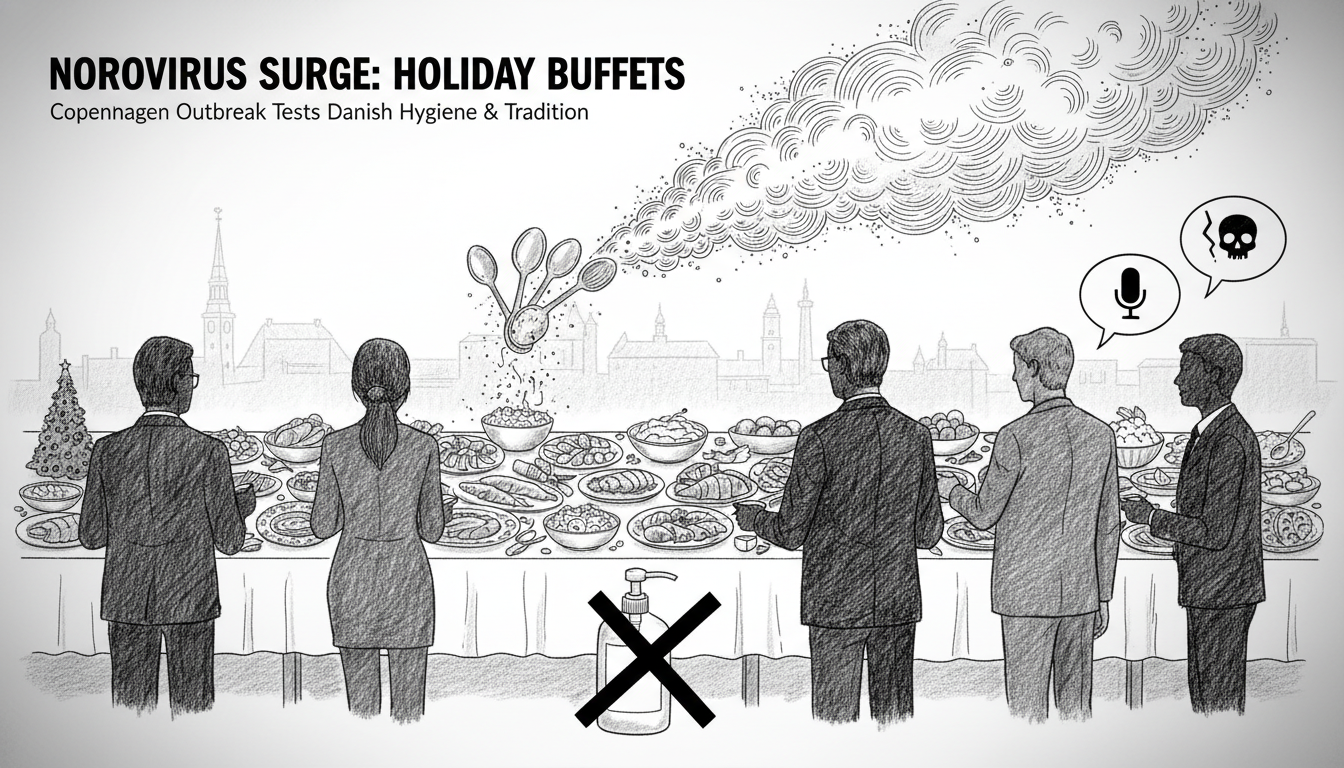
A highly contagious stomach virus is spreading across Denmark as the holiday season reaches its peak. Public health officials confirm that norovirus cases typically surge during the winter months. The festive tradition of the Christmas lunch, or 'julefrokost', is now identified as a primary transmission event. These gatherings, where colleagues and friends share extensive buffet-style meals, create ideal conditions for the virus to spread. The Danish Food and Drug Administration has issued specific guidance to curb the outbreak. Their advice comes as many municipalities report increased absenteeism in workplaces and schools.
Norovirus spreads with alarming ease through contaminated food and surfaces. Buffets present a particular risk, as multiple people handle serving utensils. Officials stress that alcohol-based hand sanitizers are ineffective against this pathogen. Thorough handwashing with soap and water remains the best defense. They recommend using tongs and spoons for all buffet items and changing plates for each new serving. A person can be contagious both before feeling ill and for at least 48 hours after symptoms subside. This lengthy transmission window makes containment challenging.
This annual public health challenge intersects with broader themes in Danish society. The communal 'julefrokost' is a deeply ingrained social ritual, reflecting Denmark's strong culture of workplace and community cohesion. Public health campaigns must therefore balance risk communication with cultural sensitivity. The response also tests the renowned Danish welfare system's preventive capabilities. Local social centers and municipal health services often become first points of contact for concerned residents, especially in diverse urban areas like Copenhagen. Effective communication in multiple languages is crucial for integration, ensuring all community members understand the precautions.
From a policy perspective, this recurring situation highlights the continuous effort required to protect public health within a social democratic model. The state provides clear guidelines, but individual responsibility is paramount. There is a direct economic impact from lost productivity, which the welfare state absorbs through sick leave benefits. For international residents and newcomers, navigating such health advisories is part of the integration process. Understanding these seasonal public health patterns is key to participating fully in Danish cultural life while staying safe. The current advice is straightforward: if you are sick, stay home. Wash your hands diligently with soap before eating. Be mindful at shared meals. These simple acts protect both personal health and the wider community's well-being during this festive time.