
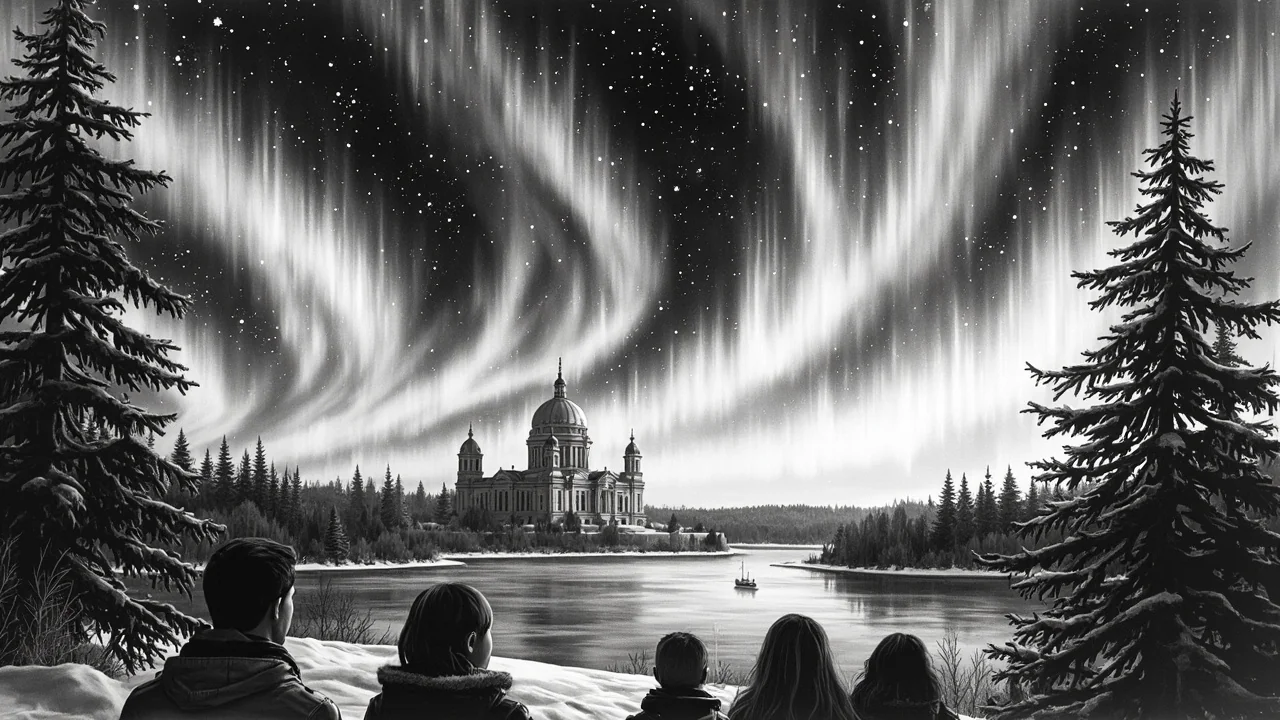
A rare and spectacular natural phenomenon visible in the capital region always generates high search and real-time news activity. The Northern Lights, or revontulet, were clearly visible in the sky over Helsinki on the evening of March 20, 2026. The phenomenon was widely reported on social media with pictures and videos taken by residents. Ilmatieteen laitos, the Finnish Meteorological Institute, had predicted increased solar activity that could lead to auroras being visible as far south as Southern Finland. The institute's forecast proved accurate for the Helsinki area, and the event captured public and online attention. The vivid display over the capital provided a stunning visual spectacle as residents shared their experiences across various digital platforms.
The occurrence of such a strong aurora display in southern Finland is relatively uncommon. It demonstrates the powerful solar activity predicted by meteorological experts and created a memorable night for many in the Helsinki region. The aurora borealis is a natural light display caused by collisions between electrically charged particles from the sun and gases in Earth's atmosphere. These particles are drawn toward the poles by Earth's magnetic field. The colors, often green but sometimes pink, red, yellow, blue, and violet, depend on the type of gas molecules involved. The Finnish name for the lights, revontulet, translates to "fox fires," stemming from an old Finnish myth.
The prediction by Ilmatieteen laitos was based on monitoring solar winds and coronal mass ejections from the sun. These events can intensify geomagnetic storms, which in turn make auroras brighter and visible at lower latitudes. The display over Helsinki was a direct result of such a geomagnetic storm. Visibility in the city was enhanced by clear weather conditions that night, allowing for an unobstructed view of the sky. Reports and images flooded platforms like Instagram, X, and Facebook shortly after the lights appeared. The auroral oval, the region where the lights are typically visible, expanded southward to cover Helsinki temporarily. This expansion is a direct consequence of heightened solar activity interacting with Earth's magnetosphere. The event was a notable example of space weather influencing a visible atmospheric event in a populated region.