
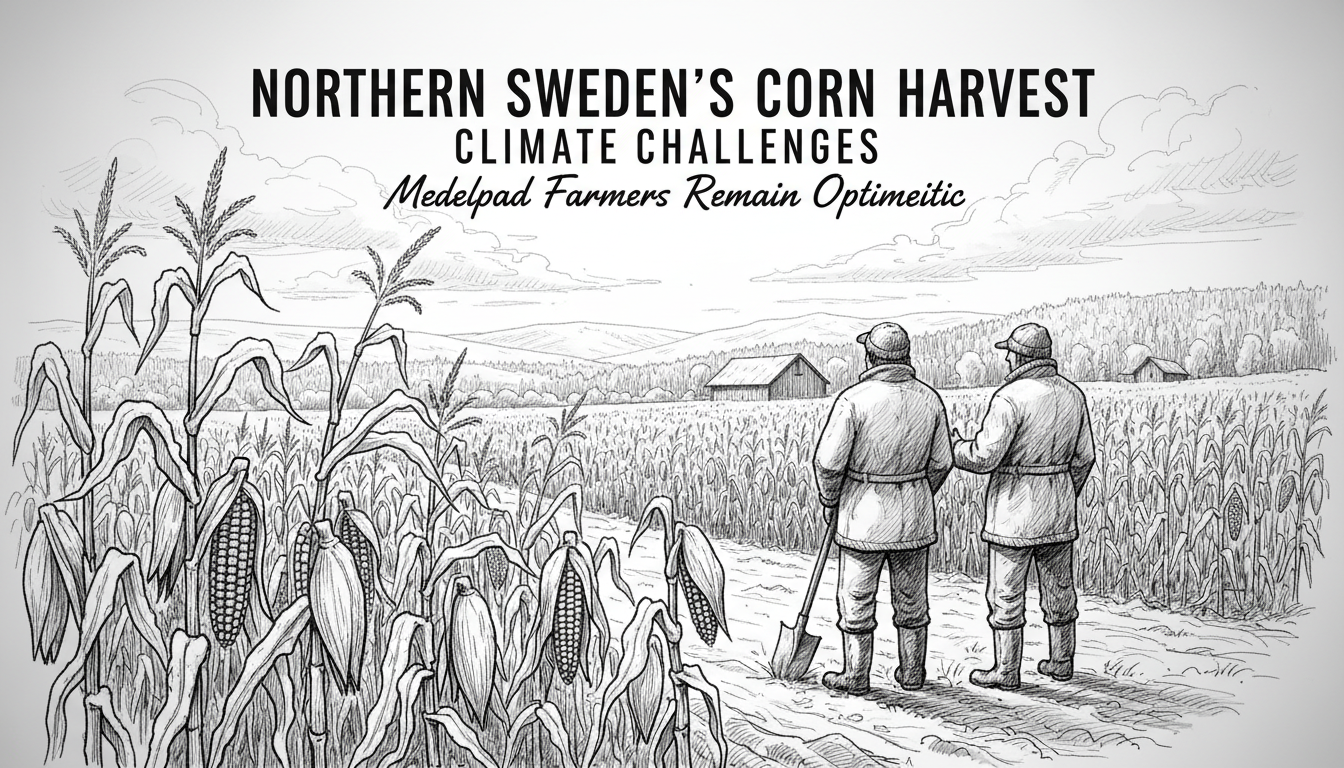
Farmers Anna and Joakim Vägermark planted 65 hectares of corn this season in Torpshammar, western Medelpad. Their operation represents the largest corn cultivation in northern Sweden. Climate changes are making corn farming increasingly common across northern regions.
Joakim Vägermark explained that corn provides better nutrition for their dairy cows. "The cows perform better and milk production increases with corn feed," he said in a statement. Corn creates more nutrient-rich and easily digestible feed compared to grass and hay alone.
This year's harvest quantity was described as normal. Yet it marks their poorest yield since they began corn cultivation four years ago. Last year's harvest occurred in September. The cold spring this year delayed corn growth significantly.
Harvesting only became possible in late October. Despite the challenges, the farmers remain optimistic about corn as a viable crop. Northern Sweden's agricultural landscape is clearly evolving with changing climate conditions.
Farmers across the region are adapting their practices as growing seasons shift. The Vägermarks' experience shows both the opportunities and uncertainties facing Nordic agriculture.