
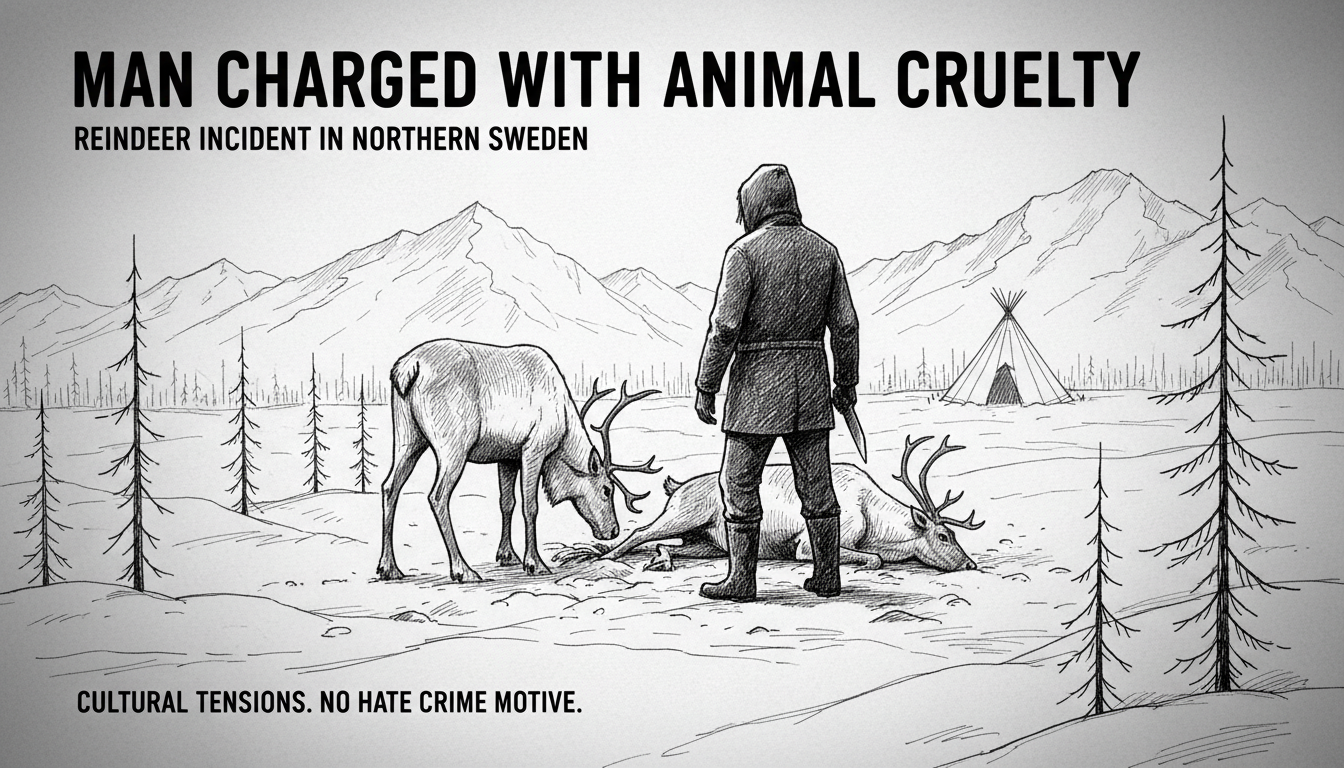
A man in Umeå faces serious animal cruelty charges after hitting three reindeer with his vehicle and then cutting their throats. The incident occurred during February in northern Sweden, an area where the indigenous Sami people have herded reindeer for centuries.
Assistant prosecutor Anna Nilsson leads the investigation. She stated the animals suffered greatly before dying. Her office released details about the case in a formal statement. Nilsson confirmed the violence against the reindeer should be classified as severe animal cruelty.
Rumors circulated locally about possible hate crime motivations behind the attack. The prosecutor directly addressed these speculations. She emphasized the investigation shows no evidence of hate crime motives. There is also no connection to the Rally Sweden event that sometimes occurs in the region.
This case touches deep cultural nerves in Sweden. Reindeer represent more than just wildlife here. They connect directly to Sami cultural heritage and traditional livelihoods. Many Swedes feel particular outrage when these animals suffer needless harm.
Northern Swedes know reindeer often wander onto roadways, especially during winter months. Most drivers exercise extra caution in reindeer territory. The standard procedure involves contacting authorities after any collision. What makes this case different is the deliberate harm that followed the initial accident.
Sweden takes animal welfare seriously with strong legal protections. The country's animal cruelty laws carry potential prison sentences for severe violations. Cases involving protected species or indigenous cultural symbols often receive particular attention from prosecutors.
Local Sami communities have expressed concern about the incident. Reindeer herding faces multiple challenges today from climate change to land use conflicts. Additional threats from deliberate cruelty create extra stress for these traditional communities.
The case now moves toward trial in Swedish courts. Legal experts suggest the severity of the charges reflects both the animals' suffering and the cultural significance of reindeer in northern Sweden. This combination often leads to stricter enforcement of animal protection laws.
International readers might wonder why this case matters beyond local news. It demonstrates Sweden's approach to balancing modern society with cultural preservation. The strong response to this incident shows how seriously the country takes both animal welfare and protection of indigenous traditions.
What happens next? The court will examine evidence and hear testimony. The accused will have opportunity to present his side of the story. Swedish courts typically handle such cases within several months, though complex investigations can take longer.
This situation reminds us that cultural context matters in understanding legal responses. What might seem like a simple animal cruelty case carries deeper significance in regions where traditional livelihoods intersect with modern life. Sweden's approach shows how societies can protect both animal welfare and cultural heritage through their legal systems.