
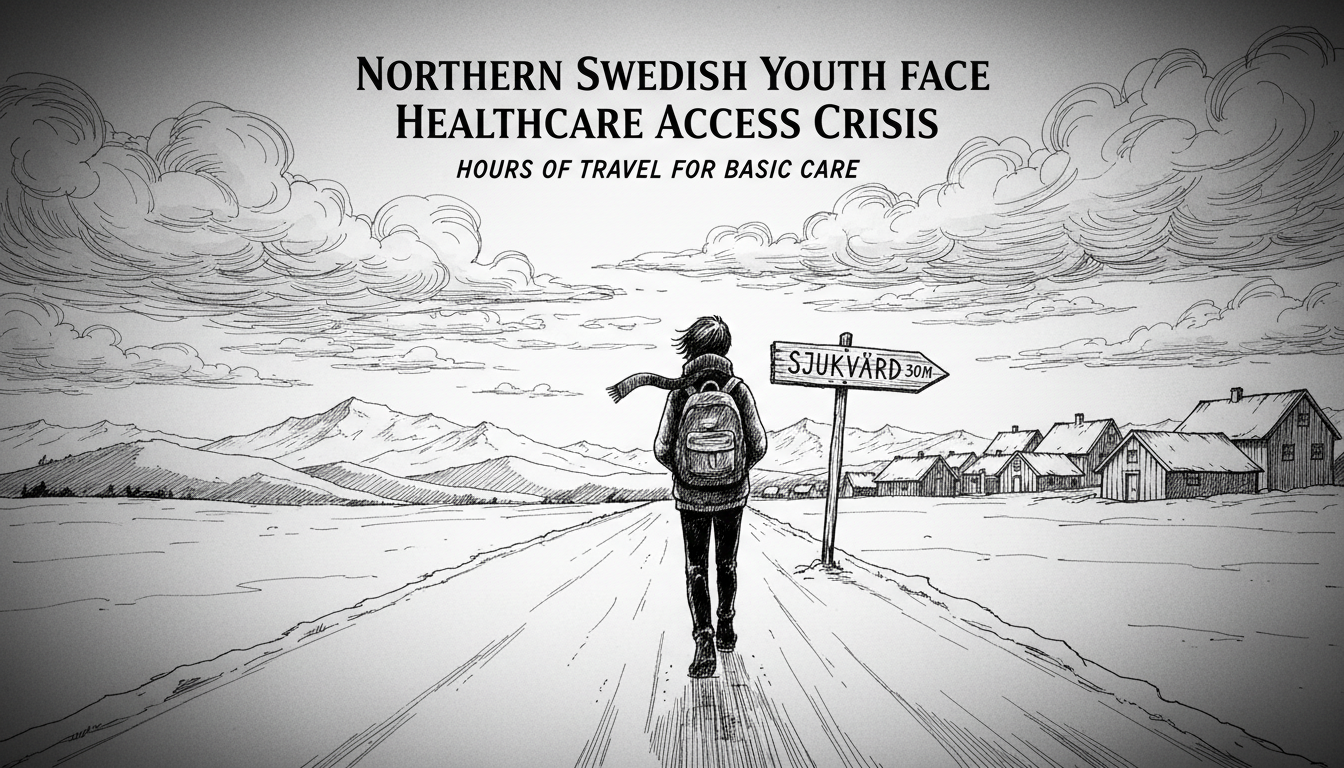
Young residents in Sweden's northern regions confront substantial barriers accessing essential healthcare services. A comprehensive national mapping reveals dramatic disparities in youth clinic availability across the country. The Swedish government faces mounting pressure to address these geographical inequalities in healthcare provision.
Arjeplog residents must travel 210 kilometers each way to reach their nearest youth clinic. The journey requires over three hours by bus to reach Piteå for basic healthcare services. This situation creates impossible choices for young people seeking confidential medical advice.
Ingela Holmertz, general secretary of a leading health rights organization, stated these travel demands violate fundamental healthcare principles. Nobody should need to travel for hours to visit a youth clinic or access abortion services, yet this remains the reality for many northern Swedes.
Twelve-year-old Vilmar Renberg expressed the practical difficulties facing young patients. Adolescents often cannot discuss sensitive health matters with parents and lack independent transportation options. The bus journey itself presents an insurmountable barrier for confidential healthcare access.
Region Norrbotten has closed several physical youth clinics while expanding digital healthcare services. This shift toward telemedicine aims to bridge geographical gaps but raises new concerns. Fifteen-year-old Mira Nordin and other youths worry about digital security and the impersonal nature of online consultations. Many young patients prefer face-to-face interactions for discussing personal health matters.
The national assessment examined all 21 Swedish healthcare regions using four criteria from UN health framework standards. Researchers evaluated accessibility, availability, acceptability, and quality across multiple service categories. The analysis included youth clinics, sexual health services, maternity care, and specialized gynecological and urological treatments.
This healthcare disparity highlights structural challenges in Sweden's regional governance system. The Riksdag decisions on healthcare funding distribution have created noticeable service gaps between urban and rural areas. Stockholm politics often prioritizes metropolitan needs while northern communities face service reductions.
The current situation reflects deeper tensions in Swedish healthcare policy. Government policy Sweden traditionally emphasizes equality, yet practical implementation varies dramatically across regions. Northern residents consistently receive fewer healthcare resources despite often having greater medical needs.
Historical underinvestment in northern infrastructure compounds current healthcare access problems. Previous Riksdag decisions allocated disproportionate resources to southern urban centers. The Swedish Parliament now faces difficult choices about rebalancing regional healthcare investments.
Healthcare professionals note that digital solutions cannot fully replace physical clinics for adolescent patients. Young people often require safe, confidential spaces for discussing sensitive health issues. The absence of local youth clinics forces difficult compromises between privacy and healthcare access.
This mapping exercise provides concrete evidence of Sweden's healthcare geographical divide. The findings challenge Sweden's self-image as a model of universal healthcare access. The Swedish government must now confront these documented disparities in basic service provision.
The report includes specific recommendations for creating more equitable healthcare distribution. Policy experts suggest targeted investments in northern healthcare infrastructure and transportation solutions. These proposals will likely generate debate within government districts about budget priorities and regional equity.