
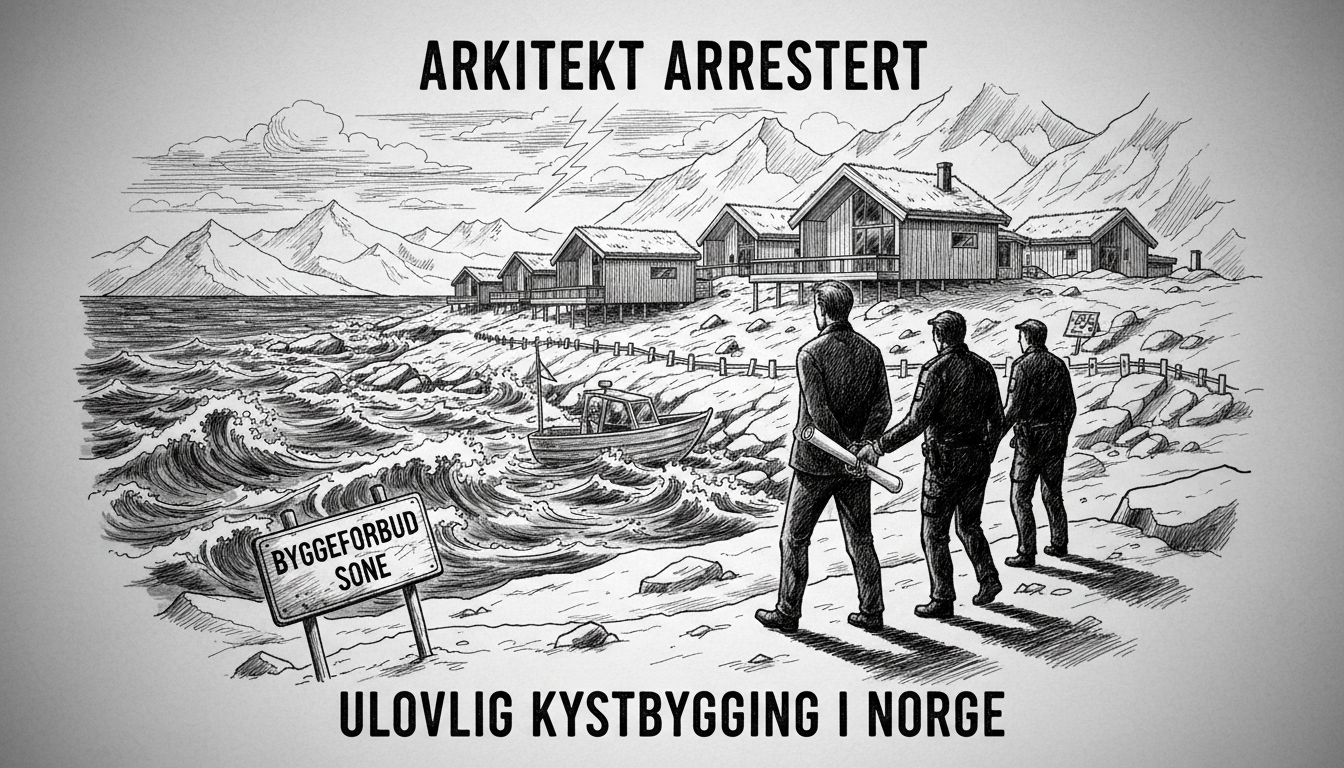
Norwegian police arrested an architect Tuesday for suspected illegal construction projects. Authorities conducted raids at multiple addresses in Fredrikstad.
The man faces allegations of extensive illegal cabin construction in protected coastal zones. He serves as the responsible applicant for several projects under investigation.
Police confirmed one person remains in custody following the operation. Searches occurred at several locations as part of the probe.
Defense lawyer Helge Skaaraas criticized the police action. "In our assessment, no criminal offense has occurred," he said in a statement. "The arrest appears disproportionate."
Skaaraas called the case highly unusual. He noted decades of legal experience without encountering similar situations.
The accused will appear for custody hearing Wednesday at Sarpsborg District Court. Police seek one week detention with mail and visit restrictions.
Prosecutor Mathias Emil Hager of the Eastern Police District defended the arrest. "Police believe the conditions for arrest exist," Hager stated. "We will argue this during today's detention meeting."
The case involves substantial violations of Norway's Planning and Building Act. "This concerns excessive construction in coastal zones relative to granted permits," Hager explained.
Authorities consider the matter serious due to breach of trust. Municipalities issue permits relying on applicants acting properly.
Police initiated the investigation after the municipality filed multiple compliance cases against the same applicant. Officials also received complaints repeatedly naming the same individual.
Violations of Norway's building laws carry maximum one-year prison sentences. Police spent weeks planning Tuesday's operation.
The arrested man underwent interrogation Tuesday. Investigators continue reviewing seized materials and documentation.
This case highlights Norway's strict protection of coastal areas, where building restrictions often surprise international observers. The legal confrontation between defense and prosecution suggests conflicting interpretations of evidence that courts must now resolve.