
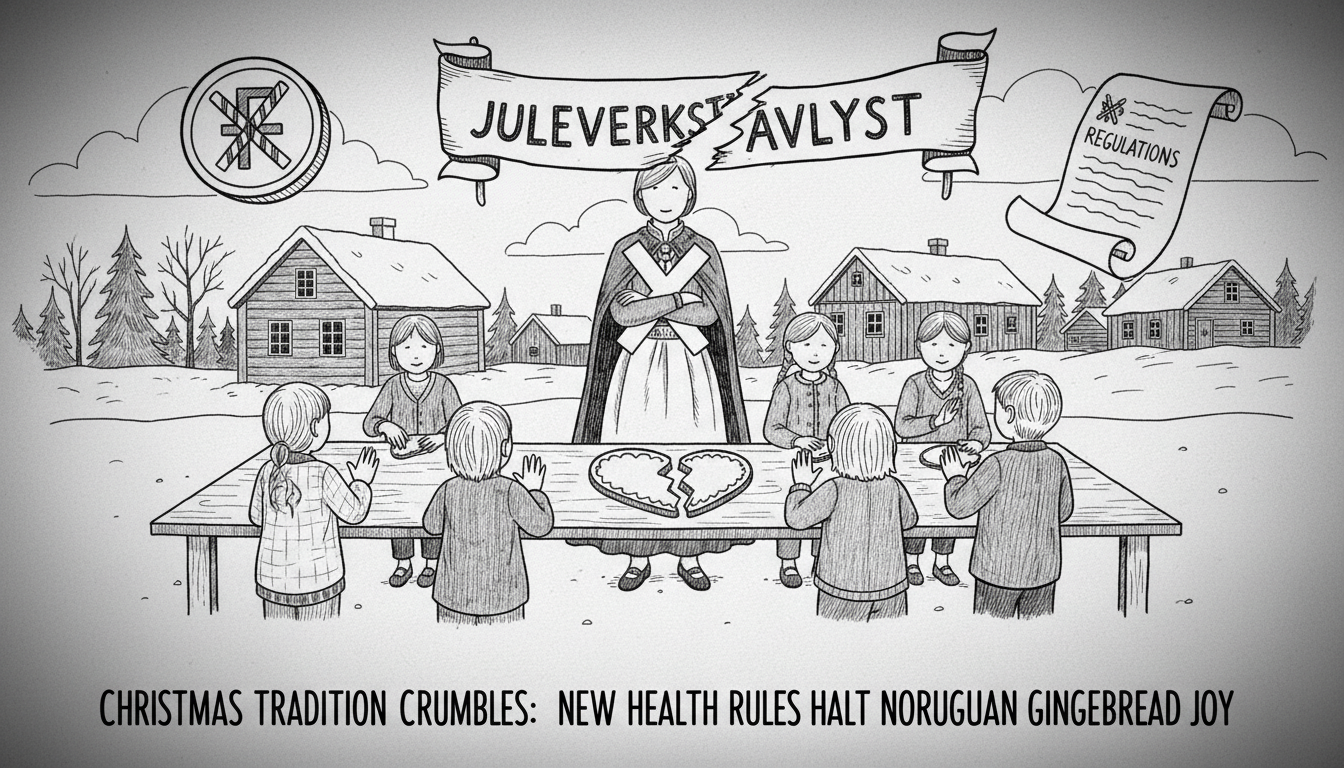
A cherished Christmas tradition in a small Norwegian community has been canceled due to a new national health regulation. The annual gingerbread workshop at Waagans Bakeri og Konditori in Tynset will not take place this year. The bakery has hosted the event for local children since 2018. A new regulation prohibits the marketing of unhealthy food and drink to children under 18. This includes the distribution of gingerbread cookies as part of a commercial activity aimed at minors. The rule is part of a broader public health strategy to reduce childhood exposure to unhealthy dietary marketing. The decision has sparked a political debate about regulatory overreach versus public health priorities.
Baker Anne Flemsæterhaug Waagan expressed deep disappointment. She said the workshop created valuable childhood memories and social joy. The smell of Christmas baking filled the air during past events. Children decorated cookies, drank cocoa, and participated in drawing contests. Waagan stated the children's eyes would light up with happiness. She received drawings and saw their decorated cookies. The tradition was positive for children, parents, and grandparents alike. The Norwegian Directorate of Health confirmed the bakery could still host the event for adults. Families could be invited if cookies were given to parents, who could then decide to pass them to children.
The regulation was passed by the Storting, Norway's parliament, with support from several parties. The Labour Party, the Centre Party, the Socialist Left Party, the Green Party, the Red Party, the Christian Democratic Party, and the Patient Focus party voted for it. The rule aims to promote health by preventing diet-related issues in the population. It specifically seeks to protect children from health-detrimental marketing. The vote occurred just before Christmas last year, with enforcement beginning this spring.
Opposition politicians have criticized the regulation's practical effects. Health policy spokesperson for the Conservative Party, Erlend Svardal Bøe, called the situation very bureaucratic. He argued the law does not align with practical reality. Bøe stated parents are capable of making good dietary choices for their children. He warned that prohibition is not always the best tool. The Progress Party's health policy spokesperson, Kristian Eilertsen, was more direct. He labeled the cancellation of traditional gingerbread workshops as completely idiotic. Eilertsen accused the government of stealing cookies from children in its zeal to regulate. He plans to raise the issue in the Storting if the government does not amend the rules.
May Cecilie Lossius, Division Director for Public Health at the Norwegian Directorate of Health, acknowledged the timing has prompted many inquiries. She stressed the regulation's intent is to reduce the overall marketing pressure of unhealthy products directed at children. Lossius explained that making exceptions for many situations could collectively create numerous arenas for unhealthy exposure. The rule targets commercial marketing activities, not the act of baking or eating gingerbread itself. The directorate manages and provides guidance according to the established legal framework.
This incident highlights a recurring tension in Norwegian policy-making. The state often intervenes with regulations to shape public health outcomes, a principle known as 'forebyggende politikk' or preventive policy. This stems from a strong societal commitment to collective welfare. However, it frequently clashes with local traditions and personal autonomy. Similar debates have surrounded regulations on alcohol advertising, tobacco displays, and sugar taxes. The gingerbread case is a microcosm of this larger conflict. It pits the state's role as a health guardian against community-led cultural practices.
Baker Waagan agrees with the regulation's intention to combat unhealthy habits. Yet she believes there are better solutions. She suggests starting with good food traditions in schools. Waagan proposes a buffet system where children choose their food, similar to kindergartens. This approach could foster better habits without banning community events. Svardal Bøe of the Conservative Party echoed this sentiment. He emphasized creating good habits early in childhood through cooperation. The focus should be on reducing sugar, salt, and saturated fat content in food and drink, he argued. Relying solely on bans is naive and ineffective.
The story from Tynset reflects a broader Scandinavian trend. Nordic countries are global leaders in public health regulation. They frequently use legislative tools to engineer social outcomes. This works well for systemic issues like road safety or recycling. It becomes more contentious when applied to intimate cultural and familial spaces like holiday baking. The government's challenge is balancing statistical health goals with the intangible social value of local tradition. For the children of Tynset, the consequence is a quieter, less sugary December. Whether this trade-off is worth the lost community joy is a question now being debated across Norway.