
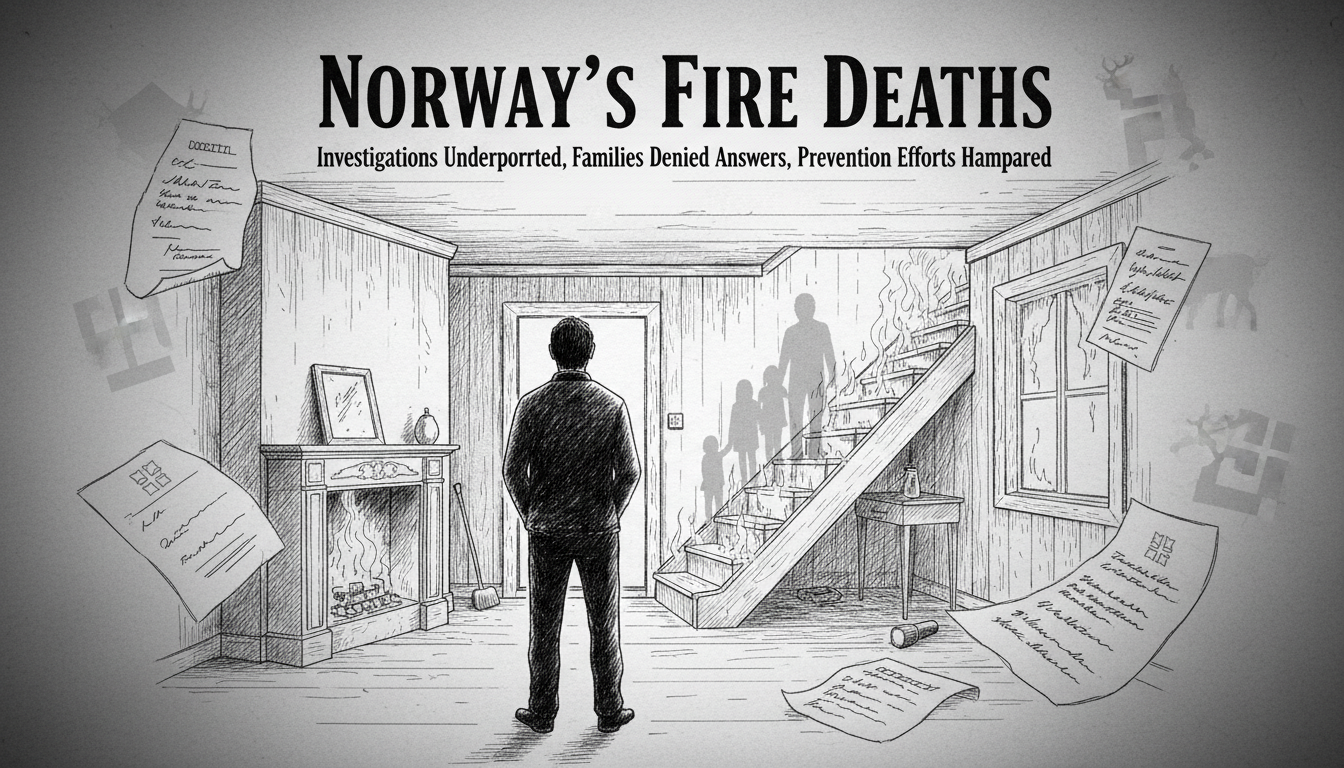
Four young women died in a Hamar fire on September 8 this year. Investigators still don't know what caused the blaze.
A father lost his daughter, stepson and ex-wife in a 2021 cabin fire on Andøya island. He says authorities never properly investigated. Many Norwegian families never learn why their loved ones died in fires.
Official data shows 225 people died in 202 fires between 2020 and September 2025. Police determined specific causes for only 60 of these deadly fires.
But can we trust these numbers? No, according to experts familiar with the data.
Norway's fire statistics are incomplete and messy. There has been much error and underreporting, confirms Håvard Arntzen, head of the fire, chemistry and documents section at the National Criminal Investigation Service.
We unfortunately don't have national statistics accurate enough to use, says police directorate spokesperson Eirik Lyngdal.
Police districts handle fire investigations locally and report to the Directorate for Social Security and Emergency Preparedness. But they often fail at this task, says forensic technician Erik Jones.
We know fire causes get reported too early, before forensic technicians even assist, he explains.
One major problem: deadly fires aren't a separate case category in police records. They get registered as investigation cases instead.
The National Criminal Investigation Service gets called only when districts lack specific expertise. They have nothing to do with actual reporting to the emergency directorate.
We want better reporting routines from police and correct statistics, Jones says. But the path there isn't simple.
We need to uncover criminal acts and prevent future tragedies, Arntzen emphasizes. That's why this statistics matter so much.
The Director of Public Prosecutions issued guidelines in February 2024 to clarify responsibilities. Has anything improved?
Several police districts sent death fire numbers that don't match the emergency directorate's overview.
Registration and reporting are inaccurate and incomplete, says prosecutor Per Eirik Vigmostad-Olsen. This is unfortunate for prevention efforts.
Johan Marius Ly, department head for fire and rescue at the emergency directorate, disagrees that reporting methods are too difficult.
Police districts' reporting routine to us is simple enough, he states. The challenge likely lies elsewhere.
The emergency directorate has noted low cause reporting from police districts for years, relative to fire numbers in their own statistics. We support the criminal investigation service's statement about widespread errors and underreporting, Ly says.
We know good prevention saves lives, including in fire safety. That's why police must prioritize thorough technical and tactical investigations to determine fire causes. This knowledge forms the basis for improving fire prevention work.
The police directorate became aware of missing reporting some time ago, writes section chief Liv Aasberg Corneliussen in an email.
Measures were implemented then through reminders to districts about reporting importance and improved technical routines. Since this remains challenging, we will reconsider measures, Corneliussen adds.
Reporting fire causes is crucial for implementing preventive measures.
The system's failures mean Norwegian families may never understand why their loved ones perished. Meanwhile, preventable fire risks could continue unchecked across the country.