
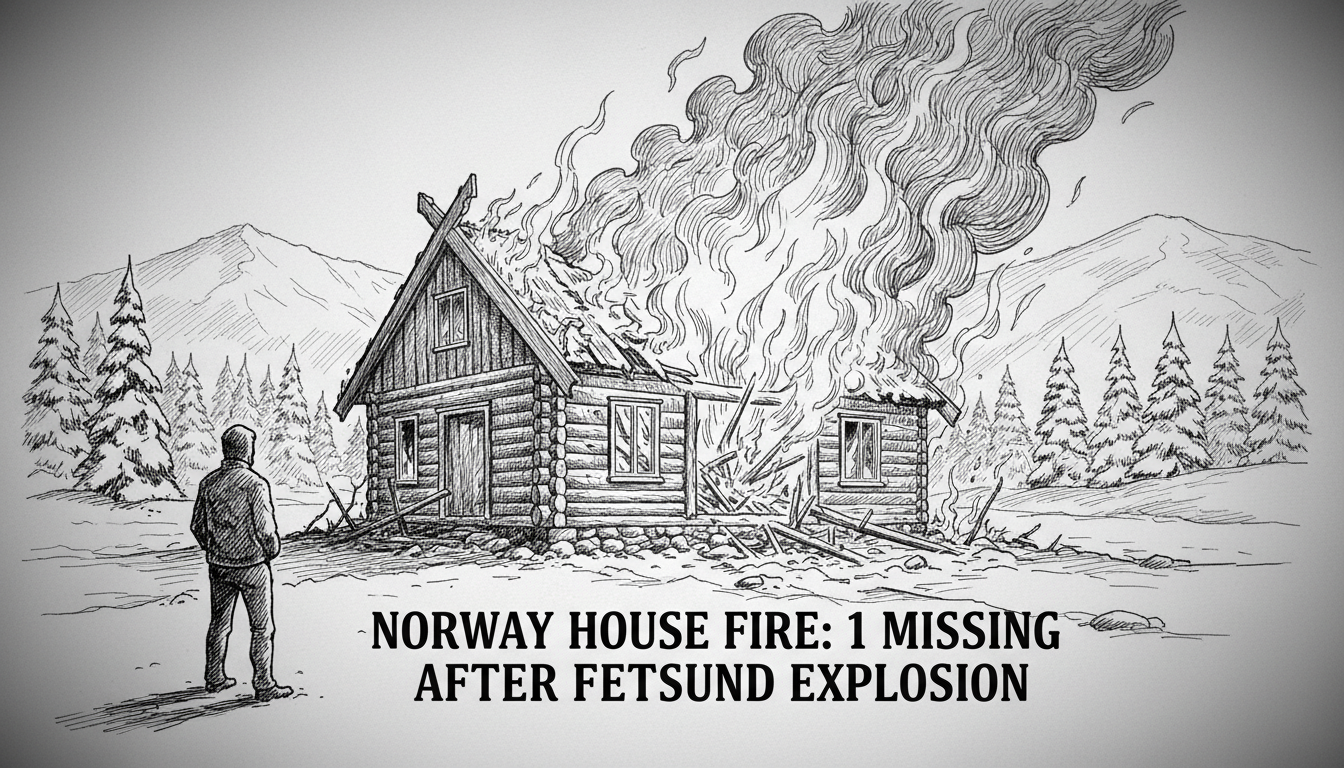
Norway house fire in Fetsund turned critical Tuesday afternoon following a reported explosion. Emergency services rushed to a single-family home in the Lillestrøm municipality after the blaze was reported at 16:40 local time. Police confirmed one person registered at the address remains unaccounted for as firefighters battle intense flames engulfing the structure.
"There is a full blaze in the detached house, with open flames from the roof," police noted in their operational log. Operations manager Ronny Hellerud Samuelsen soon after reported an explosion at the scene. Authorities immediately urged residents to keep a safe distance and issued a specific warning for the neighborhood. "Residents in the area are asked to keep windows and hatches closed due to heavy smoke," Samuelsen wrote.
The incident highlights the sudden and severe dangers that can erupt in quiet residential communities. Fetsund, a town within the traditional district of Romerike northeast of Oslo, is typically known for its tranquil setting near the Glomma river. The rapid escalation from fire to explosion has shifted this from a routine emergency call to a major incident with potentially tragic consequences.
Emergency Response and Community Impact
Fire and rescue services from Lillestrøm are on site, working to contain and extinguish the fire. Their primary objective is to gain control of the flames, a task complicated by the earlier explosion and the structural integrity of the burning building. The police have secured the perimeter, a standard procedure that also preserves the scene for the subsequent investigation. The combination of fire and explosion triggers a multi-agency response, with police assuming lead responsibility for the overall operation once the immediate rescue phase concludes.
For neighbors, the event has been both frightening and disruptive. The directive to keep windows closed is a common but serious precaution in such fires. Smoke inhalation poses a significant health risk, and modern synthetic materials in homes can produce toxic fumes when burned. The explosion itself would have been a shocking event, likely felt and heard in surrounding properties, shattering the afternoon calm in this part of Akershus county.
"The priority is always life safety, then incident stabilization," a veteran fire officer, speaking on background due to the active investigation, explained. "When an explosion is reported, it changes the risk assessment dramatically for responders. It indicates potential fuel sources or pressures we must be aware of, and it can critically weaken the building's structure, making interior operations extremely dangerous."
The Search for Answers and a Missing Resident
The most pressing unknown is the status of the individual registered at the address. Police have stated this person has not yet been accounted for, a formulation that underscores the seriousness of the situation. Until firefighters can safely enter and search the premises, or contact is made with the individual elsewhere, their fate remains the central concern of the operation.
This aspect casts a somber shadow over the technical firefighting efforts. Norwegian emergency protocols treat every fire with a person unaccounted for as a potential rescue mission until proven otherwise. The intense fire and structural damage from the explosion, however, may severely limit any possibility of intervention until the blaze is subdued.
Local authorities, including the municipal crisis team, will likely be activated to provide support if needed. The community of Fetsund, with a population of just over 7,000, is tight-knit, and such an event will resonate deeply. The coming hours will be crucial for providing answers to both the family involved and concerned residents.
Understanding the Risks in Norwegian Homes
While statistically safe, residential fires in Norway present unique challenges. Many homes, especially in older areas, feature wooden construction, which can facilitate rapid fire spread. The country's cold climate also means homes are tightly sealed for energy efficiency, which can initially contain a fire before leading to intense, oxygen-starved conditions that may contribute to explosive backdrafts or smoke gas explosions.
The cause of the initial explosion in Fetsund will be a key line of inquiry. Common culprits in residential settings include pressurized gas canisters (like those for grills or welding), aerosol containers, or accumulated gases from certain types of fire. In rarer cases, issues with natural gas lines or illicit activities can be a factor. Determining the origin is a meticulous process that begins only after the last ember is cold.
"The investigation will be systematic," the fire officer noted. "We look for the seat of the fire, the point of origin, and then work to identify the source of ignition and any contributing factors like the explosion. In a case like this, the explosion may have been the result of the fire, not the cause of it. That distinction is vital for learning and prevention."
Norway has strict building and fire safety codes, and residential smoke alarm coverage is high. Yet, accidents can still occur through technical faults, human error, or unforeseen combinations of events. The Norwegian Directorate for Civil Protection (DSB) consistently campaigns for fire preparedness, including having working smoke detectors, fire extinguishers, and an escape plan.
A Long Night Ahead for Investigators
As the fire trucks eventually depart, the work for police and fire investigators will begin in earnest. The scene will be treated as a potential crime scene until accidental causes can be confidently established. Forensic specialists will document every detail, sifting through the debris to piece together the sequence of events that led from a normal Tuesday to a catastrophic fire.
This process can take days or even weeks. Investigators will interview witnesses, examine the home's electrical systems, review any security camera footage from the area, and analyze the debris patterns. The goal is not just to assign cause but to extract lessons that could prevent a similar tragedy elsewhere in Lillestrøm or across Norway.
The emotional investigation runs parallel to the technical one. Police will work to formally locate and notify the missing individual's next of kin. The community will grapple with the shock and the visual scar of a burned-out home in its midst. In small towns, such events are not just news items; they are personal.
The Aftermath and a Community's Resilience
The Fetsund fire is a stark reminder of how quickly disaster can strike. It underscores the bravery of first responders who confront unstable, burning structures, and the importance of heeding official warnings to stay clear. For now, the people of Fetsund can only wait, hope for the safety of their neighbor, and support the emergency crews working through the evening.
Final word counts and cause determinations will come later. The immediate story is one of response, risk, and uncertainty on a quiet street in Romerike. The ultimate story, yet to be written, will hinge on what investigators find in the ashes and whether a community must mourn one of its own.