
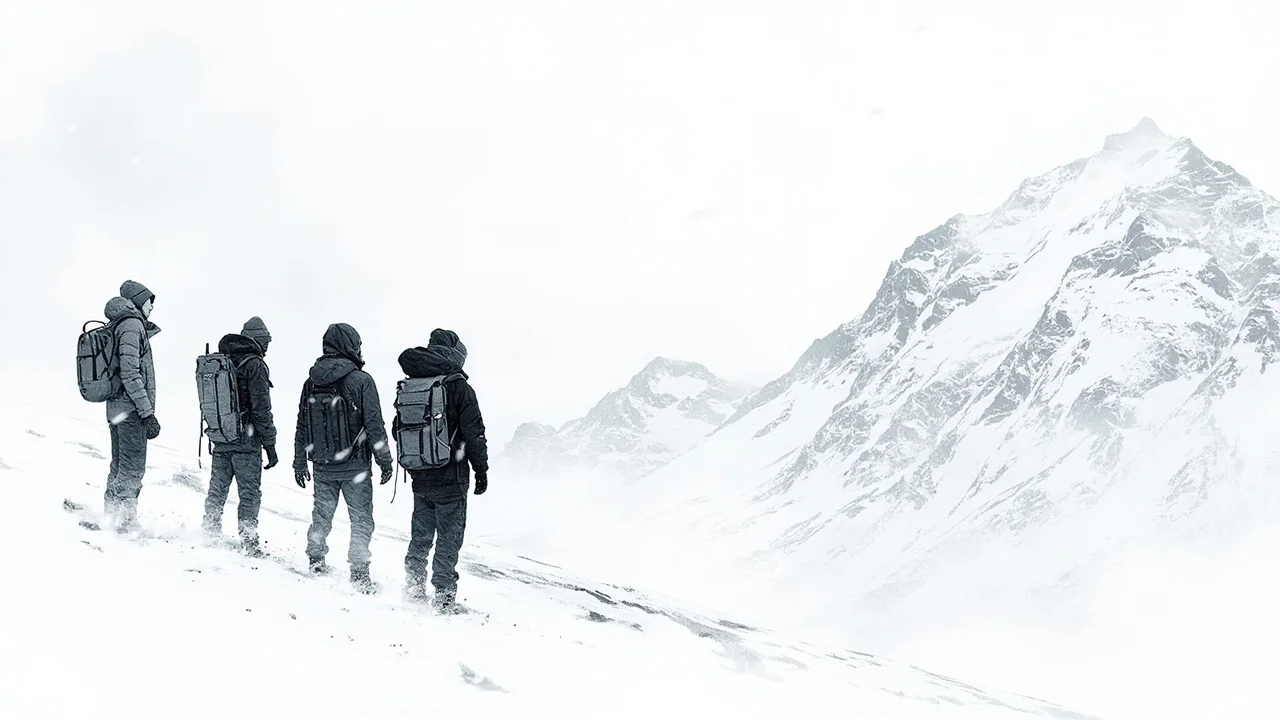
Norway's popular Gaustatoppen mountain became the scene of a dramatic rescue operation after five foreign teenage boys became lost near the summit. The group, described as inadequately dressed for the severe conditions, was unable to descend from the 1,883-meter peak where temperatures plunged to minus 21 degrees Celsius. Rescue services, including a helicopter, were dispatched following an emergency call reporting the stranded hikers.
This incident highlights the persistent dangers faced by tourists in Scandinavia's majestic but unforgiving wilderness. Gaustatoppen, famed for its panoramic views and the unique Gaustabanen railway, attracts between 100,000 and 120,000 visitors annually. The mountain offers hiking and skiing, but its accessibility belies the rapid weather changes and extreme cold that can catch the unprepared off guard. Operations chief Sigurd Edvardsen confirmed the rescue mission was underway to locate and extract the young men from the hazardous environment.
A Race Against Time and Temperature
The core challenge for rescuers was the lethal combination of disorientation and exposure. Being "inadequately dressed" for such temperatures presents an immediate risk of hypothermia and frostbite, conditions that can set in rapidly, especially for those not moving. The use of a rescue helicopter indicates the urgency of the situation, as ground-based teams would have taken significantly longer to reach the summit in darkness and deep cold. This operation underscores a critical protocol in Nordic mountain rescue: speed is often the decisive factor between life and death.
From a Danish perspective, where the highest point is a mere 171 meters, such dramatic mountain rescues are foreign. Yet, the underlying theme of tourist preparedness is universal. Danish authorities frequently warn visitors to the country's coastlines and forests about respecting nature. This Norwegian incident serves as a stark, amplified reminder of those same principles. The Nordic outdoors demands respect, regardless of the nation's topography.
The Allure and Peril of Accessible Wilderness
Gaustatoppen's high visitor numbers point to its status as a managed tourist destination, not a remote, untamed peak. The presence of the Gaustabanen, a railway that transports visitors partway up the mountain, likely contributes to a perception of safety and ease. This can create a dangerous disconnect. Tourists may embark on a summit hike without fully appreciating the remaining challenge or the volatile alpine climate above the tree line. They transition from a facilitated tourist experience to a raw natural environment without a corresponding shift in gear or mindset.
This is a recurring issue across Nordic tourist hotspots. In Denmark, similar dynamics play out on the shifting sands of Råbjerg Mile or along the turbulent waters of the West Coast. Visitors, lulled by well-marked trails or nearby amenities, can underestimate the power of nature. The Norwegian teens' situation is an extreme example of a common problem: the failure to equip oneself for the worst-case scenario, not just the planned excursion. Proper clothing, navigation tools, and emergency supplies are non-negotiable, even on popular trails.
Lessons in Integration and Community Safety
While this is a breaking news story from Norway, it intersects deeply with themes I observe in Danish society: integration and communal responsibility. Many new residents in Denmark arrive from climates and urban landscapes utterly different from Scandinavia's. Part of successful integration involves learning to navigate and respect this new environmental context. Community centers and integration programs could arguably place greater emphasis on practical outdoor safety—how to dress for Danish winter, how to read weather warnings, understanding the risks of the sea or forests.
The rescue response itself is a product of the Nordic welfare model's emphasis on collective security. Highly trained, publicly funded rescue services are a societal guarantee, a safety net for all within the borders, citizen and visitor alike. This operation, likely costing tens of thousands of kroner, will be borne by the public system. It prompts a delicate debate about responsibility. While society pledges to help, individuals have a duty to avoid recklessly endangering themselves and those sent to save them. This social contract is fundamental to the region's functioning.
A Broader Pattern of Tourist Misadventure
This event is not isolated. Every summer, Danish coastal rescue services perform numerous retrievals of swimmers caught in riptides. Every winter, police report incidents of drivers stranded on icy roads without a winter survival kit. The Norwegian mountain drama is a high-altitude version of a persistent regional pattern. The allure of Nordic nature is potent, and marketing often focuses on its beauty and accessibility, sometimes at the expense of conveying the necessary caution.
Authorities continuously grapple with this communication challenge. How do you warn without discouraging tourism? How do you instill a culture of preparedness? Some Norwegian parks have implemented mandatory gear checks for certain hikes. Others use clear signage with pictograms and multiple languages. The effectiveness of these measures is tested in moments like the Gaustatoppen rescue, where a group, for reasons yet unknown, found themselves critically unprepared.
The Human Cost of Rescue Operations
Behind the logistical report of a helicopter dispatch lies a human story of fear, cold, and hope. Five teenagers, likely on an adventure, suddenly confronted a life-threatening situation. Their families, possibly thousands of kilometers away, may have been unaware of the danger until contacted by authorities. The rescue personnel, meanwhile, undertake a high-risk mission in darkness and extreme cold, putting their own safety on the line. This human cost—emotional and physical—is the true weight of such emergencies.
In the aftermath, the focus will rightly be on the boys' health and their safe return. Subsequently, questions will arise. Were there adequate warnings in their language? Did they ignore signage? Was this a tragic misjudgment? The answers will inform future safety campaigns. For now, the story is a tense waiting game, a reminder that in the balance between human ambition and natural force, nature holds the ultimate power. The successful conclusion of this rescue will depend on skill, technology, and perhaps a measure of luck, against the indifferent chill of a Norwegian mountain night.
The Aftermath and Enduring Questions
As this article is written, the outcome of the rescue mission is still unknown. We can only hope for a successful retrieval and a story that ends with a stern lesson learned rather than a tragedy. Regardless of the result, the incident will reverberate. It will be analyzed by Norwegian trekking associations and safety boards. It may prompt new signage or updated advisories for the Gaustatoppen area.
For Denmark and the wider Nordic region, it reinforces a critical message. Our nature is a treasure, but it is not a tame park. Respecting it requires preparation, humility, and an understanding that conditions can change in an instant. The social safety net is strong, but it is not invincible. The most important integration any person can make in Scandinavia is not just with its society, but with its landscape. This means learning to listen to the weather forecast, to pack an extra layer, and to know when turning back is the wisest summit of all. The mountains, like the sea, do not compromise.