
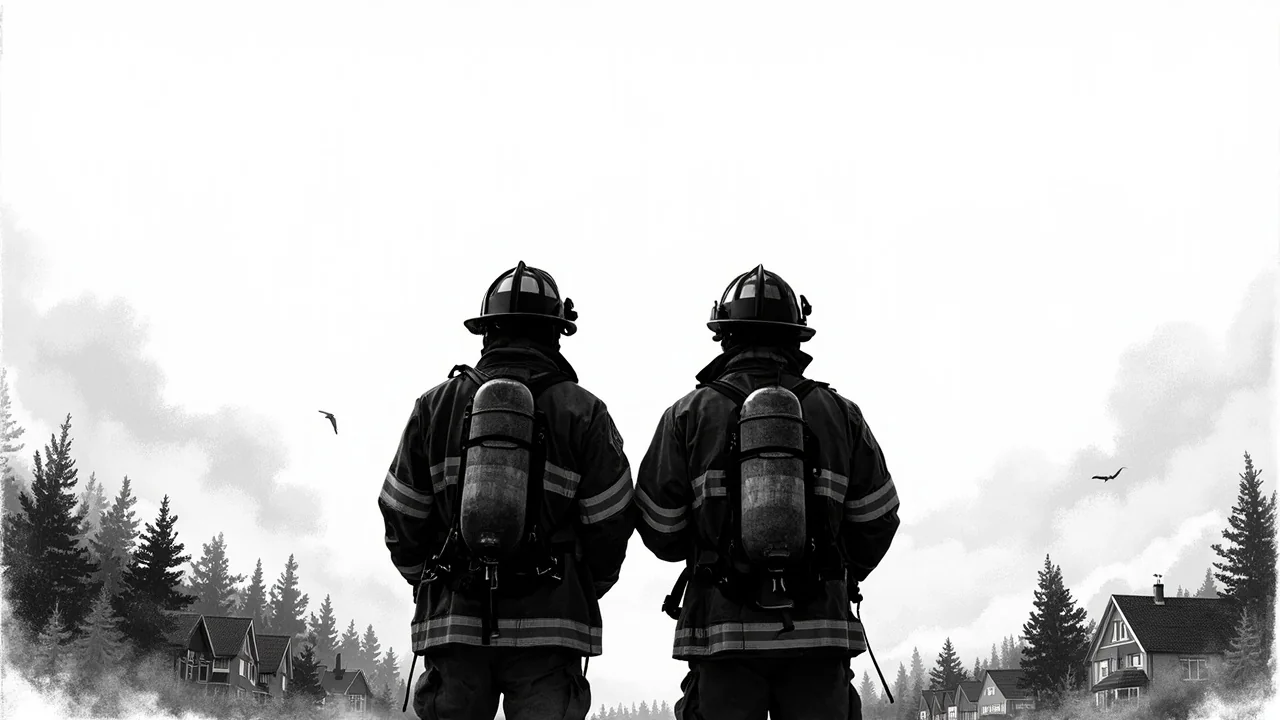
Norway's firefighting community is in mourning after two volunteer smoke divers died battling a house fire in Verdal. Geir Otto Lein Johnson, 58, and Roger Kvello Hansen, 51, both local residents, perished early Wednesday morning after entering the burning building and never coming out.
Their bodies were recovered from the ruins Wednesday evening. The tragedy has sent shockwaves through the close-knit emergency services across the country, uniting firefighters in grief and highlighting the ever-present dangers of their profession.
A Night of Tragedy in Vinne
The alarm sounded around 2 a.m. on Wednesday, January 7. A fire had broken out in a house on Vinne in Verdal, a municipality in Trøndelag county. The resident managed to escape and alert emergency services. The local fire brigade, part of Brannvesenet Midt IKS, responded immediately.
Firefighters began suppression efforts, but the blaze developed rapidly into an intense inferno. In an attempt to control the fire from within, two experienced smoke divers—Johnson and Hansen—entered the structure. They were part-time, volunteer firefighters, a common and crucial component of Norway's emergency response, especially in rural areas.
At 2:50 a.m., the crew outside lost contact with the two men inside. "Attempts were made to contact them and enter the house, but at that stage the fire was so powerful that it was not possible to get in," said Morten Mørkved, the police service leader for Levanger and Verdal, during a press conference. The fire service finally brought the blaze under control just before 5:30 a.m. Wednesday. The grim search then began.
A Community and a Profession in Mourning
On Friday afternoon, around twenty fire constables gathered at the blackened site. They stood in silence, honoring their fallen colleagues. The local fire chief, Håvard Bye, described the profound impact. "After the terrible thing had happened, we have been focused on taking care of the next of kin. The municipality has assisted us in caring for the closest relatives. We have many colleagues whom we also must take care of," Bye stated.
The head of operations for Brannvesenet Midt IKS, Trond Marius Fornes, gave voice to the collective pain. "It is incredibly painful. We have lost two incredibly good colleagues," he said. The sentiment echoed nationwide. Fire stations across Norway have observed moments of silence, and messages of support have flooded in for the Verdal crew, illustrating the deep bonds within Norway's emergency response network.
One firefighter from another district called it "my worst nightmare," a sentiment understood by all who wear the uniform. The deaths are a stark reminder that despite advanced training and equipment, firefighting remains one of the most dangerous civilian jobs. The incident is believed to be one of the deadliest for Norwegian firefighters in recent years.
The Investigation and Unanswered Questions
The police, with assistance from the National Criminal Investigation Service (Kripos), have launched a detailed investigation. Forensic technicians are meticulously examining the ruins to determine the fire's cause and the precise sequence of events that led to the fatalities. Police stated the investigation would be thorough and time-consuming, with several interviews to be conducted.
Key questions remain. What caused the fire to escalate so violently and quickly? Were there structural elements or contents within the house that contributed to the speed of the blaze? The investigation will also review operational protocols, though there is no immediate indication of error. The focus, authorities stress, is on understanding the tragedy to prevent future ones.
"The police will today continue the scene examinations with assistance from Kripos and conduct more interviews. It is expected to take time before answers to central questions come," police noted in a press release. The families of the deceased have been notified before the names were made public, a standard procedure in such sensitive cases.
The Vital Role of Volunteer Firefighters
This tragedy casts a spotlight on Norway's heavy reliance on part-time, volunteer firefighters. In many municipalities outside major urban centers, professional, full-time crews are supplemented or replaced entirely by dedicated volunteers who respond to pagers at all hours. These individuals, like Johnson and Hansen, train rigorously and perform the same hazardous duties as their full-time counterparts, often balancing this commitment with other jobs and family life.
Their sacrifice underscores a critical, sometimes underappreciated, pillar of Norwegian civil safety. The system allows for rapid response in remote areas but depends on the courage and altruism of local citizens. The loss of two such volunteers is a blow not just to their families and colleagues, but to the very fabric of local emergency preparedness in Verdal.
A Nation's Reflection on Risk and Sacrifice
The Verdal fire is a somber moment for all of Norway. It forces a national conversation about the risks faced by those who run toward danger. Each time a fire alarm sounds, these men and women accept a level of risk that is both calculated and profound. Society depends on their willingness to do so.
Funeral arrangements are pending as the community begins the long process of grieving. Memorials have sprung up at local fire stations, and a national fund for the families of fallen firefighters is likely to see an outpouring of support. The professional associations for firefighters will also be involved in providing long-term support to the Verdal team dealing with trauma.
For now, the charred plot on Vinne stands as a silent testament. Two men went into a burning building to protect their community. They did not return. Their deaths are a brutal reminder that safety is never guaranteed, and that the phrase "first responder" carries a weight that, in moments of terrible clarity, becomes all too real. As the investigation continues and the funerals are planned, Norway is left to honor their memory and confront the inherent danger that shadows every emergency call.