
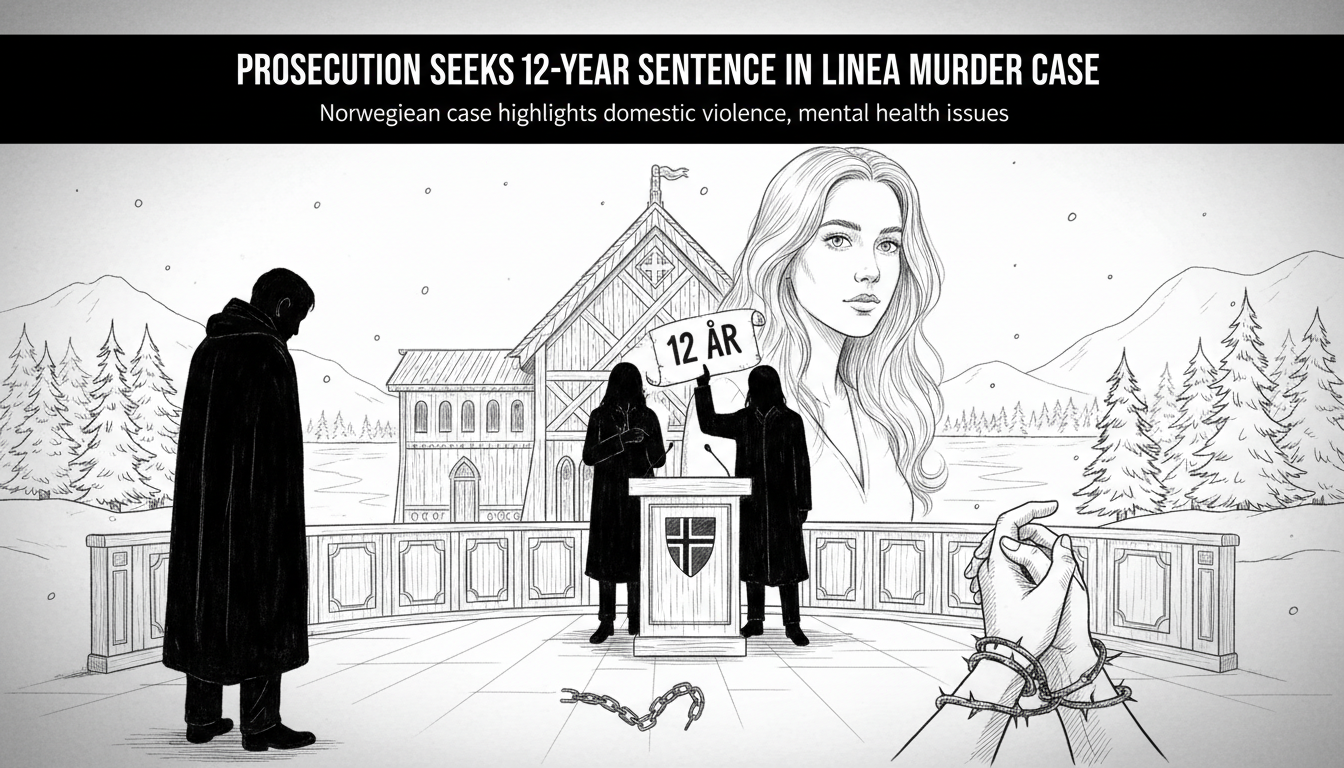
A 35-year-old man appeared in Trøndelag District Court this week, charged with the murder of 20-year-old Linea Bjørnnes. He denies criminal guilt.
The prosecution concluded its case by requesting a 12-year prison sentence. Prosecutor Kaia Strandjord argued the man acted with clear intent to kill.
Norwegian law requires proof of intent for murder convictions. The prosecutor emphasized the man admitted placing his hand over Linea's mouth and putting a scarf between her teeth along with tissue paper in her mouth.
"You know you're killing a person when you block breathing organs," Strandjord told the court.
The defense lawyer Kjell Myrland countered that his client never intended to kill Linea. "He had no wish whatsoever to kill Linea. The background is that he loved Linea very much," Myrland said.
The defense argued the man remained conscious that Linea could breathe through her nose during the incident. They requested the mildest possible sentence.
Forensic psychiatrists testified the defendant showed no signs of serious mental illness during the alleged crime period. Chief psychologist Kåre Nonstad described the man as displaying "marked egocentricity" and lacking empathy for the victim and family.
Linea was found lifeless on her home floor in Hegra, Stjørdal municipality in central Norway last December. She was declared dead the following day.
Pathology specialists suggested oxygen deprivation brain injury as the probable cause of death. Amphetamine was detected in Linea's blood, though prosecutors stated the drug use didn't cause her death.
The defendant and Linea had lived next door to each other in a municipal housing block in Stjørdal. The man previously faced multiple restraining orders against Linea and had been investigated for threats, violence, and abuse against her.
Earlier criminal cases were dropped due to questions about his mental capacity. Police recordings from the night Linea was found captured the man saying, "I went way over the line, I lost control."
The case reveals troubling patterns in how Norwegian authorities handle repeated domestic violence offenders, particularly when mental health concerns complicate legal proceedings.