
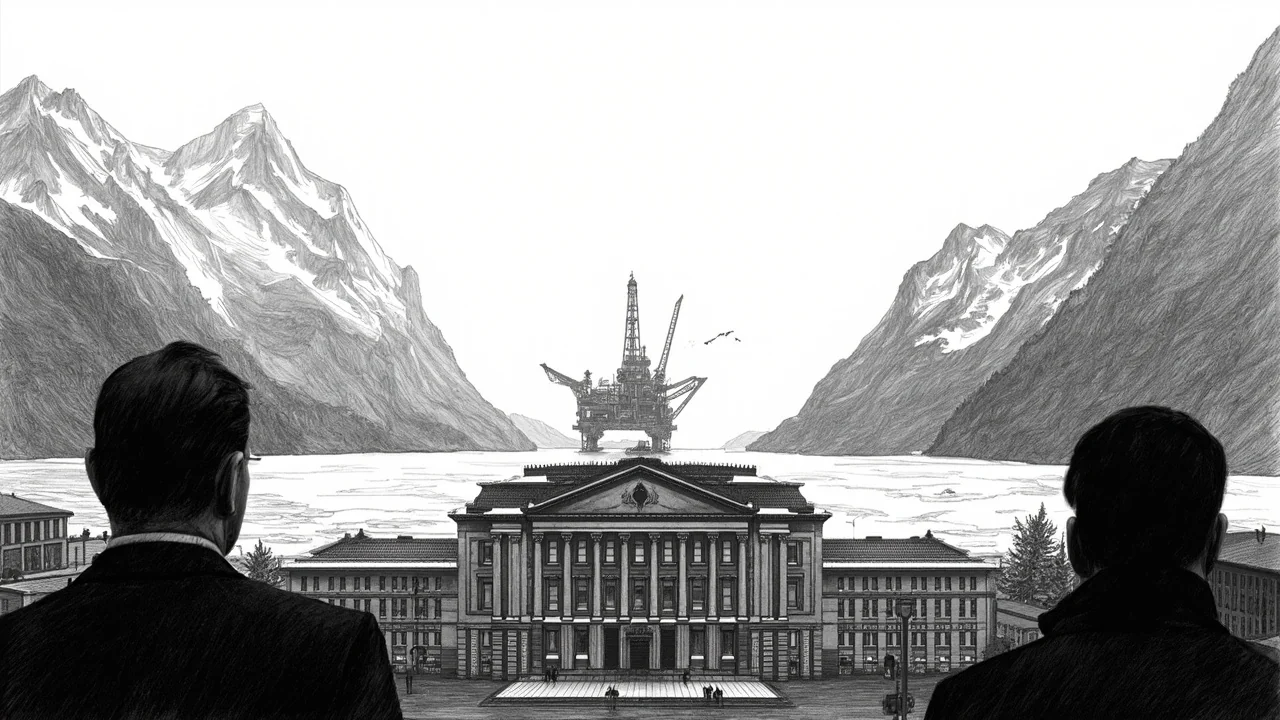
Norway's parliament will debate national energy policy on March 19, the same day the government announces its 2026 offshore oil and gas licensing plans and OPEC+ holds a ministerial meeting. Environmental groups will protest outside the Stortinget (Norway's parliament), highlighting a deep political rift over the country's energy future. This clash is no coincidence. It shows the Labour-led government's political strategy to handle competing domestic and international pressures. Source: Norwegian Parliament (Stortinget).
Parliamentary pressure forces frontier restart
The Labour minority government, led by Prime Minister Jonas Gahr Stoere, operates under constant threat from its parliamentary opponents. In May 2025, the Stortinget ordered the government to restart oil and gas exploration licensing in frontier areas, ending a moratorium that had been in place since 2021. This parliamentary directive forced the government's hand. The government's survival has been tied to oil policy. In December 2025, the budget vote risked becoming a vote of confidence over issues including the oil-funded sovereign wealth fund's investments. The message from parliament is clear: Norway's economy still relies on petroleum revenue, and exploration must continue.
The upcoming Awards in Predefined Areas (APA) round announcement is part of this political balancing act. On January 13, 2026, Energy Minister Terje Aasland awarded stakes in 57 offshore exploration licences to 19 companies, per Reuters. The APA round focuses on mature areas of the Norwegian Continental Shelf, but the 2025 parliamentary order pushes for new frontier exploration. This expansion happens despite growing legal and activist challenges.
Legal challenges meet investor uncertainty
Norway's oil expansion faces a historic test at the European Court of Human Rights (ECtHR). Greenpeace Nordic and six youth activists have brought the 'People vs. Arctic Oil' case. They argue Norway's oil licensing violates human rights by worsening climate change. A ruling against Norway could set a global legal precedent, potentially freezing new licensing rounds and stranding assets. For international investors, this creates unpredictable regulatory risk alongside standard market volatility from OPEC+ decisions.
The timing of the OPEC+ meeting on March 19 adds another layer. Norway isn't an OPEC member, but its production decisions influence global crude supply and prices. Major Norwegian energy companies like Equinor plan investments based on long-term price projections that OPEC+ actions can disrupt. The government's licensing announcements must now account for both international market signals and domestic legal threats. Investors watching the APA round must weigh immediate access to resources against the risk that future exploration could be halted by courts.
Expect the Stortinget debate to produce fiery rhetoric but little immediate policy change. The Labour government will continue approving licences in established areas while slowly progressing frontier studies to satisfy parliament. The real pressure will come later in 2026 from the ECtHR decision. If the court rules against Norway, the entire licensing system could need a redesign that prioritizes climate impact assessments. That move would alarm international oil companies and test Norway's economic model.
Read more: Norway to Release Report on Weight-Loss Drug Side Effects in....
Read more: Norway Police Cordon Marina Walrus After Tourist Incidents.