
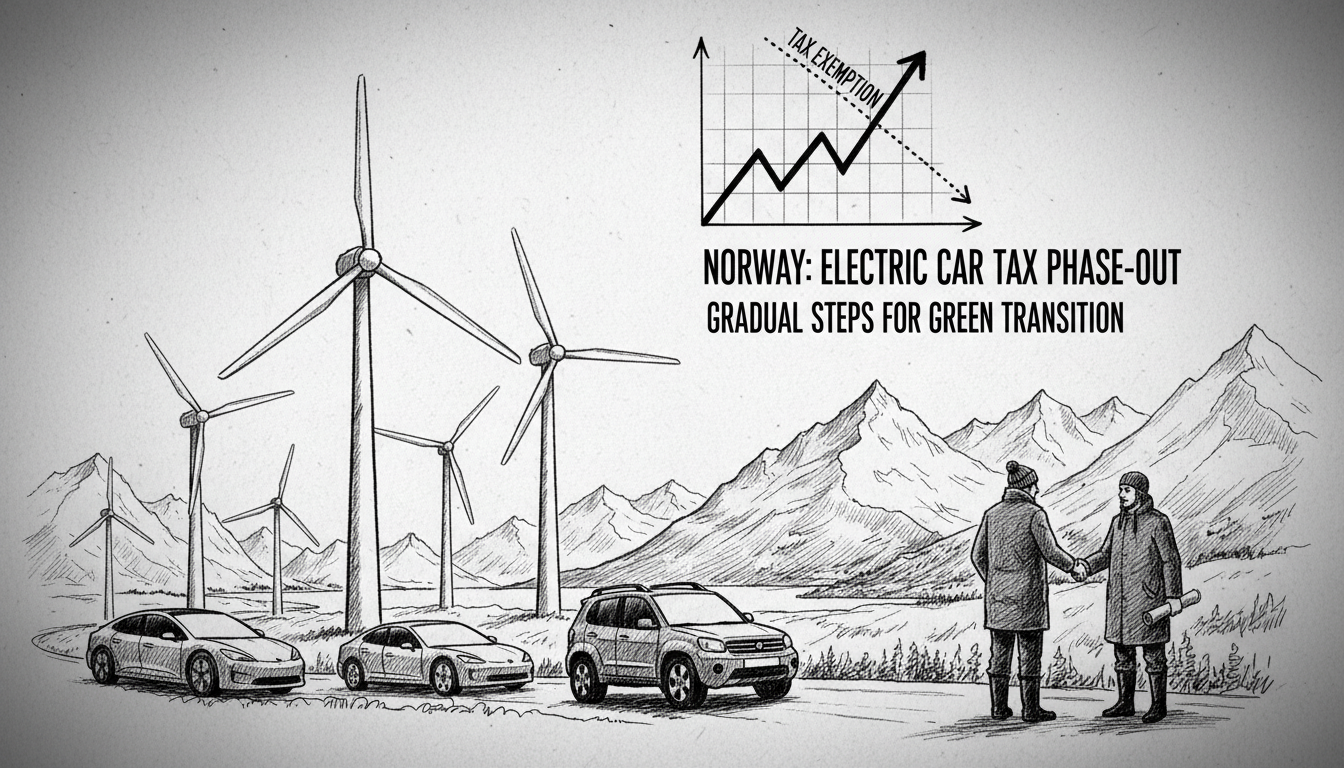
Norway's political parties have reached a budget agreement that will gradually reduce the tax exemption for electric vehicles. The deal marks a significant shift in the country's long-standing policy of promoting zero-emission transport. The new rules will start to take effect from the new year.
The agreement was reached in overnight negotiations. It involves several parties, including the Labour Party and the Socialist Left Party. The original government proposal was more aggressive. It aimed to lower the exemption threshold faster and introduce full value-added tax sooner.
Under the new compromise, the VAT exemption threshold will drop to 300,000 Norwegian kroner initially. It will then be reduced further to 150,000 kroner in a later stage. Full VAT on electric cars will be applied after that. This phased approach was a key demand from some parties in the talks.
A spokesperson for the Socialist Left Party said they fought to ensure new cars sold remain emission-free. They argued the phase-out should not happen overnight. The party stated the final agreement better protects both consumer wallets and climate goals. This reflects the complex balance in Norwegian climate policy between incentives and fiscal responsibility.
Norway's automobile association expressed satisfaction with the outcome. Their press chief said the sudden change at the new year is still notable. However, she welcomed the multi-step approach compared to the government's initial plan. She called it better for people's finances and for overall emissions reduction.
The association also highlighted another victory in the deal. Drivers of traditional petrol and diesel cars will not face higher taxes during this transition. This point aims to prevent penalizing individuals who cannot yet switch to electric vehicles. It acknowledges the practical realities of the national vehicle fleet.
This policy change signals a new chapter for Norwegian tech startups and the green transport sector. Oslo's innovation districts have been hubs for EV technology and smart mobility solutions. The gradual phase-out provides a clearer, longer runway for companies to adapt their business models and pricing.
For years, Norway has been a global leader in electric vehicle adoption, driven by strong incentives. This shift represents a maturing market. The government is now beginning to normalize taxation as EVs move from niche to mainstream. The move could influence other Nordic nations considering similar policy adjustments in their own digital transformation journeys.
The change has direct implications for consumers. The cost of a new mid-range or premium electric car in Norway will increase. Analysts suggest this may accelerate the development of more affordable EV models. It could also boost the second-hand electric car market as buyers seek value.
Norwegian tech trends have long been intertwined with sustainability. This policy evolution shows how fiscal tools must adapt as green technologies succeed. The deal attempts to manage the transition without stalling progress on national emission targets. The coming years will test whether this balanced approach works.