
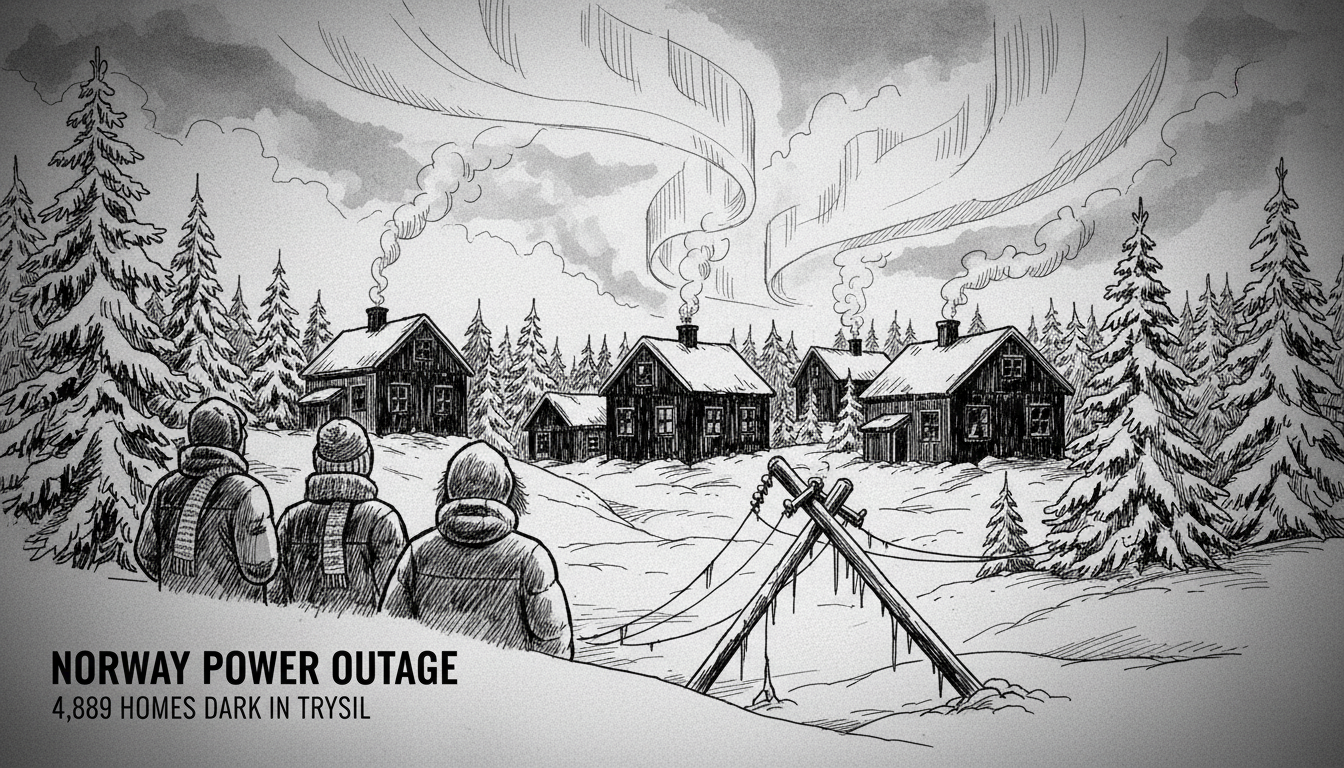
Norway's popular Trysil ski resort was plunged into darkness Saturday evening as a major power outage left 4,889 households without electricity. The outage, attributed to strong winds sweeping through the mountainous region, has impacted the municipality of approximately 6,600 residents and an untold number of tourists. Local electricity distributor Elvia confirmed it has crews working to restore power, but the incident highlights the vulnerability of even robust Nordic infrastructure to extreme weather.
A Resort in the Dark
The timing of the outage is particularly problematic for Trysil, one of Norway's largest and most popular ski destinations. Winter weekends typically see the area bustling with activity, from après-ski gatherings to evening meals in mountain lodges. A widespread blackout disrupts not just domestic life but the core tourist economy. Hotels and restaurants reliant on electric heating, cooking, and lighting face significant operational challenges, while safety concerns mount on darkened roads and slopes. The local municipality has directed residents to its website for updates, a common practice in Nordic crisis communication that emphasizes digital self-service.
Grid Resilience Under Scrutiny
Norway's energy grid is generally considered highly reliable, a product of significant investment and the nation's wealth of hydropower resources. However, this incident underscores a persistent weakness: distribution networks in remote and rugged terrain. Power lines stretching through forested, mountainous areas are exceptionally susceptible to damage from high winds, heavy snow, and falling trees. "While our generation is robust, the distribution grid in regions like Trysil faces natural challenges," explains Lars Holm, an energy infrastructure analyst based in Oslo. "Extreme weather events test the physical resilience of these networks. The question is whether current maintenance and upgrade cycles can keep pace with a changing climate."
Data from the Norwegian Water Resources and Energy Directorate (NVE) shows that weather-related disruptions, while not uncommon, typically affect smaller, more isolated areas. An outage impacting nearly 5,000 connections in a single municipality constitutes a significant event. It prompts a broader discussion about infrastructure investment priorities. Should funds focus on hardening existing networks in vulnerable areas, or on developing more localized microgrids and backup systems for critical community hubs?
The Human and Economic Cost
Beyond the inconvenience, a prolonged power outage in sub-zero winter temperatures carries real risk. Most homes in the region rely on electricity for heating. While Norwegian building standards are high, a lengthy blackout can lead to dangerously dropping indoor temperatures, frozen pipes, and spoiling food. For the local economy, the cost is immediate. Tourism is the lifeblood of Trysil, and a reputation for instability during peak season can have lasting effects. Ski resorts operate on tight seasonal windows, and a disrupted weekend can mean lost revenue that is impossible to recoup.
"Our first priority is safety and information," a spokesperson for Trysil Kommune said in a statement. "We are coordinating with Elvia and urging residents, especially those who may be more vulnerable, to check on their neighbors and use caution." This community-focused response is typical of the Nordic welfare model, where municipalities play a central role in local crisis management. Social media channels quickly filled with offers of help—residents with wood-fired stoves inviting others for warmth, and updates shared from those with generator power.
A Nordic Pattern of Vulnerability
This event is not isolated within the region. Neighboring Sweden and Finland have faced similar large-scale outages in recent years, often linked to severe winter storms. In 2023, a storm in Sweden left tens of thousands without power. Denmark, with its flatter geography, faces different threats, primarily from storm surges flooding coastal substations. The common thread is an increasing frequency of extreme weather events that existing infrastructure was not designed to withstand. The Nordic commitment to a green transition, which includes electrifying transport and heating, ironically makes a reliable grid even more critical. Every new electric vehicle and heat pump increases societal dependence on a constant power supply.
Energy companies like Elvia operate under strict regulatory frameworks set by Norwegian authorities. They are required to meet certain reliability standards and report on outage causes and durations. The performance and response time in Trysil will be closely monitored. "These events are a stress test," says Holm. "They provide concrete data on failure points. The real measure of resilience is not preventing every outage, but how quickly and effectively you can respond and restore service, and what you learn to prevent the next one."
Looking Beyond the Repair Crews
As Elvia's crews work to repair downed lines in challenging conditions, the broader conversation continues. For a nation that is a European energy powerhouse, exporting electricity and pioneering green technology, a domestic outage of this scale is a poignant reminder of infrastructure's physical limits. It raises practical questions about household preparedness—how many residents have alternative heat sources or emergency supplies? It also touches on national policy regarding the decentralization of energy, such as supporting more household solar with battery storage, even in northern climates.
The lights will eventually come back on in Trysil. The ski lifts will restart, and the tourist season will continue. But the incident leaves a lingering question for Norway and its Nordic neighbors: as climate patterns shift, is the massive, centralized grid model of the 20th century still the most resilient path forward, or does the future lie in more adaptive, localized systems? The answer will determine how often communities find themselves in the dark.