
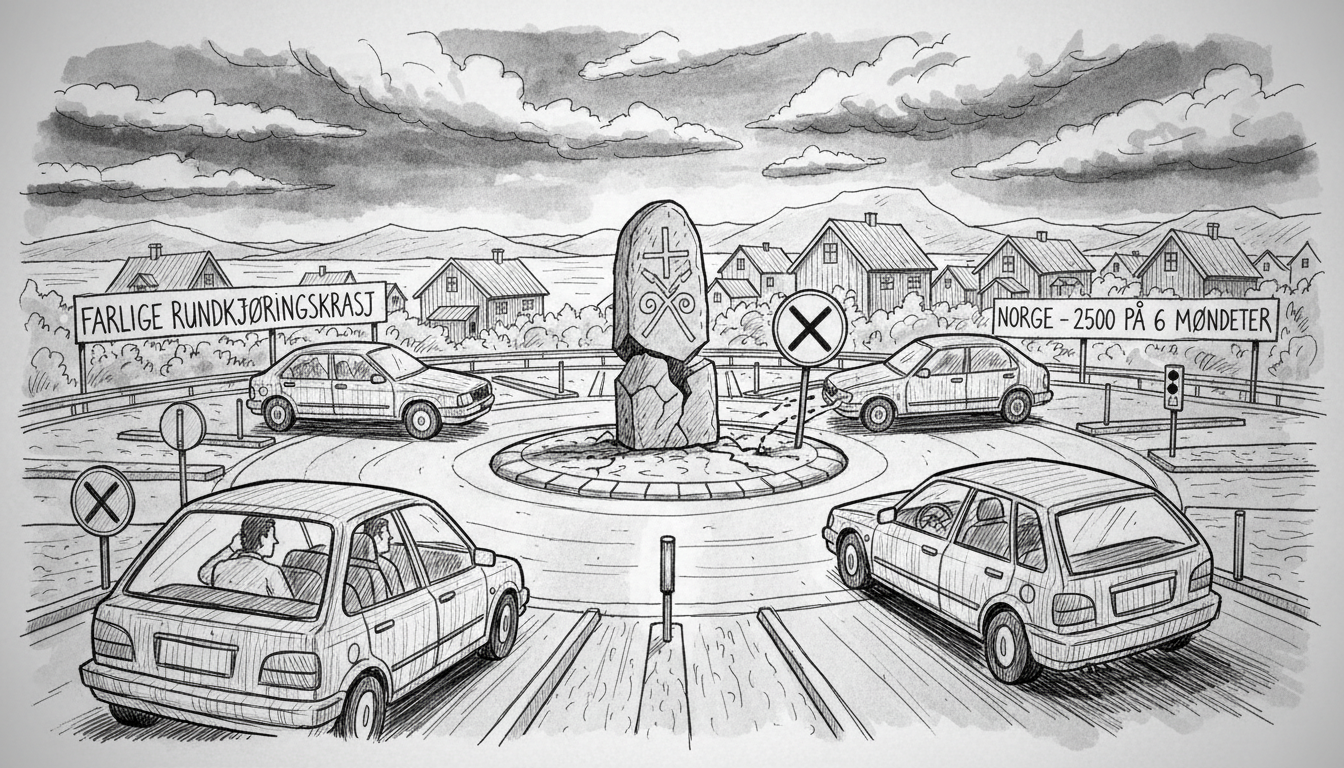
Norwegian drivers crashed nearly 2,500 times in roundabouts during the first six months of this year. Insurance companies report the damage costs reached almost 100 million Norwegian kroner.
By year's end, Norway projects approximately 5,000 roundabout collisions totaling 200 million kroner in damages. This marks a troubling increase from 2019, when only 2,600 crashes occurred throughout the entire year with 63 million kroner in costs.
Roundabouts have been part of Norway's road system for decades, yet drivers seem to be getting worse at navigating them. A traffic expert from a major insurance company explained the main frustrations.
"Roundabouts should improve traffic flow and reduce accidents," the expert said. "But incorrect lane choices and failure to use turn signals create dangerous situations daily."
In a recent survey, 65% of Norwegian drivers identified improper turn signal use as their top traffic irritation. Three in ten drivers also expressed frustration over others choosing wrong lanes in roundabouts.
Many drivers mistakenly believe they should always stay in the outer lane. This misunderstanding creates dangerous situations and frustrates other road users.
"You should choose your lane based on your exit point," the expert clarified. "If turning left, signal left and stay in the left lane. For straight ahead or right turns, use the right lane and signal right when exiting."
The discussion around turn signal use in roundabouts generates strong opinions. Drivers who obtained licenses years ago learned only to signal when exiting roundabouts. Today's driving students learn to signal left when entering roundabouts if taking left exits.
Norway's road authority states left-turn signaling isn't legally required but recommends the practice. "If we become better at this, other drivers will better understand our intentions," officials explained in a statement.
Left-turn signaling has become part of driver training and is expected during license tests. Experienced drivers could learn from this approach, according to transport officials.
The statistics offer one consolation: roundabout collisions typically occur at low speeds and rarely cause personal injuries.
Norway's roundabout problem reflects a curious reality - sometimes the most familiar traffic features become the most problematic despite their intended safety benefits.