
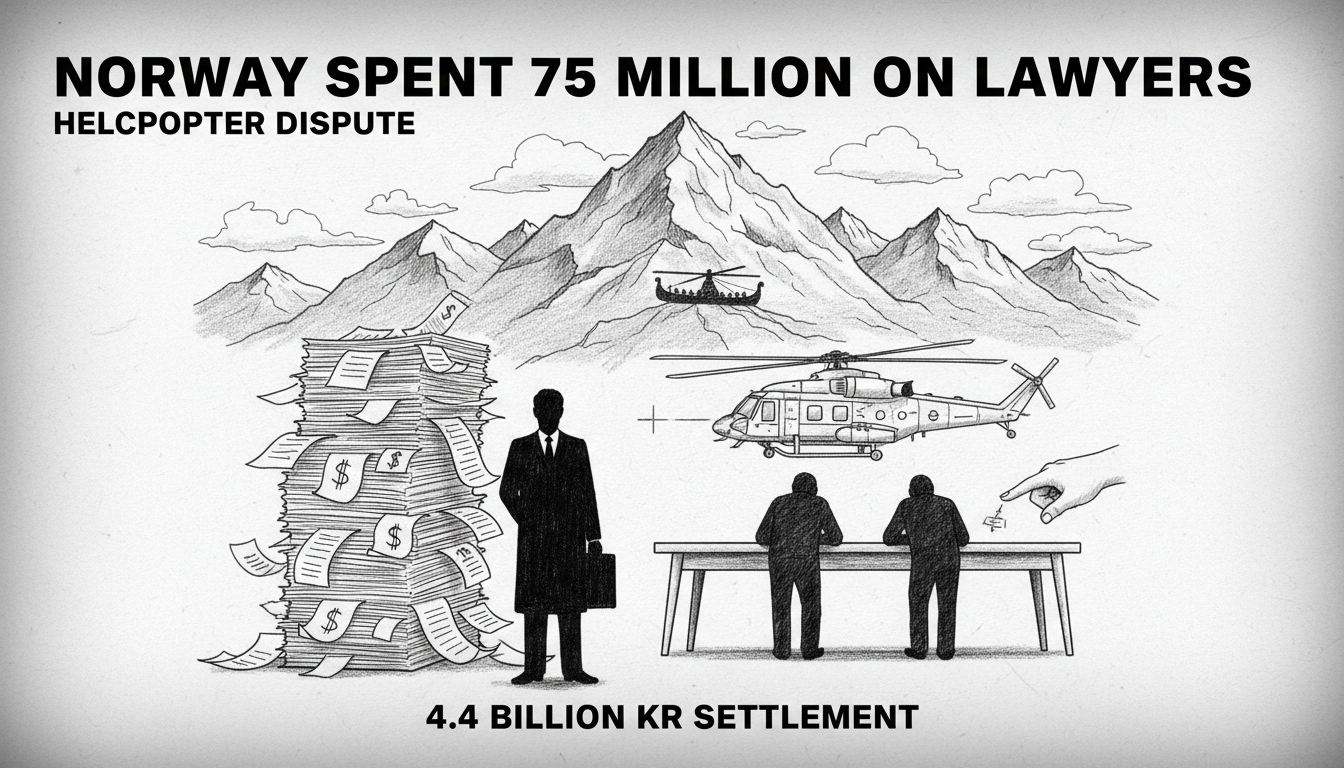
The Norwegian government spent approximately 75 million kroner on external legal assistance during the NH90 helicopter dispute. This substantial amount covered legal support from the law firm Wikborg Rein, used alongside the government's own legal counsel. The funds included value-added tax and accumulated until the settlement reached in November.
Defence Materiel Agency press contact Per Erlien Dalløkken declined to provide additional comments about the legal expenses. He stated the agency had nothing further to add about the matter in his email correspondence.
Earlier in November, the government announced reaching a comprehensive settlement agreement with NHIndustries SAS and its parent companies. This agreement resolved all disputes between the parties related to Norway's NH90 helicopter program. The Government Attorney confirmed NHI will pay the Norwegian state 375 million euros, equivalent to 4.4 billion Norwegian kroner.
Norway originally ordered 14 NH90 helicopters for deployment on coast guard vessels and frigates. The delivery contract specified completion by 2008, but the program encountered numerous delivery problems and delays. These operational challenges created significant tensions between the Norwegian military and the manufacturer over several years.
The substantial legal expenses raise questions about cost management in major defense procurement disputes. While Norway secured a favorable settlement, the 75 million kroner in legal fees represents a considerable additional cost to taxpayers. This case highlights the complex financial calculations governments must make when pursuing compensation through legal channels.
Major defense contracts often involve intricate international agreements and legal frameworks. The NH90 situation demonstrates how procurement issues can escalate into costly legal battles, even when parties eventually reach settlement agreements. Norway's experience may inform other Nordic countries facing similar defense equipment challenges.
International readers should understand that Nordic countries typically maintain high standards for government transparency and accountability. The revelation of these legal costs through media channels reflects this cultural expectation of public sector openness. The case also shows how even well-managed governments can face unexpected expenses in complex international defense contracts.