
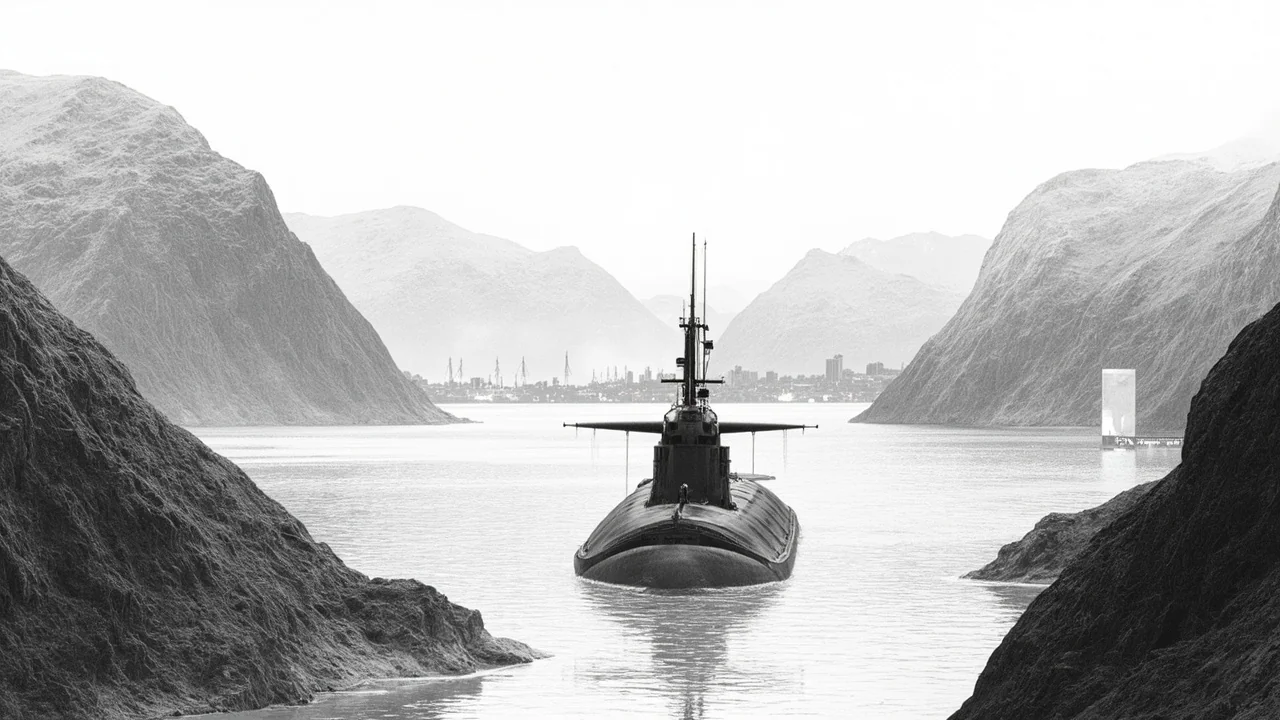
Norway's ambitious submarine expansion faces an unexpected obstacle: the national power grid operator has rejected electricity access for the military's new Arctic base. Statnett denied the Defense Ministry's request to connect Ramsund NAVal station, where six new submarines worth NOK 98.46 billion ($9.2 billion) will be stationed starting in 2029. Source: Statnett Official Website.
The rejection exposes a fundamental tension in Norwegian society between military modernization and energy infrastructure limits. Ramsund orlogsstasjon serves as the Navy's primary northern base, strategically positioned for Arctic operations as NATO tensions with Russia escalate.
Grid Capacity Clash Reveals Infrastructure Strain
Statnett's refusal stems from capacity constraints north of Ofoten, where "all available capacity has been reserved for a long time," according to Statnett director Gunnar Løvås. The grid operator maintains it must follow existing regulations that provide no special military priority.
Local energy company Nordkraft disputes this assessment. CEO Eirik Frantzen argues the Harstad region has sufficient capacity to supply Defense Ministry needs through conditional connections, where military facilities could be temporarily disconnected during peak demand periods.
The dispute highlights Norway's broader infrastructure challenges as Arctic militarization accelerates. The Defense Ministry has planned Ramsund upgrades for over a decade, yet power access remained unresolved until now.
Political Pressure Mounts for Defense Priority Rules
The government is developing new regulations to prioritize defense interests in grid connections, following similar disputes over ammunition producer Nammo's power access at Raufoss. Energy Minister proposals would allow national security projects to jump capacity queues, potentially displacing civilian customers.
"Everything particularly critical should be prioritized," Frantzen told E24. The proposed rules would enable conditional connections for defense facilities, accepting temporary disconnection risks during grid stress.
Statnett has endorsed military priority in principle, supporting defense queue-jumping in its 2024 Energy Ministry consultation response. Implementation requires parliamentary approval and compensation frameworks for displaced customers.
The standoff will test whether Stortinget prioritizes national security over civilian grid access. Without political intervention by 2027, Norway's most expensive military project faces operational delays that could undermine Arctic defense capabilities precisely when NATO needs them most.
Read more: Norway PM Spouse Stock Scandal Exposes Elite Accountability ....
Read more: Norway Labor Unions Demand 4% Wage Hike Amid Inflation Surge.