
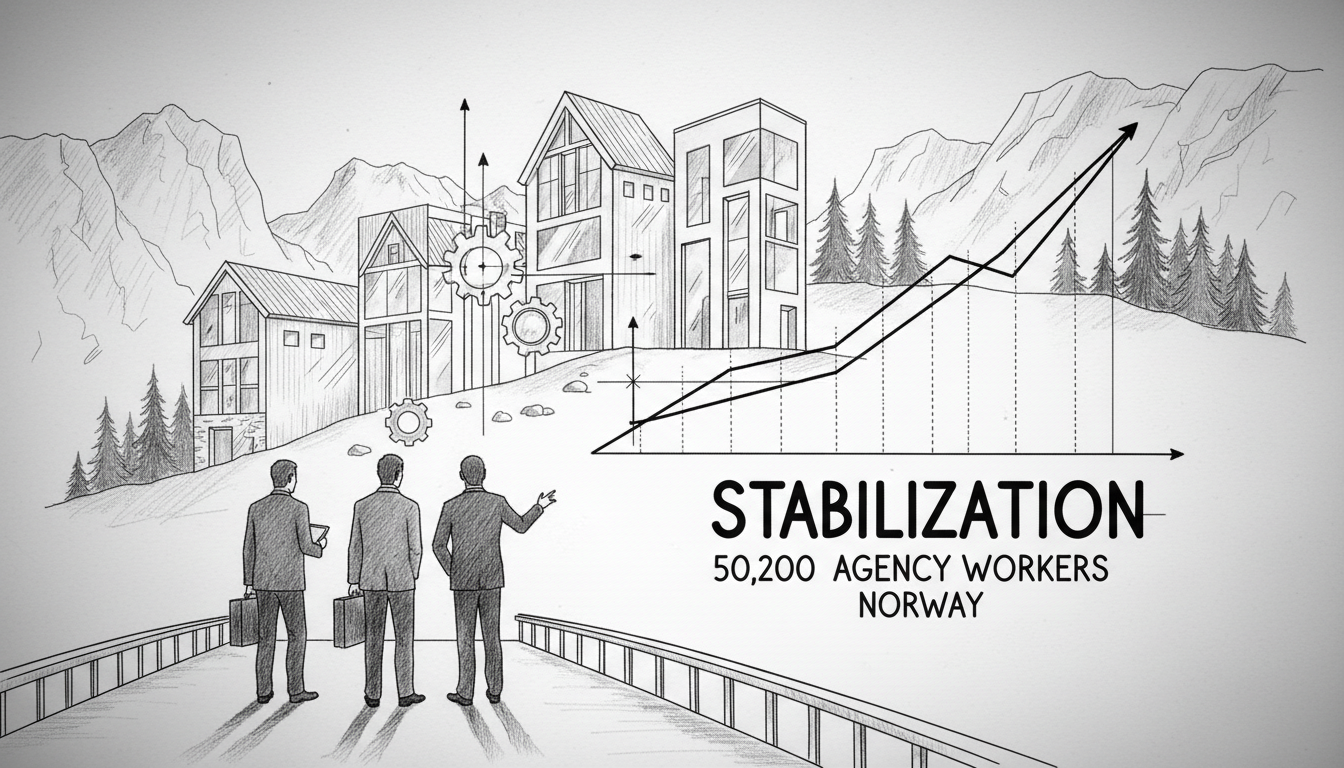
Norway's temporary staffing sector has reached a stable lower plateau following significant regulatory reforms. Third quarter figures show 50,200 workers employed through staffing agencies, representing a modest decline of 400 positions compared to the same period last year. The current numbers reflect a substantial reduction of 7,800 temporary workers when measured against 2022 levels.
Senior advisor Christoffer Berge confirmed the stabilization trend in an official statement. He noted staffing industry employment has settled at consistently lower numbers after the implementation period.
New restrictions on temporary labor hiring took full effect in 2023, triggering a major contraction across Norway's staffing sector. The regulatory changes specifically targeted the practice of employee leasing between companies. These measures aimed to strengthen permanent employment protections while reducing workforce precarity.
The Norwegian Parliament (Storting) approved these labor market reforms after extensive debate about balancing flexibility with worker security. Government buildings in Oslo hosted numerous negotiations between labor unions and employer associations before finalizing the legislation. The reforms reflect Norway's distinctive tripartite cooperation model between government, employers, and unions.
For international observers, these developments reveal important aspects of Norway's labor market philosophy. The country maintains what economists call 'flexicurity' – combining labor market flexibility with strong social safety nets. Temporary staffing agencies provide necessary workforce mobility, particularly in oil and gas sectors where project-based work is common.
The stabilization at current levels suggests Norway has found a new equilibrium in temporary staffing. Companies operating in Norwegian fjords and offshore oil fields now adjust to these permanent changes in labor regulations. Energy sector operations around Stavanger and Bergen must comply with stricter rules when hiring temporary workers for petroleum projects.
What does this mean for Norway's economic future? The data indicates successful implementation of labor policy objectives without crippling business flexibility. Both the government and opposition parties will likely monitor how these changes affect Norway's competitive position in European energy markets. The country continues balancing its social democratic traditions with global economic realities.
Norwegian temporary staffing regulations now align more closely with the country's comprehensive worker protection systems. The numbers demonstrate that policy interventions can reshape labor markets without causing dramatic disruption when implemented through Norway's consensus-based approach.