
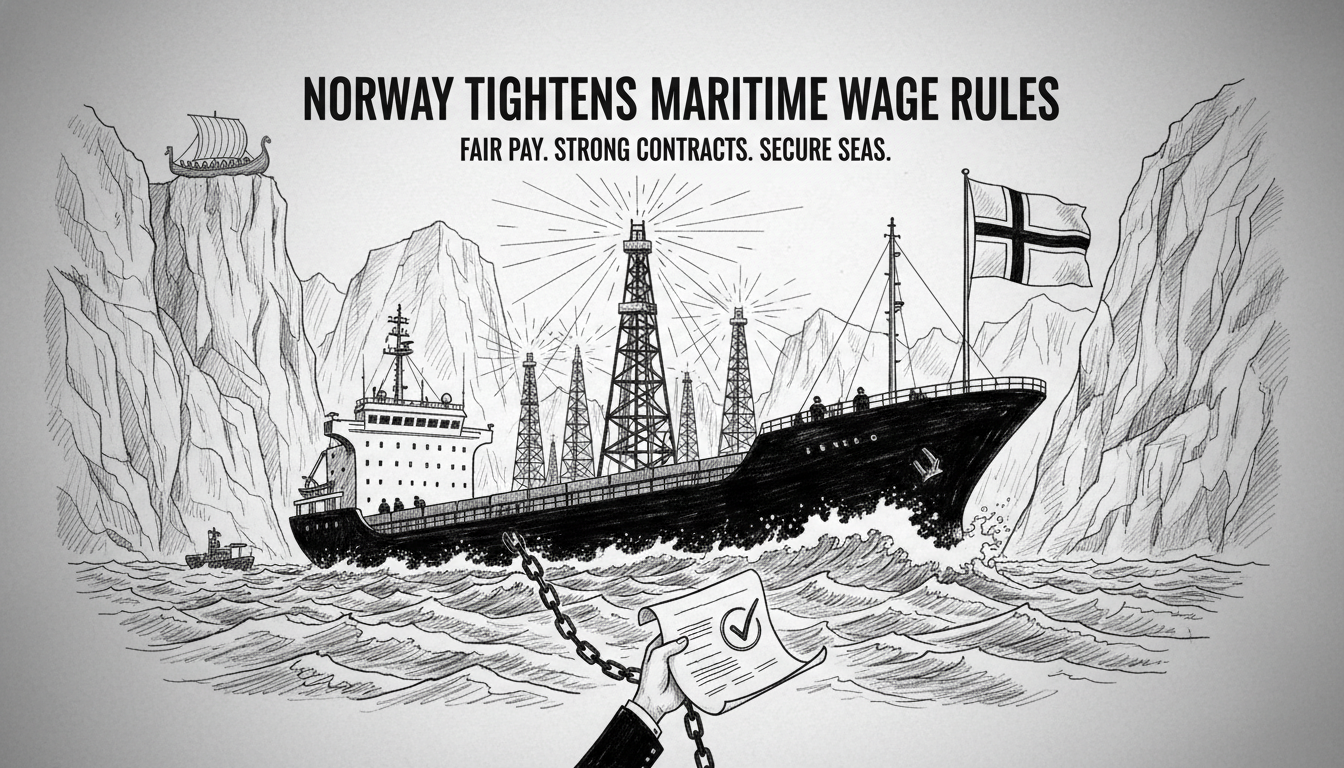
The Norwegian government is implementing stricter wage enforcement for all ship crews operating within the country's territorial waters. New regulations require contractors to ensure their suppliers provide proper employment contracts with specified wages. Companies must also conduct regular checks to verify compliance with Norwegian salary standards.
Fisheries and Ocean Policy Minister Marianne Sivertsen Næss stated that maritime work must follow Norwegian conditions with fair compensation. She emphasized that contractors bear responsibility for ensuring proper wage implementation across their supply chains. The minister declared that employers in maritime industries must guarantee crew members receive correct pay according to Norwegian standards.
This policy follows the Norwegian Parliament's decision earlier this year requiring Norwegian wage conditions for seafarers on vessels in Norwegian waters. The legislation affects all ships operating along Norway's extensive coastline from the Barents Sea to the Skagerrak strait. It particularly impacts vessels working near major offshore installations including the Johan Sverdrup and Troll oil fields.
The wage enforcement represents Norway's continuing effort to maintain high labor standards in its strategically important maritime sectors. Norway's shipping and offshore industries employ thousands of workers from multiple nationalities. The new rules aim to prevent wage competition that could undermine Norwegian maritime workers' positions.
International shipping companies operating in Norwegian waters must now adapt to these strengthened requirements. The regulations cover vessels servicing Norway's substantial offshore energy infrastructure along the western coast. This includes operations near major fjords like the Sognefjorden and Hardangerfjorden where substantial maritime activity occurs.
Norwegian authorities have faced pressure from labor unions to address wage discrepancies in the maritime sector. The Norwegian Seafarers' Union has long advocated for stronger wage enforcement measures. Union representatives argue that fair competition requires all operators to meet the same labor standards regardless of vessel registration.
The government's approach reflects Norway's tradition of strong worker protections combined with pragmatic maritime policy. As one of Europe's largest shipping nations and a major offshore energy producer, Norway maintains careful balance between industry competitiveness and social welfare. These new wage rules demonstrate the government's commitment to preserving Norwegian labor standards amid global competition.
Industry analysts note the regulations may increase operational costs for some international shipping companies. However, Norwegian officials maintain that fair competition requires uniform wage standards. The policy aligns with Norway's broader maritime strategy emphasizing quality, safety, and sustainable operations in its waters.
Implementation will involve coordination between multiple government agencies including the Norwegian Maritime Authority and Labour Inspection Authority. Enforcement mechanisms will include documentation requirements and potential inspections to verify compliance. Companies found violating the wage rules could face penalties including contract termination and exclusion from future Norwegian projects.
The strengthened wage enforcement comes as Norway continues developing its offshore wind capacity and maintaining its substantial oil and gas operations. Both sectors rely heavily on maritime support vessels operating throughout Norwegian waters. The government aims to ensure these growing industries maintain Norway's high standards for worker compensation and rights.