
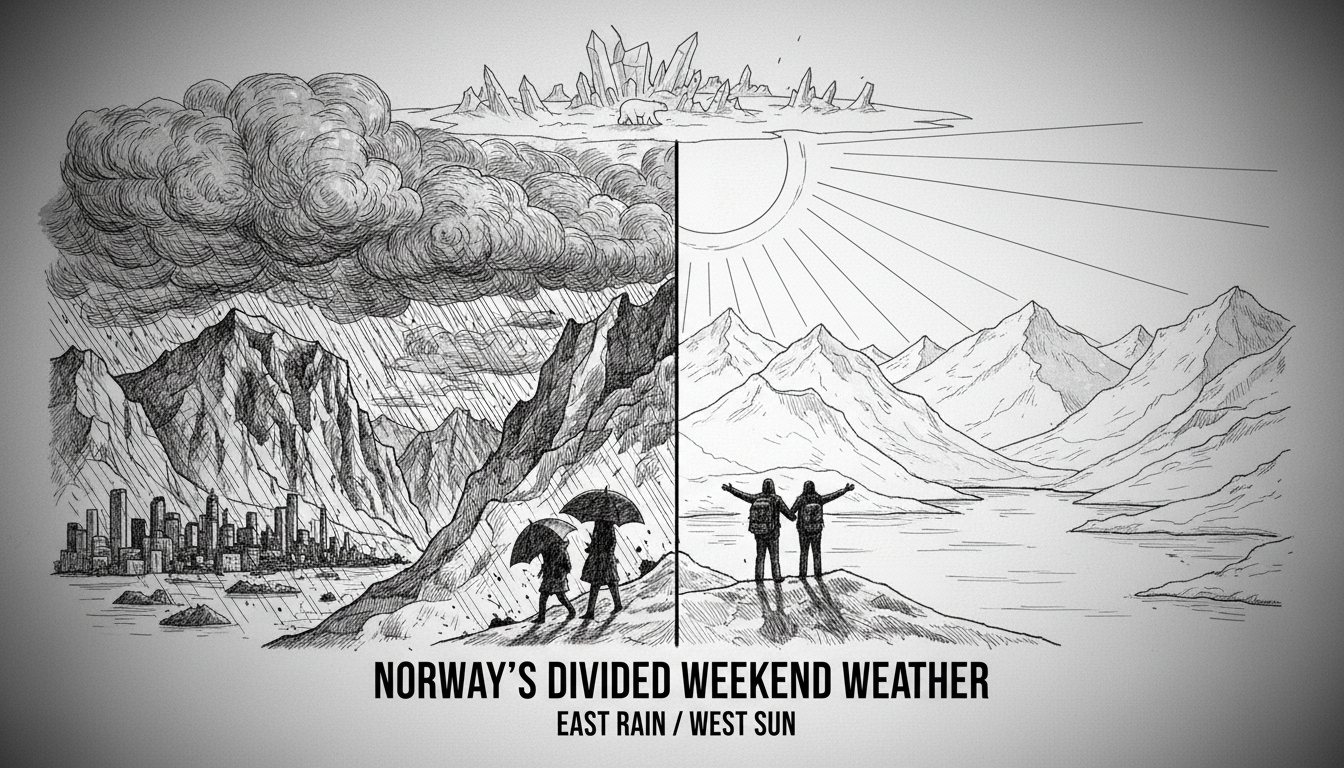
A stark weather divide will define the weekend across Norway. The eastern and southern regions face a grey and damp outlook, while central and western areas prepare for clearer skies and sunshine. This pattern presents a classic example of the country's complex microclimates, influenced by its mountainous terrain and long coastline.
According to the national meteorological service, the regions of Østlandet and Sørlandet will experience persistently poor conditions. A meteorologist on duty stated the forecast is for grey skies and rain, with little sunshine expected. He noted receiving complaints about the current dark and dreary atmosphere and could not promise any improvement in the coming days. The precipitation in these areas will be rain, not the white snow some might hope for to brighten the landscape. The official suggested residents might need to create their own light with Christmas candles or other sources to lift the gloom.
In contrast, conditions west of the mountains look markedly better. Trøndelag in central Norway is set to be the clear weather winner from Friday to Sunday. The Vestlandet region will also see mostly fine weather, though with slightly less sun than its central neighbor. This situation, with poor weather in the east and fine conditions on the west coast, is noted as somewhat uncommon. Clear skies will bring sub-zero temperatures at night, but daytime can offer plenty of fine sunshine and temperatures above freezing.
Northern Norway is entering a calmer weather period. Forecasts indicate little significant precipitation, with only some scattered snow possible. The meteorologist confirmed no storms or strong winds are expected for Troms and Finnmark. Instead, stable and cold conditions are predicted, with temperatures possibly dipping to five or six degrees below zero. Nordland county can expect some above-freezing temperatures over the weekend, concluding a picture of generally good, more wintry weather in the north.
This regional split has tangible implications. For the energy sector, reduced solar gain in the populous east may lead to a marginal, temporary increase in electricity demand for lighting. The stable, cold conditions in the Arctic north are favorable for maritime operations and winter logistics, which are critical for communities and industries in Troms and Finnmark. The weather disparity also highlights a cultural and economic reality. The brighter conditions in Trøndelag and Vestlandet, home to major coastal cities and key maritime infrastructure, contrast with the capital region of Oslo, where grey skies can impact public mood and outdoor economic activity. It is a straightforward reminder of Norway's geographic challenges, where weather dictates daily life and economic rhythms from the Oslofjord to the Barents Sea with little regard for central planning.